
-
×
 Come Into My Trading Room: A Complete Guide to Trading with Alexander Elder
1 × $6.00
Come Into My Trading Room: A Complete Guide to Trading with Alexander Elder
1 × $6.00 -
×
 The Mathematics of Technical Analysis with Clifford Sherry
1 × $6.00
The Mathematics of Technical Analysis with Clifford Sherry
1 × $6.00 -
×
 Pristine Seminar - Options Trading the Pristine Way
1 × $6.00
Pristine Seminar - Options Trading the Pristine Way
1 × $6.00 -
×
 The Trading Blueprint with Brad Goh - The Trading Geek
1 × $5.00
The Trading Blueprint with Brad Goh - The Trading Geek
1 × $5.00 -
×
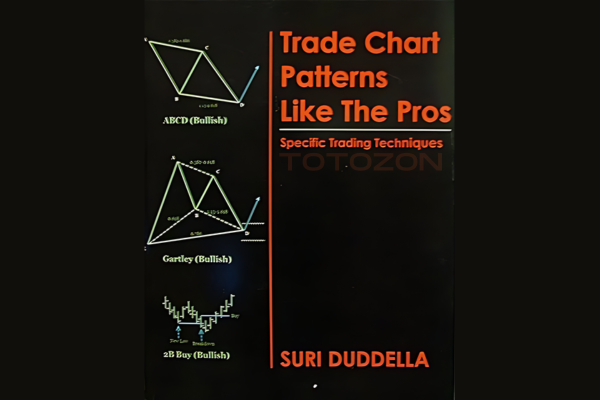 Trade Chart Patterns Like The Pros with Suri Duddella
1 × $6.00
Trade Chart Patterns Like The Pros with Suri Duddella
1 × $6.00 -
×
 Advanced Pattern Trader Course with Trade Empowered
1 × $23.00
Advanced Pattern Trader Course with Trade Empowered
1 × $23.00 -
×
 Original Curriculum with Home Options Trading Course
1 × $6.00
Original Curriculum with Home Options Trading Course
1 × $6.00 -
×
 Butterfly and Condor Workshop with Aeromir
1 × $15.00
Butterfly and Condor Workshop with Aeromir
1 × $15.00 -
×
 Your Next Great Stock: How to Screen the Market for Tomorrow's Top Performers with Jack Hough
1 × $6.00
Your Next Great Stock: How to Screen the Market for Tomorrow's Top Performers with Jack Hough
1 × $6.00 -
×
 Toni’s Market Club with Toni Turner
1 × $6.00
Toni’s Market Club with Toni Turner
1 × $6.00 -
×
 Technical Analysis 201: From Chart Setups to Trading Execution Methodology Class with Jeff Bierman
1 × $6.00
Technical Analysis 201: From Chart Setups to Trading Execution Methodology Class with Jeff Bierman
1 × $6.00 -
×
 Advanced Spread Trading with Guy Bower - MasterClass Trader
1 × $15.00
Advanced Spread Trading with Guy Bower - MasterClass Trader
1 × $15.00 -
×
 Dan Sheridan Butterfly Course (Sep 2012)
1 × $6.00
Dan Sheridan Butterfly Course (Sep 2012)
1 × $6.00 -
×
 The Master Indicator 2023 with Lance Ippolito
1 × $101.00
The Master Indicator 2023 with Lance Ippolito
1 × $101.00 -
×
 The Great Depression with David Burg
1 × $6.00
The Great Depression with David Burg
1 × $6.00 -
×
 The Complete Guide to Multiple Time Frame Analysis & Reading Price Action with Aiman Almansoori
1 × $13.00
The Complete Guide to Multiple Time Frame Analysis & Reading Price Action with Aiman Almansoori
1 × $13.00 -
×
 Sun Tzu and the Art of War for Traders with Dean Lundell
1 × $6.00
Sun Tzu and the Art of War for Traders with Dean Lundell
1 × $6.00 -
×
 SQX Mentorship with Tip Toe Hippo
1 × $23.00
SQX Mentorship with Tip Toe Hippo
1 × $23.00 -
×
 Capital with Charles D.Ellis
1 × $6.00
Capital with Charles D.Ellis
1 × $6.00 -
×
 Essentials in Quantitative Trading QT01 By HangukQuant's
1 × $23.00
Essentials in Quantitative Trading QT01 By HangukQuant's
1 × $23.00
Harmonic Elliott Wave: The Case for Modification of R. N. Elliott’s Impulsive Wave Structure with Ian Copsey
$6.00
File Size: Coming soon!
Delivery Time: 1–12 hours
Media Type: Online Course
Harmonic Elliott Wave: The Case for Modification of R. N. Elliott’s Impulsive Wave Structure with Ian Copsey
Introduction
In the intricate world of technical analysis, the Elliott Wave Theory has stood as a cornerstone for understanding market cycles. Ian Copsey, a distinguished analyst, has introduced a compelling modification to this theory through his concept of the Harmonic Elliott Wave. This article explores Copsey’s innovative approach, which refines and extends R. N. Elliott’s original impulsive wave structure.
Who is Ian Copsey?
A Veteran in Market Analysis Ian Copsey is a seasoned technical analyst who has dedicated his career to enhancing and applying the Elliott Wave Theory in contemporary financial markets.
Understanding Elliott Wave Theory
The Basics of R. N. Elliott’s Theory R. N. Elliott proposed that market movements follow a predictable, natural rhythm of five waves in the direction of the trend followed by three corrective waves. This fractal model has been used to forecast financial markets with remarkable accuracy.
The Need for Modification
Why Modify Elliott’s Wave Theory? While Elliott’s original theory has been incredibly influential, Copsey argues that certain market conditions have evolved in ways that Elliott’s initial model does not fully account for.
Harmonic Elliott Wave Explained
Defining the Harmonic Modifications Ian Copsey’s Harmonic Elliott Wave introduces adjustments that account for more complex market dynamics, ensuring that the wave theory remains robust in today’s volatile trading environments.
Key Components of Copsey’s Model
- Adjustment of Wave Structures: Copsey modifies the count of waves in certain phases to reflect modern market behaviors.
- Integration of Fibonacci Ratios: Harmonic patterns rely heavily on Fibonacci ratios to predict the end points of waves more accurately.
Applying Harmonic Elliott Wave in Trading
Practical Application for Traders Understanding how to apply these modifications can significantly enhance a trader’s ability to predict market turns and trends.
Case Studies and Examples We will review real-world applications of the Harmonic Elliott Wave method to illustrate its effectiveness in live market conditions.
Benefits of Harmonic Elliott Wave
Enhanced Accuracy and Reliability Traders who use the Harmonic Elliott Wave method often report improved accuracy in their predictive models, leading to better trading outcomes.
Challenges and Considerations
Learning Curve Adopting Copsey’s modifications requires an understanding of both basic and advanced concepts in wave theory, which may be challenging for newcomers.
The Future of Wave Analysis
Evolving with the Markets As financial markets continue to evolve, so too must the analytical tools we use, a philosophy that Ian Copsey champions with his modifications.
Conclusion
Ian Copsey’s Harmonic Elliott Wave represents a significant evolution in the application of Elliott Wave Theory. By adapting the classic model to better fit modern market conditions, Copsey has enhanced the toolset available to technical analysts and traders worldwide.
FAQs
1. What is the Elliott Wave Theory?
The Elliott Wave Theory is a form of technical analysis that predicts future price movements by identifying crowd psychology that manifests in waves.
2. How does the Harmonic Elliott Wave differ from the traditional model?
The Harmonic Elliott Wave incorporates modifications to the wave structures and integrates Fibonacci ratios to improve prediction accuracy.
3. Who can benefit from using the Harmonic Elliott Wave?
Both novice and experienced traders can benefit from the Harmonic Elliott Wave, especially those looking for a deeper understanding of market dynamics.
4. What are Fibonacci ratios?
Fibonacci ratios are mathematical relationships derived from the Fibonacci sequence, widely used in technical analysis to predict areas of support and resistance.
5. How can one learn the Harmonic Elliott Wave method?
Learning the Harmonic Elliott Wave method typically involves studying technical analysis literature, attending workshops, and practicing under experienced traders.
Be the first to review “Harmonic Elliott Wave: The Case for Modification of R. N. Elliott’s Impulsive Wave Structure with Ian Copsey”
You must be logged in to post a review.
Related products

Forex Trading
Original price was: $1,898.00.$10.00Current price is: $10.00.

Original price was: $197.00.$5.00Current price is: $5.00.

Forex Trading
Original price was: $2,995.00.$31.00Current price is: $31.00.
Forex Trading
Original price was: $850.00.$23.00Current price is: $23.00.

Original price was: $649.00.$20.00Current price is: $20.00.

Forex Trading
Original price was: $125.00.$17.00Current price is: $17.00.

Forex Trading
Original price was: $797.00.$10.00Current price is: $10.00.

Original price was: $1,200.00.$23.00Current price is: $23.00.

Forex Trading
Original price was: $2,000.00.$23.00Current price is: $23.00.

Original price was: $999.00.$5.00Current price is: $5.00.
Forex Trading
Original price was: $697.00.$5.00Current price is: $5.00.
Forex Trading
The Complete Guide to Multiple Time Frame Analysis & Reading Price Action with Aiman Almansoori
Original price was: $1,399.00.$13.00Current price is: $13.00.

Original price was: $497.00.$11.00Current price is: $11.00.

Original price was: $4,995.00.$15.00Current price is: $15.00.
Original price was: $895.00.$15.00Current price is: $15.00.

Forex Trading
Original price was: $239.00.$8.00Current price is: $8.00.
Forex Trading
Original price was: $799.00.$15.00Current price is: $15.00.

Forex Trading
Quantamentals – The Next Great Forefront Of Trading and Investing with Trading Markets
Original price was: $1,495.00.$8.00Current price is: $8.00.

Original price was: $997.00.$13.00Current price is: $13.00.

Original price was: $2,120.00.$15.00Current price is: $15.00.

Reviews
There are no reviews yet.