
-
×
 High Probability Trading Using Elliott Wave And Fibonacci Analysis withVic Patel - Forex Training Group
1 × $10.00
High Probability Trading Using Elliott Wave And Fibonacci Analysis withVic Patel - Forex Training Group
1 × $10.00 -
×
 The Complete Guide to Multiple Time Frame Analysis & Reading Price Action with Aiman Almansoori
1 × $13.00
The Complete Guide to Multiple Time Frame Analysis & Reading Price Action with Aiman Almansoori
1 × $13.00 -
×
 Training Program
1 × $15.00
Training Program
1 × $15.00 -
×
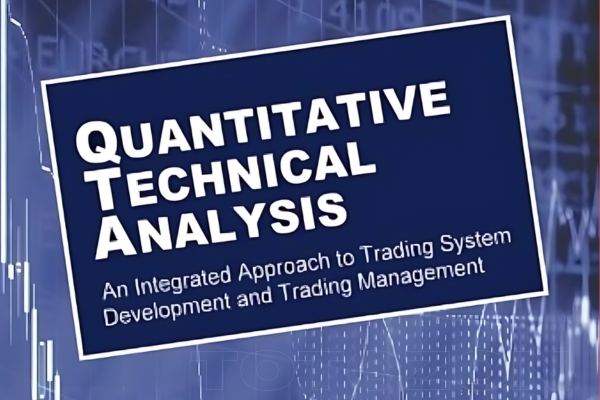 Quantitative Technical Analysis: An integrated approach to trading system development and trading management
1 × $6.00
Quantitative Technical Analysis: An integrated approach to trading system development and trading management
1 × $6.00 -
×
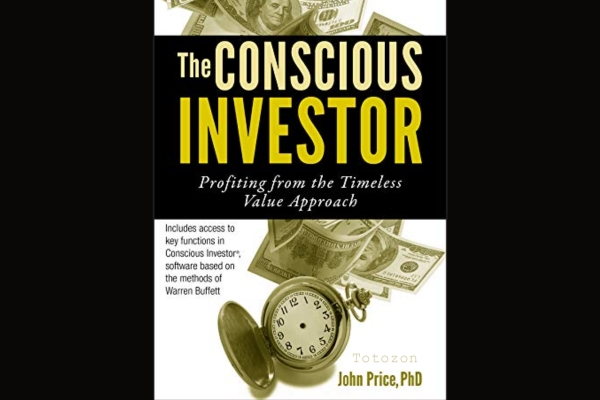 The Conscious Investor: Profiting from the Timeless Value Approach with John Price
1 × $6.00
The Conscious Investor: Profiting from the Timeless Value Approach with John Price
1 × $6.00 -
×
 The Orderflow Masterclass with PrimeTrading
1 × $17.00
The Orderflow Masterclass with PrimeTrading
1 × $17.00 -
×
 The Winning Watch-List with Ryan Mallory
1 × $31.00
The Winning Watch-List with Ryan Mallory
1 × $31.00 -
×
 ZipTraderU 2023 with ZipTrader
1 × $5.00
ZipTraderU 2023 with ZipTrader
1 × $5.00 -
×
 Buy the Fear Sell the Greed
1 × $6.00
Buy the Fear Sell the Greed
1 × $6.00 -
×
 TTM Directional Day Filter System for TS
1 × $6.00
TTM Directional Day Filter System for TS
1 × $6.00 -
×
 Ninja Order Flow Trader (NOFT)
1 × $39.00
Ninja Order Flow Trader (NOFT)
1 × $39.00 -
×
 Trading Short TermSame Day Trades Sep 2023 with Dan Sheridan & Mark Fenton - Sheridan Options Mentoring
1 × $31.00
Trading Short TermSame Day Trades Sep 2023 with Dan Sheridan & Mark Fenton - Sheridan Options Mentoring
1 × $31.00 -
×
 ICT Prodigy Trading Course – $650K in Payouts with Alex Solignani
1 × $15.00
ICT Prodigy Trading Course – $650K in Payouts with Alex Solignani
1 × $15.00 -
×
 Winning Market Systems. 83 Ways to Beat the Market
1 × $6.00
Winning Market Systems. 83 Ways to Beat the Market
1 × $6.00 -
×
 Quantamentals - The Next Great Forefront Of Trading and Investing with Trading Markets
1 × $8.00
Quantamentals - The Next Great Forefront Of Trading and Investing with Trading Markets
1 × $8.00 -
×
 Ultimate Trading Course with Dodgy's Dungeon
1 × $8.00
Ultimate Trading Course with Dodgy's Dungeon
1 × $8.00 -
×
 Turning Losing Forex Trades into Winners: Proven Techniques to Reverse Your Losses with Gerald E.Greene
1 × $6.00
Turning Losing Forex Trades into Winners: Proven Techniques to Reverse Your Losses with Gerald E.Greene
1 × $6.00 -
×
 The Naked Eye: Raw Data Analytics with Edgar Torres - Raw Data Analytics
1 × $8.00
The Naked Eye: Raw Data Analytics with Edgar Torres - Raw Data Analytics
1 × $8.00 -
×
 The Stock Investing Course For Beginners with Matt Dodge
1 × $5.00
The Stock Investing Course For Beginners with Matt Dodge
1 × $5.00 -
×
 Compass Trading System with Right Line Trading
1 × $39.00
Compass Trading System with Right Line Trading
1 × $39.00 -
×
 TTM Indicators Package for eSignal
1 × $6.00
TTM Indicators Package for eSignal
1 × $6.00 -
×
 Essentials in Quantitative Trading QT01 By HangukQuant's
1 × $23.00
Essentials in Quantitative Trading QT01 By HangukQuant's
1 × $23.00 -
×
 GMB Master Academy
1 × $31.00
GMB Master Academy
1 × $31.00 -
×
 Forecast 2024 Clarification with Larry Williams
1 × $15.00
Forecast 2024 Clarification with Larry Williams
1 × $15.00 -
×
 Hit and Run Trading Updated Version with Jeff Cooper
1 × $6.00
Hit and Run Trading Updated Version with Jeff Cooper
1 × $6.00 -
×
 The Mango Trade 2017
1 × $6.00
The Mango Trade 2017
1 × $6.00 -
×
 The Situational Order Flow Trading Course with Mike Valtos
1 × $20.00
The Situational Order Flow Trading Course with Mike Valtos
1 × $20.00 -
×
 Illuminati Trader
1 × $31.00
Illuminati Trader
1 × $31.00 -
×
 Algo Trading Masterclass with Ali Casey - StatOasis
1 × $23.00
Algo Trading Masterclass with Ali Casey - StatOasis
1 × $23.00 -
×
 TheVWAP with Zach Hurwitz
1 × $5.00
TheVWAP with Zach Hurwitz
1 × $5.00 -
×
 Understanding Electronic DayTrading with Carol Troy
1 × $6.00
Understanding Electronic DayTrading with Carol Troy
1 × $6.00 -
×
 Position Dissection with Charles Cottle
1 × $4.00
Position Dissection with Charles Cottle
1 × $4.00 -
×
 The WWA Core Concepts Bootcamp
1 × $6.00
The WWA Core Concepts Bootcamp
1 × $6.00 -
×
 How To Read The Market Professionally with TradeSmart
1 × $27.00
How To Read The Market Professionally with TradeSmart
1 × $27.00 -
×
 Best of the Best: Collars with Amy Meissner & Scott Ruble
1 × $15.00
Best of the Best: Collars with Amy Meissner & Scott Ruble
1 × $15.00
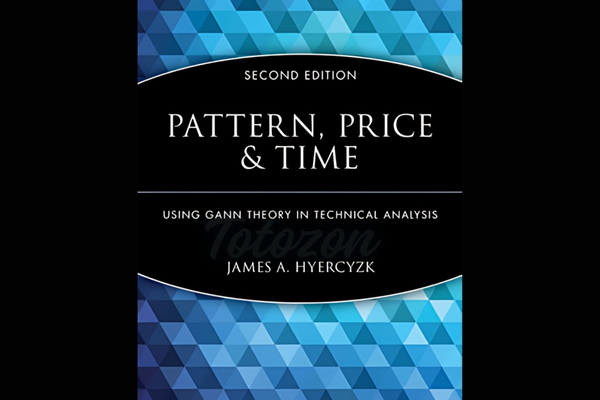
Pattern- Price & Time. Using Gann Theory in Trading Systems (2nd Ed.)
$6.00
File Size: Coming soon!
Delivery Time: 1–12 hours
Media Type: Online Course
Pattern, Price & Time: Using Gann Theory in Trading Systems (2nd Ed.)
Introduction
Welcome to our deep dive into the world of trading using Gann Theory. In this edition, we explore the revised and expanded concepts in the second edition of “Pattern, Price & Time: Using Gann Theory in Trading Systems.” This guide is essential for traders seeking to enhance their market strategies through the timeless techniques developed by W.D. Gann.
What is Gann Theory?
Historical Background
Gann Theory was developed by William Delbert Gann, a finance trader who integrated geometry, astrology, and ancient mathematics into trading. His approach to the markets was based on the premise that certain geometric patterns and angles could predict movements in the financial markets.
Core Concepts of Gann Theory
- The Importance of Angles: Gann emphasized the use of angles in the price-time series chart, which represent a certain speed of price change.
- Pattern Recognition: He believed that price movements followed certain geometric patterns that could be leveraged for predictive purposes.
- Time and Price Equivalence: Gann posited that time and price have a harmonious relationship, which could be decoded to determine future market movements.
Gann Angles: A Tool for Market Forecasting
Gann Angles are a distinctive and essential component of his trading strategy. These angles are drawn on a price chart, representing predetermined rates of price movements.
Constructing Gann Angles
- 1×1 Angle: The 45-degree angle, considered the most crucial, indicates a balance between time and price.
- Other Significant Angles: These include 1×2, 2×1, and others, each representing different market strengths or weaknesses.
Using Gann Angles Effectively
To use Gann Angles, traders need to correctly set up their charts and understand the context in which these angles provide predictive value.
Gann Square of Nine: Another Essential Tool
The Gann Square is a complex table used for determining time and price alignments. It is particularly useful in identifying key support and resistance levels.
Application in Trading
Using the Square of Nine involves aligning it with a particular price on the chart and decoding the angles to predict future price action.
Integrating Gann Theory in Modern Trading Systems
While Gann’s methods might seem esoteric, they are incredibly relevant. Here’s how modern traders can integrate these theories:
Software and Technology
Many trading platforms now offer tools specifically designed to implement Gann’s methods, such as angle calculators and pattern layout tools.
Combining with Other Strategies
Gann’s techniques are often used in conjunction with other trading systems to validate strategies or refine entry and exit points.
Challenges and Limitations
While promising, Gann’s theories require an understanding of a broad range of disciplines, including complex mathematics and astrology. Traders should be aware of these challenges and seek to understand the underlying principles thoroughly.
Conclusion
Gann Theory remains a fascinating area within the trading world, offering unique insights into price and time dynamics. By understanding and applying Gann’s principles, traders can unlock new dimensions in their trading strategies, potentially leading to more informed and successful market decisions.
FAQs
- What is the Gann Theory?
- Gann Theory is a trading approach that combines geometric patterns, astrology, and ancient mathematics to predict market movements.
- How do Gann Angles work?
- Gann Angles are drawn on charts to represent specific rates of price change, used to predict support and resistance levels.
- Can Gann Theory be used for all types of trading?
- Yes, Gann Theory can be adapted for different trading markets, including stocks, commodities, and forex.
- Is special software required to use Gann Theory?
- While not mandatory, specialized software can help traders more accurately implement Gann’s methods.
- What are the challenges of using Gann Theory?
- The main challenges include the complexity of the concepts and the need for a broad understanding of multiple disciplines.
Be the first to review “Pattern- Price & Time. Using Gann Theory in Trading Systems (2nd Ed.)”
You must be logged in to post a review.
Related products

Original price was: $497.00.$31.00Current price is: $31.00.

Forex Trading
Original price was: $1,898.00.$10.00Current price is: $10.00.

Forex Trading
Original price was: $2,997.00.$23.00Current price is: $23.00.

Original price was: $695.00.$41.00Current price is: $41.00.
Forex Trading
Original price was: $797.00.$10.00Current price is: $10.00.

Original price was: $139.00.$23.00Current price is: $23.00.

Original price was: $1,200.00.$23.00Current price is: $23.00.
Forex Trading
Original price was: $125.00.$17.00Current price is: $17.00.
Forex Trading
Original price was: $249.00.$15.00Current price is: $15.00.
Original price was: $997.00.$8.00Current price is: $8.00.

Forex Trading
Original price was: $697.00.$5.00Current price is: $5.00.
Forex Trading
Original price was: $1,098.00.$39.00Current price is: $39.00.

Original price was: $450.00.$23.00Current price is: $23.00.

Forex Trading
Original price was: $550.00.$5.00Current price is: $5.00.
Forex Trading
Original price was: $4,997.00.$27.00Current price is: $27.00.
Forex Trading
The Complete Guide to Multiple Time Frame Analysis & Reading Price Action with Aiman Almansoori
Original price was: $1,399.00.$13.00Current price is: $13.00.
Original price was: $799.00.$15.00Current price is: $15.00.

Original price was: $4,995.00.$15.00Current price is: $15.00.

Original price was: $497.00.$11.00Current price is: $11.00.

Original price was: $197.00.$5.00Current price is: $5.00.
Reviews
There are no reviews yet.