
-
×
 Butterfly and Condor Workshop with Aeromir
1 × $15.00
Butterfly and Condor Workshop with Aeromir
1 × $15.00 -
×
 High Probability Trading Using Elliott Wave And Fibonacci Analysis withVic Patel - Forex Training Group
1 × $10.00
High Probability Trading Using Elliott Wave And Fibonacci Analysis withVic Patel - Forex Training Group
1 × $10.00 -
×
 The Indices Orderflow Masterclass with The Forex Scalpers
1 × $23.00
The Indices Orderflow Masterclass with The Forex Scalpers
1 × $23.00 -
×
 TradeCraft: Your Path to Peak Performance Trading By Adam Grimes
1 × $15.00
TradeCraft: Your Path to Peak Performance Trading By Adam Grimes
1 × $15.00 -
×
 The Best Option Trading Course with David Jaffee - Best Stock Strategy
1 × $15.00
The Best Option Trading Course with David Jaffee - Best Stock Strategy
1 × $15.00 -
×
 Bond Market Course with The Macro Compass
1 × $15.00
Bond Market Course with The Macro Compass
1 × $15.00 -
×
 AI For Traders with Trading Markets
1 × $31.00
AI For Traders with Trading Markets
1 × $31.00 -
×
 Deep Dive Butterfly Trading Strategy Class with SJG Trades
1 × $41.00
Deep Dive Butterfly Trading Strategy Class with SJG Trades
1 × $41.00 -
×
 2016 Chicago Annual Options Seminar with Dan Sheridan
1 × $23.00
2016 Chicago Annual Options Seminar with Dan Sheridan
1 × $23.00 -
×
 The Trading Blueprint with Brad Goh - The Trading Geek
1 × $5.00
The Trading Blueprint with Brad Goh - The Trading Geek
1 × $5.00 -
×
 Ultimate Trading Course with Dodgy's Dungeon
1 × $8.00
Ultimate Trading Course with Dodgy's Dungeon
1 × $8.00 -
×
 SQX Mentorship with Tip Toe Hippo
1 × $23.00
SQX Mentorship with Tip Toe Hippo
1 × $23.00 -
×
 Algo Trading Masterclass with Ali Casey - StatOasis
1 × $23.00
Algo Trading Masterclass with Ali Casey - StatOasis
1 × $23.00 -
×
 Best of the Best: Collars with Amy Meissner & Scott Ruble
1 × $15.00
Best of the Best: Collars with Amy Meissner & Scott Ruble
1 × $15.00

Forex Trading Secrets. Trading Strategies for the Forex Market
$6.00
File Size: Coming soon!
Delivery Time: 1–12 hours
Media Type: Online Course
Content Proof: Watch Here!
You may check content proof of “Forex Trading Secrets. Trading Strategies for the Forex Market” below:
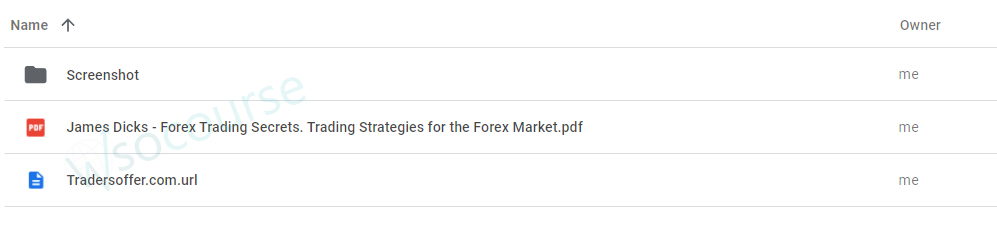
Forex Trading Secrets: Trading Strategies for the Forex Market
The Forex market, often referred to as the foreign exchange market, is the world’s largest and most liquid financial market. Whether you’re a seasoned trader or a novice, understanding the secrets and strategies of Forex trading can be the key to your success. In this article, we will explore various Forex trading secrets and strategies to help you navigate this dynamic market.
Understanding the Forex Market
What is Forex Trading?
Forex trading involves buying and selling currencies to profit from changes in exchange rates. Unlike other markets, Forex operates 24 hours a day, five days a week, allowing for continuous trading opportunities.
How the Forex Market Works
The Forex market is decentralized, meaning it operates without a central exchange. Instead, trading occurs directly between participants via electronic networks. Major participants include banks, financial institutions, corporations, governments, and individual traders.
Essential Forex Trading Concepts
Currency Pairs
Currencies are traded in pairs, such as EUR/USD or GBP/JPY. The first currency in the pair is the base currency, and the second is the quote currency. The exchange rate tells you how much of the quote currency you need to buy one unit of the base currency.
Pips and Lots
- Pips: The smallest price move that a given exchange rate can make. It is usually the fourth decimal place in most currency pairs.
- Lots: Standardized units of currency traded in Forex. A standard lot is 100,000 units of the base currency.
Leverage and Margin
- Leverage: Allows traders to control a large position with a relatively small amount of money. While leverage can amplify profits, it can also increase losses.
- Margin: The amount of money required to open a leveraged position. It acts as a security deposit to cover potential losses.
Top Forex Trading Strategies
1. Scalping
Scalping involves making numerous small trades to capture minor price movements. This strategy requires quick decision-making and a strong understanding of market behavior.
2. Day Trading
Day trading involves opening and closing trades within the same trading day. This strategy aims to profit from short-term price movements and avoid overnight risks.
3. Swing Trading
Swing traders hold positions for several days or weeks, aiming to profit from price swings. This strategy relies on technical analysis to identify entry and exit points.
4. Position Trading
Position trading is a long-term strategy where traders hold positions for months or even years. This approach is based on fundamental analysis and long-term market trends.
5. Trend Following
Trend following involves identifying and trading in the direction of market trends. Traders use technical indicators to determine the strength and direction of trends.
6. Counter-Trend Trading
Counter-trend trading involves taking positions against the prevailing market trend. This strategy aims to profit from market corrections and reversals.
7. Breakout Trading
Breakout trading involves entering a position when the price breaks through a significant support or resistance level. This strategy capitalizes on increased volatility following a breakout.
8. Range Trading
Range trading involves identifying and trading within a price range. Traders buy at the lower boundary (support) and sell at the upper boundary (resistance) of the range.
Advanced Forex Trading Techniques
1. Technical Analysis
Technical analysis involves using charts and indicators to analyze price movements and predict future trends. Popular indicators include moving averages, RSI, MACD, and Bollinger Bands.
2. Fundamental Analysis
Fundamental analysis involves evaluating economic, financial, and political factors that influence currency prices. Key indicators include GDP, interest rates, and employment data.
3. Sentiment Analysis
Sentiment analysis involves gauging market sentiment to predict price movements. Traders use tools like the Commitment of Traders (COT) report to assess market positioning.
Risk Management in Forex Trading
1. Setting Stop-Loss Orders
A stop-loss order automatically closes a trade when the price reaches a predetermined level, limiting potential losses.
2. Using Take-Profit Orders
A take-profit order closes a trade when the price reaches a specified profit level, ensuring that gains are realized.
3. Diversifying Your Portfolio
Diversification involves spreading investments across various assets to reduce risk. In Forex, this can mean trading multiple currency pairs.
4. Managing Leverage
Using leverage responsibly is crucial. Traders should understand the risks and avoid over-leveraging their positions.
Developing a Forex Trading Plan
1. Setting Clear Goals
Define your trading goals, including profit targets and risk tolerance. Having clear objectives helps guide your trading decisions.
2. Keeping a Trading Journal
A trading journal helps track your trades, analyze performance, and identify areas for improvement. Record details such as entry and exit points, trade size, and outcomes.
3. Continuous Learning
The Forex market is constantly evolving. Stay informed about market news, trends, and developments to adapt your strategies accordingly.
Conclusion
Mastering Forex trading secrets and strategies requires time, practice, and a commitment to learning. By understanding the market, employing effective strategies, and managing risk, you can enhance your chances of success in the Forex market.
FAQs
1. What is the best Forex trading strategy for beginners?
For beginners, day trading and swing trading are often recommended due to their shorter time frames and lower risks compared to long-term strategies.
2. How much capital do I need to start Forex trading?
The amount of capital needed varies, but it’s advisable to start with at least $500 to $1,000 to allow for adequate risk management and trading flexibility.
3. Can I trade Forex part-time?
Yes, many traders start part-time, gradually increasing their trading activity as they gain experience and confidence in their strategies.
4. What is the role of a Forex broker?
A Forex broker acts as an intermediary between traders and the Forex market, providing access to trading platforms, tools, and market data.
5. How can I improve my Forex trading skills?
Continuous learning, practice, and analysis are key. Utilize educational resources, stay updated with market news, and regularly review your trading performance.
Be the first to review “Forex Trading Secrets. Trading Strategies for the Forex Market”
You must be logged in to post a review.
Related products
Forex Trading
Original price was: $499.00.$15.00Current price is: $15.00.
Original price was: $450.00.$23.00Current price is: $23.00.

Original price was: $197.00.$5.00Current price is: $5.00.

Original price was: $1,800.00.$54.00Current price is: $54.00.

Original price was: $895.00.$15.00Current price is: $15.00.
Original price was: $695.00.$41.00Current price is: $41.00.

Original price was: $649.00.$20.00Current price is: $20.00.
Forex Trading
Original price was: $2,000.00.$23.00Current price is: $23.00.

Forex Trading
Original price was: $125.00.$17.00Current price is: $17.00.
Original price was: $799.00.$15.00Current price is: $15.00.

Forex Trading
Original price was: $500.00.$5.00Current price is: $5.00.

Original price was: $497.00.$11.00Current price is: $11.00.
Forex Trading
Original price was: $797.00.$10.00Current price is: $10.00.

Forex Trading
Original price was: $1,098.00.$39.00Current price is: $39.00.

Original price was: $999.00.$5.00Current price is: $5.00.

Original price was: $139.00.$23.00Current price is: $23.00.
Forex Trading
Original price was: $2,997.00.$23.00Current price is: $23.00.

Original price was: $1,200.00.$23.00Current price is: $23.00.

Original price was: $310.00.$23.00Current price is: $23.00.
Forex Trading
Original price was: $697.00.$5.00Current price is: $5.00.

Reviews
There are no reviews yet.