
-
×
 Simple Methods for Detecting Buying and Selling Points in Securities with James Liveright
1 × $6.00
Simple Methods for Detecting Buying and Selling Points in Securities with James Liveright
1 × $6.00 -
×
 Chart Analysis Boot Camp Course Webinar with Mike Albright
1 × $6.00
Chart Analysis Boot Camp Course Webinar with Mike Albright
1 × $6.00 -
×
 Indicator Effectiveness Testing & System Creation with David Vomund
1 × $6.00
Indicator Effectiveness Testing & System Creation with David Vomund
1 × $6.00 -
×
 Passages To Profitability: A Comprehensive Guide To Channel Trading with Professor Jeff Bierman, CMT
1 × $6.00
Passages To Profitability: A Comprehensive Guide To Channel Trading with Professor Jeff Bierman, CMT
1 × $6.00 -
×
 Advanced Ichimoku Kinkō Hyō - Ichimoku Cloud Strategy with Rafał Zuchowicz - TopMasterTrader
1 × $17.00
Advanced Ichimoku Kinkō Hyō - Ichimoku Cloud Strategy with Rafał Zuchowicz - TopMasterTrader
1 × $17.00 -
×
 Spotting Solid Short-Term Opportunities
1 × $6.00
Spotting Solid Short-Term Opportunities
1 × $6.00 -
×
 Yarimi University Course
1 × $56.00
Yarimi University Course
1 × $56.00 -
×
 Lazy Emini Trader Master Class
1 × $15.00
Lazy Emini Trader Master Class
1 × $15.00 -
×
 Compound Stock Earnings Advanced Charting (Video 1.19 GB)
1 × $15.00
Compound Stock Earnings Advanced Charting (Video 1.19 GB)
1 × $15.00 -
×
 Small Account Options Trading Workshop Package with Doc Severson
1 × $6.00
Small Account Options Trading Workshop Package with Doc Severson
1 × $6.00 -
×
 0 DTE Options Trading Workshop with Aeromir Corporation
1 × $15.00
0 DTE Options Trading Workshop with Aeromir Corporation
1 × $15.00 -
×
 Speculating with Futures and Traditional Commodities Part II (Liverpool Group) - Noble DraKoln
1 × $6.00
Speculating with Futures and Traditional Commodities Part II (Liverpool Group) - Noble DraKoln
1 × $6.00 -
×
 What Ranks Schema Course with Clint Butler
1 × $23.00
What Ranks Schema Course with Clint Butler
1 × $23.00 -
×
 Freedom Challenge Course with Steven Dux
1 × $5.00
Freedom Challenge Course with Steven Dux
1 × $5.00 -
×
 How To Buy with Justin Mamis
1 × $6.00
How To Buy with Justin Mamis
1 × $6.00 -
×
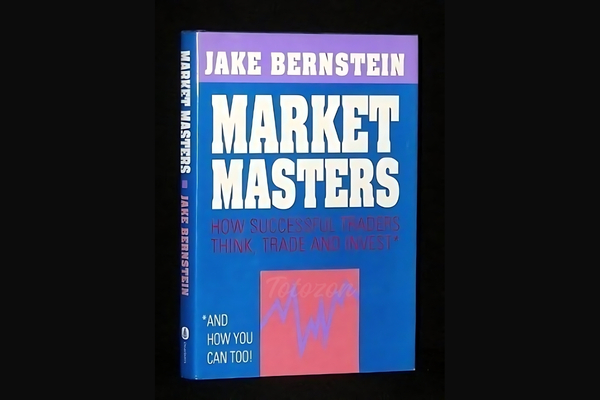 Market Masters. How Traders Think Trade And Invest with Jake Bernstein
1 × $6.00
Market Masters. How Traders Think Trade And Invest with Jake Bernstein
1 × $6.00 -
×
 The Naked Eye: Raw Data Analytics with Edgar Torres - Raw Data Analytics
1 × $8.00
The Naked Eye: Raw Data Analytics with Edgar Torres - Raw Data Analytics
1 × $8.00 -
×
 Street-Smart Chart Reading – Volume 2 – Digging Deeper with Donald G.Worden
1 × $6.00
Street-Smart Chart Reading – Volume 2 – Digging Deeper with Donald G.Worden
1 × $6.00 -
×
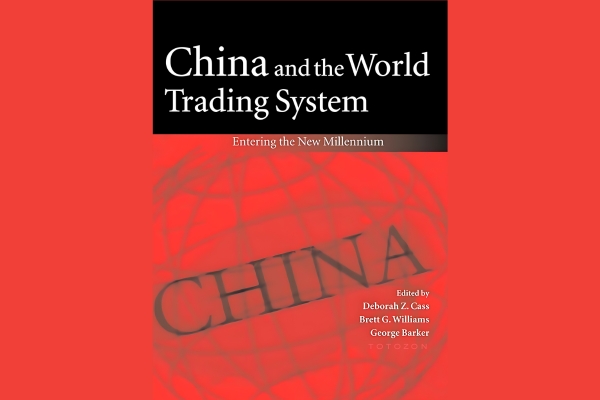 China & the World Trading System with Deborah Cass, Brett Williams & George Barker
1 × $6.00
China & the World Trading System with Deborah Cass, Brett Williams & George Barker
1 × $6.00 -
×
 Art & Science of Trend Trading Class with Jeff Bierman
1 × $6.00
Art & Science of Trend Trading Class with Jeff Bierman
1 × $6.00 -
×
 Making Sense of Price Action: Price Action Profits with Scott Foster
1 × $54.00
Making Sense of Price Action: Price Action Profits with Scott Foster
1 × $54.00 -
×
 Commodities Rising: The Reality Behind the Hype and How To Really Profit in the Commodities Market - Jeffrey Christian
1 × $6.00
Commodities Rising: The Reality Behind the Hype and How To Really Profit in the Commodities Market - Jeffrey Christian
1 × $6.00 -
×
 Option Insanity Strategy with PDS Trader
1 × $69.00
Option Insanity Strategy with PDS Trader
1 × $69.00 -
×
 TRADING NFX Course with Andrew NFX
1 × $5.00
TRADING NFX Course with Andrew NFX
1 × $5.00 -
×
 W. D Gann 's Square Of 9 Applied To Modern Markets with Sean Avidar - Hexatrade350
1 × $23.00
W. D Gann 's Square Of 9 Applied To Modern Markets with Sean Avidar - Hexatrade350
1 × $23.00 -
×
 Investing In KLSE Stocks and Futures With Japanese Candlestick with Fred Tam
1 × $6.00
Investing In KLSE Stocks and Futures With Japanese Candlestick with Fred Tam
1 × $6.00 -
×
 White Phoenix’s The Smart (Money) Approach to Trading with Jayson Casper
1 × $39.00
White Phoenix’s The Smart (Money) Approach to Trading with Jayson Casper
1 × $39.00 -
×
 Pit Bull with Martin Schwartz
1 × $6.00
Pit Bull with Martin Schwartz
1 × $6.00 -
×
 Alexander Elder Full Courses Package
1 × $6.00
Alexander Elder Full Courses Package
1 × $6.00 -
×
 Trading Mindset, and Three Steps To Profitable Trading with Bruce Banks
1 × $6.00
Trading Mindset, and Three Steps To Profitable Trading with Bruce Banks
1 × $6.00 -
×
 The Orderflow Masterclass with PrimeTrading
1 × $17.00
The Orderflow Masterclass with PrimeTrading
1 × $17.00 -
×
 LARGE CAP MOMENTUM STRATEGY with Nick Radge
1 × $179.00
LARGE CAP MOMENTUM STRATEGY with Nick Radge
1 × $179.00 -
×
 ICT Prodigy Trading Course – $650K in Payouts with Alex Solignani
1 × $15.00
ICT Prodigy Trading Course – $650K in Payouts with Alex Solignani
1 × $15.00

Forecast for 2010 with Larry Williams
$6.00
File Size: Coming soon!
Delivery Time: 1–12 hours
Media Type: Online Course
Content Proof: Watch Here!
You may check content proof of “Forecast for 2010 with Larry Williams” below:
Forecast for 2010 with Larry Williams
Predicting market trends is a challenging yet essential part of investing. Larry Williams, a renowned trader and market analyst, provides valuable insights into what we can expect in 2010. His analysis combines historical data, market sentiment, and technical indicators to forecast market movements. In this article, we delve into Williams’ predictions and explore how you can leverage them for successful trading.
Understanding Larry Williams’ Approach
Who is Larry Williams?
Larry Williams is a veteran trader known for his innovative trading strategies and market forecasting. With decades of experience, he has developed methods that consistently provide valuable market insights.
The Core Philosophy
Williams’ forecasting approach is rooted in technical analysis, historical patterns, and market sentiment. His goal is to identify key trends and turning points in the market.
Key Predictions for 2010
Economic Recovery
Williams predicts a gradual economic recovery in 2010 following the global financial crisis of 2008-2009. This recovery is expected to be driven by increased consumer spending and business investments.
Stock Market Trends
Bullish Sentiment
Williams forecasts a bullish trend in the stock market for 2010. He anticipates that major indices will see significant gains, driven by improved economic conditions and investor confidence.
Key Sectors to Watch
- Technology: Innovations and increased spending in tech will drive growth.
- Healthcare: Aging populations and advancements in medical technology will boost this sector.
- Energy: Renewable energy investments will continue to rise.
Commodity Markets
Gold
Williams expects gold prices to remain strong, driven by continued economic uncertainty and inflation concerns. Gold will remain a safe haven for investors.
Oil
Oil prices are predicted to stabilize, with modest gains expected as global demand recovers. However, volatility will persist due to geopolitical factors.
Interest Rates
Williams anticipates that interest rates will remain low throughout 2010 as central banks aim to support economic recovery. This will encourage borrowing and investment.
Technical Analysis Insights
Historical Patterns
Williams emphasizes the importance of historical patterns in forecasting. He looks at past market cycles to predict future movements.
Seasonal Trends
- January Effect: Stocks tend to perform well in January as investors reinvest year-end profits.
- Sell in May and Go Away: This adage suggests that markets often see lower performance during the summer months.
Sentiment Indicators
Understanding market sentiment is crucial for forecasting. Williams uses various sentiment indicators to gauge investor confidence and predict market trends.
Volatility Index (VIX)
The VIX, also known as the fear index, measures market volatility. A high VIX indicates increased market fear, while a low VIX suggests complacency.
Commitment of Traders (COT) Report
The COT report provides insights into the positions of large market participants. Williams uses this data to predict market turning points.
Proprietary Indicators
Williams has developed proprietary indicators that enhance his forecasting accuracy. These tools help identify trends and potential reversals.
Williams %R
Williams %R is a momentum indicator that measures overbought and oversold conditions. It helps predict potential market reversals.
Seasonal Patterns
Williams’ seasonal patterns tool identifies times of the year when markets historically perform well or poorly.
Practical Applications of Williams’ Forecast
Investment Strategies
Leverage Williams’ predictions to inform your investment strategies. Focus on sectors and assets with strong growth potential in 2010.
Diversification
Diversify your portfolio across different sectors and asset classes to mitigate risk and capture potential gains.
Risk Management
Implement risk management strategies to protect your investments. Use stop-loss orders and adjust your portfolio based on market conditions.
Stop-Loss Orders
Stop-loss orders help limit losses by automatically selling a security when it reaches a predetermined price.
Regular Monitoring
Regularly monitor your investments and adjust your strategies as needed based on new information and market conditions.
Common Mistakes to Avoid
Ignoring Market Sentiment
Ignoring market sentiment can lead to missed opportunities or unexpected losses. Always consider sentiment indicators in your analysis.
Overreliance on a Single Indicator
Relying too heavily on one indicator can lead to biased decisions. Use a combination of tools and analysis methods for a comprehensive view.
Failing to Manage Risk
Effective risk management is crucial for long-term success. Always use stop-loss orders and diversify your portfolio to mitigate risks.
Conclusion
Larry Williams’ forecast for 2010 provides valuable insights into potential market trends and investment opportunities. By understanding his predictions and applying them to your trading strategies, you can enhance your chances of success. Stay informed, manage your risks, and continuously refine your approach to navigate the markets effectively in 2010.

FAQs
1. Who is Larry Williams?
- Larry Williams is a renowned trader and market analyst known for his innovative trading strategies and market forecasts.
2. What are the key predictions for the stock market in 2010?
- Williams forecasts a bullish trend in the stock market, with significant gains expected in technology, healthcare, and energy sectors.
3. How can I use Larry Williams’ forecast to improve my trading?
- Leverage his predictions to inform your investment strategies, diversify your portfolio, and implement risk management techniques.
4. Why is market sentiment important in forecasting?
- Market sentiment provides insights into investor confidence and overall market mood, influencing stock movements.
5. What are some common mistakes to avoid in trading?
- Avoid ignoring market sentiment, overrelying on a single indicator, and failing to manage risk effectively.
Be the first to review “Forecast for 2010 with Larry Williams”
You must be logged in to post a review.
Related products
Original price was: $997.00.$8.00Current price is: $8.00.

Forex Trading
Original price was: $697.00.$5.00Current price is: $5.00.

Forex Trading
Original price was: $850.00.$23.00Current price is: $23.00.

Original price was: $649.00.$20.00Current price is: $20.00.

Forex Trading
Original price was: $1,098.00.$39.00Current price is: $39.00.

Original price was: $450.00.$23.00Current price is: $23.00.

Forex Trading
Original price was: $499.00.$15.00Current price is: $15.00.

Forex Trading
Quantamentals – The Next Great Forefront Of Trading and Investing with Trading Markets
Original price was: $1,495.00.$8.00Current price is: $8.00.
Forex Trading
Original price was: $999.00.$15.00Current price is: $15.00.

Forex Trading
Original price was: $797.00.$10.00Current price is: $10.00.
Original price was: $2,120.00.$15.00Current price is: $15.00.

Forex Trading
Original price was: $397.00.$31.00Current price is: $31.00.

Forex Trading
Original price was: $4,997.00.$27.00Current price is: $27.00.

Original price was: $197.00.$5.00Current price is: $5.00.

Original price was: $997.00.$13.00Current price is: $13.00.
Forex Trading
Original price was: $500.00.$5.00Current price is: $5.00.

Forex Trading
Original price was: $799.00.$15.00Current price is: $15.00.
Forex Trading
Original price was: $125.00.$17.00Current price is: $17.00.

Forex Trading
Original price was: $1,898.00.$10.00Current price is: $10.00.
Original price was: $139.00.$23.00Current price is: $23.00.

Reviews
There are no reviews yet.