
-
×
 Trading Full Circle the Complete Underground Trader System for Timing with Jea Yu
1 × $6.00
Trading Full Circle the Complete Underground Trader System for Timing with Jea Yu
1 × $6.00 -
×
 The Risk-Wise Investor: How to Better Understand and Manage Risk with Michael Carpenter
1 × $6.00
The Risk-Wise Investor: How to Better Understand and Manage Risk with Michael Carpenter
1 × $6.00 -
×
 Neowave. Inovations that Make Elliott Wave Work Better for You with Glenn Neely
1 × $6.00
Neowave. Inovations that Make Elliott Wave Work Better for You with Glenn Neely
1 × $6.00 -
×
 Fibonacci Trading: How to Master the Time and Price Advantage with Carolyn Boroden
1 × $6.00
Fibonacci Trading: How to Master the Time and Price Advantage with Carolyn Boroden
1 × $6.00 -
×
 Trading Day By Day & Code (chickgoslin.com) with Chick Goslin
1 × $6.00
Trading Day By Day & Code (chickgoslin.com) with Chick Goslin
1 × $6.00 -
×
 Advanced Forex Patterns with Vic Noble & Darko Ali
1 × $39.00
Advanced Forex Patterns with Vic Noble & Darko Ali
1 × $39.00 -
×
 Value, Price & Profit with Karl Marx
1 × $6.00
Value, Price & Profit with Karl Marx
1 × $6.00 -
×
 Portfolio Management in Practice with Christine Brentani
1 × $6.00
Portfolio Management in Practice with Christine Brentani
1 × $6.00 -
×
 News Profiteer System Manual & Members Area Videos with Henry Liu
1 × $6.00
News Profiteer System Manual & Members Area Videos with Henry Liu
1 × $6.00 -
×
 How to Find a Trading Strategy with Mike Baehr
1 × $124.00
How to Find a Trading Strategy with Mike Baehr
1 × $124.00 -
×
 WondaFX Signature Strategy with WondaFX
1 × $5.00
WondaFX Signature Strategy with WondaFX
1 × $5.00 -
×
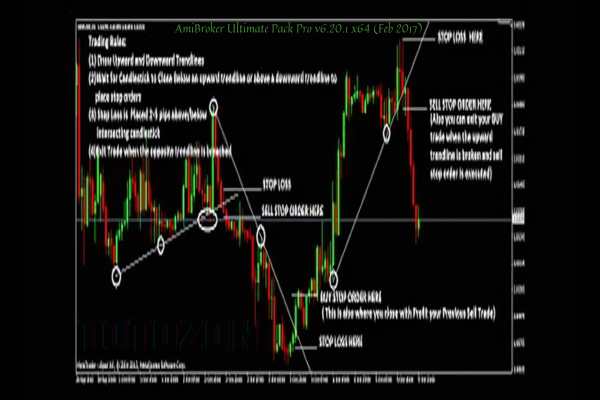 AmiBroker Ultimate Pack Pro v6.20.1 x64 (Feb 2017)
1 × $6.00
AmiBroker Ultimate Pack Pro v6.20.1 x64 (Feb 2017)
1 × $6.00 -
×
 Pattern Cycles with Alan Farley
1 × $6.00
Pattern Cycles with Alan Farley
1 × $6.00 -
×
 Getting Started With Options with Peter Titus - Marwood Research
1 × $6.00
Getting Started With Options with Peter Titus - Marwood Research
1 × $6.00 -
×
 Value Investing King of Trading Methods in the Commodity Markets - Hal Masover
1 × $6.00
Value Investing King of Trading Methods in the Commodity Markets - Hal Masover
1 × $6.00 -
×
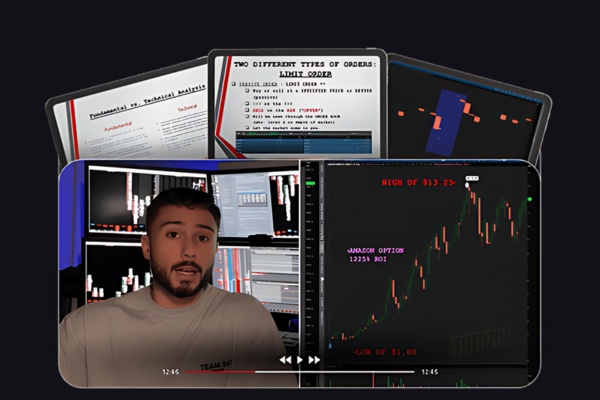 A-Z Course with InvestiTrade Academy
1 × $5.00
A-Z Course with InvestiTrade Academy
1 × $5.00 -
×
 The Practical Handbook of Genetic Algorithms with Lance Chambers
1 × $6.00
The Practical Handbook of Genetic Algorithms with Lance Chambers
1 × $6.00 -
×
 Market Maps. High Probability Trading Techniques with Timothy Morge
1 × $6.00
Market Maps. High Probability Trading Techniques with Timothy Morge
1 × $6.00 -
×
 All Time High Trading Course with TRADEVERSITY
1 × $5.00
All Time High Trading Course with TRADEVERSITY
1 × $5.00 -
×
 Advanced Management Strategies - Home Study with Pristine Capital
1 × $27.00
Advanced Management Strategies - Home Study with Pristine Capital
1 × $27.00 -
×
 Advanced Trading Course with John Person
1 × $6.00
Advanced Trading Course with John Person
1 × $6.00 -
×
 Sniper Entry Course with ALGOHUB
1 × $5.00
Sniper Entry Course with ALGOHUB
1 × $5.00 -
×
 0 DTE Options Trading Workshop with Aeromir Corporation
1 × $15.00
0 DTE Options Trading Workshop with Aeromir Corporation
1 × $15.00 -
×
 Advanced Risk Reversals and Rolling Thunder with Stratagem Trade
1 × $54.00
Advanced Risk Reversals and Rolling Thunder with Stratagem Trade
1 × $54.00 -
×
 Algo Wizard Essentials Course with Srategy Quant
1 × $13.00
Algo Wizard Essentials Course with Srategy Quant
1 × $13.00 -
×
 Dan Dowd Trading
1 × $5.00
Dan Dowd Trading
1 × $5.00 -
×
 Tradacc – The Volume Profile Formula + Futures Masterclass and Rapid Setups Pack + S&P 500 Secrets Bundle - Aaron Korbs
1 × $5.00
Tradacc – The Volume Profile Formula + Futures Masterclass and Rapid Setups Pack + S&P 500 Secrets Bundle - Aaron Korbs
1 × $5.00 -
×
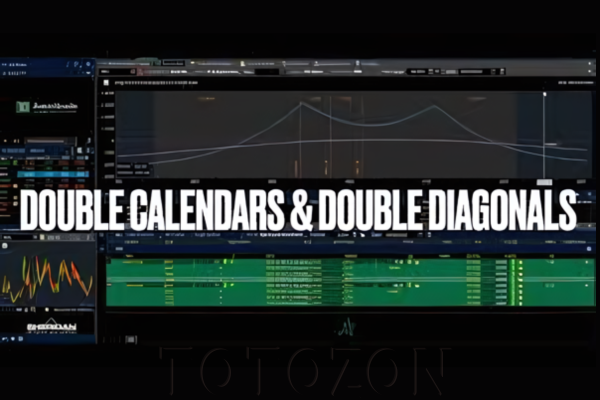 Double Calendars & Double Diagonals 2022 with Sheridan Options Mentoring
1 × $109.00
Double Calendars & Double Diagonals 2022 with Sheridan Options Mentoring
1 × $109.00 -
×
 Advanced Spread Trading with Guy Bower - MasterClass Trader
1 × $15.00
Advanced Spread Trading with Guy Bower - MasterClass Trader
1 × $15.00 -
×
 The Sweep Show with Scott Pulcini Trader
1 × $23.00
The Sweep Show with Scott Pulcini Trader
1 × $23.00 -
×
 ASFX Advanced Divergence Training Course & VIP Chat
1 × $39.00
ASFX Advanced Divergence Training Course & VIP Chat
1 × $39.00 -
×
 Day Trading and Swing Trading the Currency Market with Kathy Lien
1 × $6.00
Day Trading and Swing Trading the Currency Market with Kathy Lien
1 × $6.00 -
×
 Mars Vesta Cycle in Stocks Markets (Article) with Bill Meridian
1 × $6.00
Mars Vesta Cycle in Stocks Markets (Article) with Bill Meridian
1 × $6.00 -
×
 Strategies for Profiting on Every Trade: Simple Lessons for Mastering the Market with Oliver L. Velez
1 × $6.00
Strategies for Profiting on Every Trade: Simple Lessons for Mastering the Market with Oliver L. Velez
1 × $6.00 -
×
 Trading Options at Expiration: Strategies and Models for Winning the Endgame with Jeff Augen
1 × $6.00
Trading Options at Expiration: Strategies and Models for Winning the Endgame with Jeff Augen
1 × $6.00 -
×
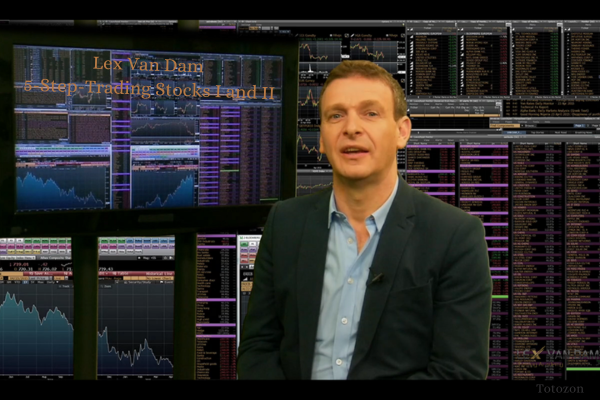 5-Step-Trading Stocks I and II with Lex Van Dam
1 × $4.00
5-Step-Trading Stocks I and II with Lex Van Dam
1 × $4.00 -
×
 Advanced Trader with Nikos Trading Academy
1 × $5.00
Advanced Trader with Nikos Trading Academy
1 × $5.00 -
×
 Applications of Abstract Algebra with Maple - Richard E.Kline, Neil Sigmon, Ernst Stitzinger
1 × $6.00
Applications of Abstract Algebra with Maple - Richard E.Kline, Neil Sigmon, Ernst Stitzinger
1 × $6.00 -
×
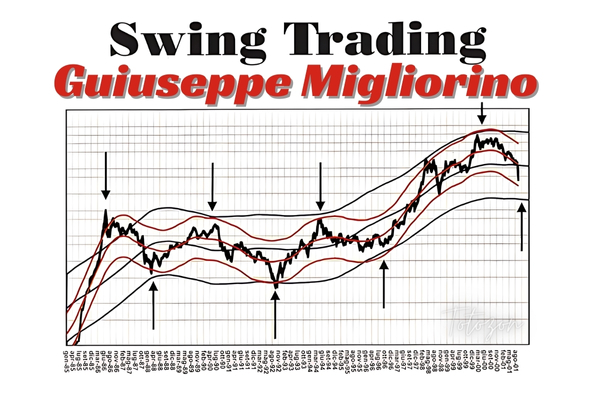 Swing Trading (Italian) with Guiuseppe Migliorino
1 × $6.00
Swing Trading (Italian) with Guiuseppe Migliorino
1 × $6.00 -
×
 Perfect Publishing System Elite with Johnny Andrews
1 × $6.00
Perfect Publishing System Elite with Johnny Andrews
1 × $6.00 -
×
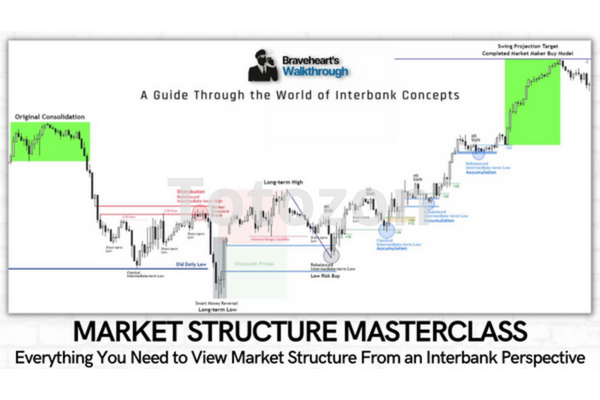 Market Structure Masterclass with Braveheart Trading
1 × $5.00
Market Structure Masterclass with Braveheart Trading
1 × $5.00 -
×
 Beginner's Guide to Ratio Butterflys Class with Don Kaufman
1 × $6.00
Beginner's Guide to Ratio Butterflys Class with Don Kaufman
1 × $6.00 -
×
 ABC Waves TOS Indicator & Live Class with Simpler Options
1 × $6.00
ABC Waves TOS Indicator & Live Class with Simpler Options
1 × $6.00 -
×
 Alternative Beta Strategies & Hedge Fund Replication with Lars Jaeger & Jeffrey Pease
1 × $6.00
Alternative Beta Strategies & Hedge Fund Replication with Lars Jaeger & Jeffrey Pease
1 × $6.00 -
×
 Trading With an Edge with Bruce Gilmore
1 × $6.00
Trading With an Edge with Bruce Gilmore
1 × $6.00 -
×
 Crash or Correction - Top 5 Patterns Every Trader Must Master with Todd Gordon
1 × $6.00
Crash or Correction - Top 5 Patterns Every Trader Must Master with Todd Gordon
1 × $6.00 -
×
 Advanced Forex Mastery Course with Alpha Forex Global
1 × $5.00
Advanced Forex Mastery Course with Alpha Forex Global
1 × $5.00 -
×
 Carter FX 2.0 with CFX University
1 × $5.00
Carter FX 2.0 with CFX University
1 × $5.00 -
×
 TC Top & Bottom Finder with Trader Confident
1 × $93.00
TC Top & Bottom Finder with Trader Confident
1 × $93.00 -
×
 A Non-Random Walk Down Wall Street with Andrew W.Lo
1 × $6.00
A Non-Random Walk Down Wall Street with Andrew W.Lo
1 × $6.00 -
×
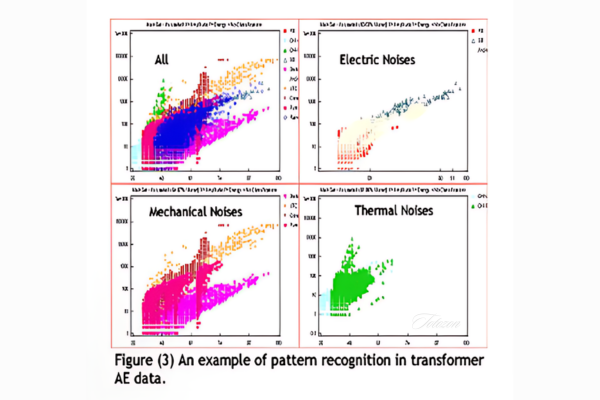 Advanced Pattern Recognition with John Cameron
1 × $23.00
Advanced Pattern Recognition with John Cameron
1 × $23.00 -
×
 CFA Level 3- Examination Morning Session – Essay (2004)
1 × $6.00
CFA Level 3- Examination Morning Session – Essay (2004)
1 × $6.00 -
×
 Advanced Nasdaq Trading Techniques with Alan Rich
1 × $6.00
Advanced Nasdaq Trading Techniques with Alan Rich
1 × $6.00 -
×
 A New Look at Exit Strategies with Charles LeBeau
1 × $6.00
A New Look at Exit Strategies with Charles LeBeau
1 × $6.00 -
×
 Using Robert’s Indicators with Rob Hoffman
1 × $6.00
Using Robert’s Indicators with Rob Hoffman
1 × $6.00 -
×
 The Complete Lot Flipper System
1 × $6.00
The Complete Lot Flipper System
1 × $6.00 -
×
 Alfred White’s Rules of Planetary Pictures with Witte, Rudolph, Lefeldt
1 × $6.00
Alfred White’s Rules of Planetary Pictures with Witte, Rudolph, Lefeldt
1 × $6.00 -
×
 The Correlation Code with Jason Fielder
1 × $6.00
The Correlation Code with Jason Fielder
1 × $6.00 -
×
 Your Next Great Stock: How to Screen the Market for Tomorrow's Top Performers with Jack Hough
1 × $6.00
Your Next Great Stock: How to Screen the Market for Tomorrow's Top Performers with Jack Hough
1 × $6.00 -
×
 The Psychology of Investing with John Nofsinger
1 × $6.00
The Psychology of Investing with John Nofsinger
1 × $6.00 -
×
 PRO COURSE Order Flow Strategy with Gova Trading Academy
1 × $5.00
PRO COURSE Order Flow Strategy with Gova Trading Academy
1 × $5.00 -
×
 Algorithmic Rules of Trend Lines
1 × $23.00
Algorithmic Rules of Trend Lines
1 × $23.00 -
×
 Electronic Trading "TNT" III Technical Trading Stuff with Joe Ross & Mark Cherlin
1 × $6.00
Electronic Trading "TNT" III Technical Trading Stuff with Joe Ross & Mark Cherlin
1 × $6.00 -
×
 You Don't Need No Stinkin' Stockbroker: Taking the Pulse of Your Investment Portfolio with Doug Cappiello & Steve Tanaka
1 × $6.00
You Don't Need No Stinkin' Stockbroker: Taking the Pulse of Your Investment Portfolio with Doug Cappiello & Steve Tanaka
1 × $6.00 -
×
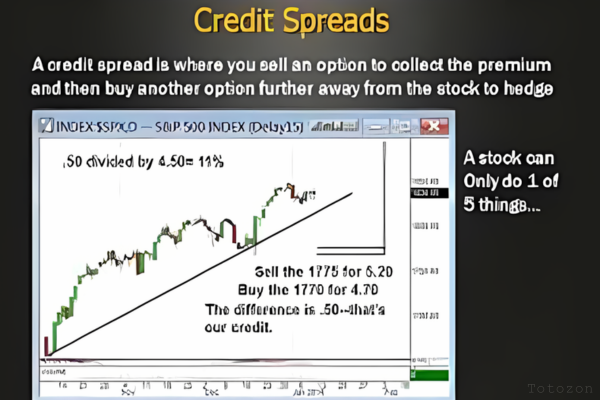 Trade from Anywhere
1 × $6.00
Trade from Anywhere
1 × $6.00 -
×
 The Dark Side Of Valuation with Aswath Damodaran
1 × $6.00
The Dark Side Of Valuation with Aswath Damodaran
1 × $6.00 -
×
 After Hour Trading Made Easy with Joe Duarte & Roland Burke
1 × $6.00
After Hour Trading Made Easy with Joe Duarte & Roland Burke
1 × $6.00 -
×
 Applying Fibonacci Analysis to Price Action
1 × $6.00
Applying Fibonacci Analysis to Price Action
1 × $6.00 -
×
 E-Bonds: An Introduction to the Online Bond Market with Jake Wengroff
1 × $6.00
E-Bonds: An Introduction to the Online Bond Market with Jake Wengroff
1 × $6.00 -
×
 TradeCraft: Your Path to Peak Performance Trading By Adam Grimes
1 × $15.00
TradeCraft: Your Path to Peak Performance Trading By Adam Grimes
1 × $15.00
Computational Financial Mathematics with Mathematica
$6.00
File Size: Coming soon!
Delivery Time: 1–12 hours
Media Type: Online Course
Computational Financial Mathematics with Mathematica
Introduction
In the fast-paced world of finance, computational tools play a crucial role in analyzing and predicting market trends. Mathematica, developed by Wolfram Research, is one such powerful tool that offers extensive capabilities for financial mathematics. This article explores how Mathematica can be used in computational financial mathematics, its key features, and the benefits it brings to financial analysts and traders.
What is Computational Financial Mathematics?
Overview
Computational financial mathematics involves the application of mathematical models and computational techniques to solve problems in finance. It encompasses a wide range of areas, including risk management, option pricing, portfolio optimization, and financial forecasting.
Importance in Finance
- Risk Management: Helps in identifying and mitigating financial risks.
- Option Pricing: Provides accurate pricing models for derivatives.
- Portfolio Optimization: Aids in constructing portfolios that maximize returns for a given risk level.
- Forecasting: Enhances the prediction of market trends and financial outcomes.
Why Mathematica?
Advanced Computational Capabilities
Mathematica is renowned for its powerful computational engine that can handle complex mathematical models and large datasets.
Versatility
It supports a wide range of mathematical and statistical functions, making it suitable for various financial applications.
User-Friendly Interface
With its intuitive interface, Mathematica is accessible to both novice and experienced users.
Key Features of Mathematica for Financial Mathematics
Symbolic Computation
Algebraic Manipulation
- Simplifying Expressions: Automatically simplifies complex algebraic expressions.
- Solving Equations: Solves linear and nonlinear equations symbolically.
Differentiation and Integration
- Symbolic Differentiation: Calculates derivatives of functions symbolically.
- Symbolic Integration: Computes integrals, both definite and indefinite, symbolically.
Numerical Computation
Precision Control
- Arbitrary Precision: Performs calculations with arbitrary precision, crucial for financial models.
- Error Management: Manages numerical errors effectively.
Optimization
- Linear Programming: Solves linear optimization problems.
- Nonlinear Optimization: Handles complex nonlinear optimization problems.
Statistical Analysis
Descriptive Statistics
- Summary Statistics: Provides summary statistics like mean, median, variance, and standard deviation.
- Data Visualization: Creates histograms, box plots, and other visualizations.
Inferential Statistics
- Hypothesis Testing: Conducts various hypothesis tests.
- Regression Analysis: Performs linear and nonlinear regression analysis.
Financial Modeling
Time Series Analysis
- Data Manipulation: Handles time series data effectively.
- Forecasting Models: Develops and tests forecasting models.
Option Pricing
- Black-Scholes Model: Implements the Black-Scholes option pricing model.
- Monte Carlo Simulations: Performs Monte Carlo simulations for option pricing.
Practical Applications of Mathematica in Finance
Risk Management
Value at Risk (VaR)
- Calculation: Computes VaR for different confidence levels.
- Stress Testing: Conducts stress tests to evaluate financial resilience.
Portfolio Optimization
Markowitz Model
- Mean-Variance Optimization: Constructs an optimal portfolio based on the Markowitz model.
- Efficient Frontier: Plots the efficient frontier for portfolio selection.
Option Pricing
Black-Scholes Model
- Implementation: Uses Mathematica to implement and visualize the Black-Scholes model.
- Sensitivity Analysis: Conducts sensitivity analysis for various parameters.
Financial Forecasting
ARIMA Models
- Building Models: Develops ARIMA models for time series forecasting.
- Model Validation: Validates models using statistical tests and diagnostics.
Benefits of Using Mathematica
Accuracy
Mathematica provides high-precision computations, ensuring accurate financial analysis.
Efficiency
Automates complex calculations and data analysis, saving time and effort.
Flexibility
Adapts to various financial models and scenarios, making it a versatile tool for financial analysts.
Visualization
Creates high-quality visualizations that enhance the interpretation of financial data.
Getting Started with Mathematica
Installation
- Download: Obtain Mathematica from Wolfram Research’s official website.
- Setup: Follow the installation instructions to set up the software.
Basic Operations
- Interface Overview: Familiarize yourself with the Mathematica interface.
- Basic Commands: Learn essential commands for performing basic operations.
Advanced Techniques
- Custom Functions: Create custom functions for specific financial models.
- Automation: Automate repetitive tasks to improve efficiency.
Success Stories
Financial Institutions
Many financial institutions use Mathematica for risk management, portfolio optimization, and market analysis.
Individual Traders
Individual traders leverage Mathematica to develop and test trading strategies, enhancing their decision-making process.
Common Challenges and Solutions
Complexity of Models
Start with simpler models and gradually move to more complex ones to build confidence and understanding.
Data Integration
Ensure seamless integration of data sources to enhance the accuracy of your analysis.
Learning Curve
Utilize online tutorials, forums, and support from Wolfram Research to overcome the learning curve.
Conclusion
Computational financial mathematics with Mathematica offers unparalleled capabilities for financial analysis and modeling. Its advanced computational power, versatility, and user-friendly interface make it an essential tool for financial professionals. By leveraging Mathematica, you can enhance your analytical skills, improve decision-making, and achieve better financial outcomes.
FAQs
1. What is Computational Financial Mathematics?
It involves applying mathematical models and computational techniques to solve problems in finance.
2. Why use Mathematica for financial mathematics?
Mathematica offers powerful computational capabilities, versatility, and a user-friendly interface, making it ideal for financial analysis.
3. What are the key features of Mathematica?
Key features include symbolic and numerical computation, statistical analysis, financial modeling, and high-quality visualization.
4. How can Mathematica be used in risk management?
It can compute Value at Risk (VaR), conduct stress tests, and perform other risk management analyses.
5. What are some practical applications of Mathematica in finance?
Applications include risk management, portfolio optimization, option pricing, and financial forecasting.
Be the first to review “Computational Financial Mathematics with Mathematica”
You must be logged in to post a review.
Related products
Forex Trading
Original price was: $550.00.$5.00Current price is: $5.00.

Original price was: $700.00.$39.00Current price is: $39.00.

Forex Trading
Original price was: $697.00.$5.00Current price is: $5.00.

Forex Trading
Original price was: $500.00.$5.00Current price is: $5.00.

Original price was: $1,849.00.$15.00Current price is: $15.00.

Original price was: $1,800.00.$54.00Current price is: $54.00.

Forex Trading
Original price was: $4,997.00.$27.00Current price is: $27.00.

Forex Trading
The Complete Guide to Multiple Time Frame Analysis & Reading Price Action with Aiman Almansoori
Original price was: $1,399.00.$13.00Current price is: $13.00.

Forex Trading
Original price was: $2,000.00.$23.00Current price is: $23.00.

Forex Trading
Original price was: $499.00.$15.00Current price is: $15.00.

Forex Trading
Original price was: $1,098.00.$39.00Current price is: $39.00.

Original price was: $497.00.$11.00Current price is: $11.00.

Forex Trading
Original price was: $125.00.$17.00Current price is: $17.00.

Forex Trading
Original price was: $797.00.$10.00Current price is: $10.00.

Original price was: $649.00.$20.00Current price is: $20.00.

Original price was: $310.00.$23.00Current price is: $23.00.
Original price was: $895.00.$15.00Current price is: $15.00.

Forex Trading
Original price was: $1,898.00.$10.00Current price is: $10.00.

Original price was: $299.00.$8.00Current price is: $8.00.

Forex Trading
Original price was: $249.00.$15.00Current price is: $15.00.
Reviews
There are no reviews yet.