
-
×
 Developing the Psychological Trader’s Edge with Robin Dayne
1 × $6.00
Developing the Psychological Trader’s Edge with Robin Dayne
1 × $6.00 -
×
 The Noise Trader Approach to Finance (Article) with Andrei Schleifer, Laurence H.Summers
1 × $6.00
The Noise Trader Approach to Finance (Article) with Andrei Schleifer, Laurence H.Summers
1 × $6.00 -
×
 Ichimoku Cloud Trading Course with FollowMeTrades
1 × $15.00
Ichimoku Cloud Trading Course with FollowMeTrades
1 × $15.00 -
×
 TradeGuider Education Package
1 × $54.00
TradeGuider Education Package
1 × $54.00 -
×
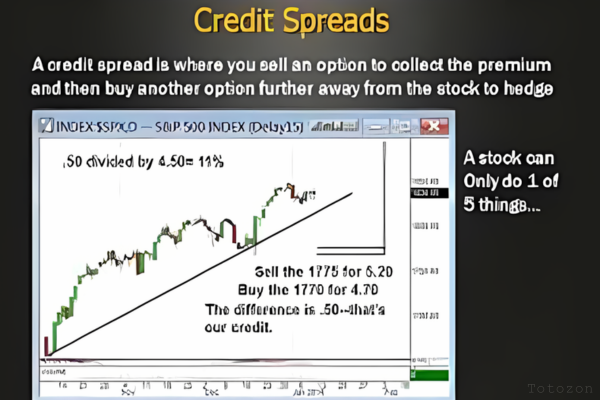 Trade from Anywhere
1 × $6.00
Trade from Anywhere
1 × $6.00 -
×
 Supply and Demand Video Course with JamesFXS
1 × $13.00
Supply and Demand Video Course with JamesFXS
1 × $13.00 -
×
 ETF Trend Trading Mentorship Course
1 × $15.00
ETF Trend Trading Mentorship Course
1 × $15.00 -
×
 Winning With The Market with Douglas R.Sease
1 × $6.00
Winning With The Market with Douglas R.Sease
1 × $6.00 -
×
 Tradingriot Bootcamp + Blueprint 3.0
1 × $6.00
Tradingriot Bootcamp + Blueprint 3.0
1 × $6.00 -
×
 Fractal Markets FX (SMC)
1 × $5.00
Fractal Markets FX (SMC)
1 × $5.00 -
×
 Blank Check Trade
1 × $31.00
Blank Check Trade
1 × $31.00 -
×
 TREND/REV BLOCK AND EA FOREX SYSTEM (No MT4 Indicator) with IFXSuccess
1 × $69.00
TREND/REV BLOCK AND EA FOREX SYSTEM (No MT4 Indicator) with IFXSuccess
1 × $69.00 -
×
 High Probability Trading Using Elliott Wave And Fibonacci Analysis withVic Patel - Forex Training Group
1 × $10.00
High Probability Trading Using Elliott Wave And Fibonacci Analysis withVic Patel - Forex Training Group
1 × $10.00 -
×
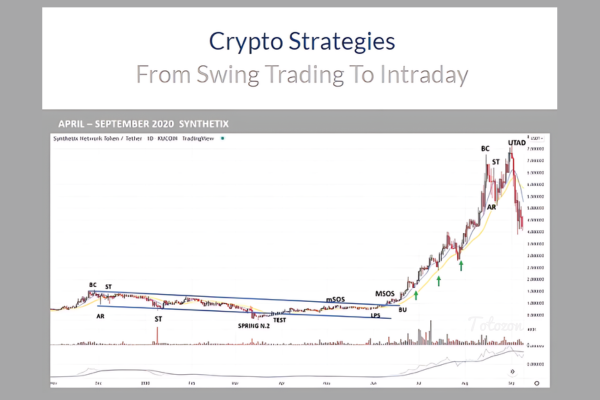 Crypto Strategies From Swing Trading To Intraday with Alessio Rutigliano & Roman Bogomazov
1 × $17.00
Crypto Strategies From Swing Trading To Intraday with Alessio Rutigliano & Roman Bogomazov
1 × $17.00 -
×
 Trading Strategies with Larry Sanders
1 × $6.00
Trading Strategies with Larry Sanders
1 × $6.00 -
×
 SQX Mentorship with Tip Toe Hippo
1 × $23.00
SQX Mentorship with Tip Toe Hippo
1 × $23.00 -
×
 Random Walk Trading - J.L.Lord - One Strategy for All Markets
1 × $6.00
Random Walk Trading - J.L.Lord - One Strategy for All Markets
1 × $6.00 -
×
 The Great Reflation with Anthony Boeckh
1 × $6.00
The Great Reflation with Anthony Boeckh
1 × $6.00 -
×
 Module II - Signature Trades with FX MindShift
1 × $6.00
Module II - Signature Trades with FX MindShift
1 × $6.00 -
×
 Neural Networks in Trading with Dr. Ernest P. Chan
1 × $31.00
Neural Networks in Trading with Dr. Ernest P. Chan
1 × $31.00 -
×
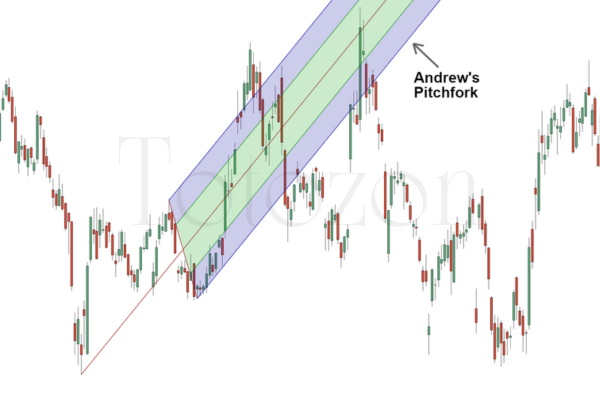 Andrews Pitchfork Basic
1 × $6.00
Andrews Pitchfork Basic
1 × $6.00 -
×
 TECHNICAL ANALYSIS MODULE
1 × $6.00
TECHNICAL ANALYSIS MODULE
1 × $6.00 -
×
 Price Action Trader Training
1 × $6.00
Price Action Trader Training
1 × $6.00 -
×
 A Course in Trading with Donald Mack & Wetsel Market Bureau
1 × $6.00
A Course in Trading with Donald Mack & Wetsel Market Bureau
1 × $6.00 -
×
 The Best Option Trading Course with David Jaffee - Best Stock Strategy
1 × $15.00
The Best Option Trading Course with David Jaffee - Best Stock Strategy
1 × $15.00 -
×
 Month 01 to 08 2018
1 × $62.00
Month 01 to 08 2018
1 × $62.00 -
×
 The Newly Revised Hal Method of Cyclic Analysis with Walter Bressert
1 × $5.00
The Newly Revised Hal Method of Cyclic Analysis with Walter Bressert
1 × $5.00 -
×
 Activedaytrader - Mastering Technicals
1 × $15.00
Activedaytrader - Mastering Technicals
1 × $15.00 -
×
 Module IV - Day Trading to Short Term Swing Trades with FX MindShift
1 × $6.00
Module IV - Day Trading to Short Term Swing Trades with FX MindShift
1 × $6.00 -
×
 Forex Day Trading Course with Raul Gonzalez
1 × $5.00
Forex Day Trading Course with Raul Gonzalez
1 × $5.00 -
×
 Price Action Prophet
1 × $54.00
Price Action Prophet
1 × $54.00 -
×
 Blueprint to Extreme Reversals with Aiman Almansoori - Trading Terminal
1 × $8.00
Blueprint to Extreme Reversals with Aiman Almansoori - Trading Terminal
1 × $8.00 -
×
 Commodity Futures Traders Club (CTCN) Issues 01 – 77
1 × $6.00
Commodity Futures Traders Club (CTCN) Issues 01 – 77
1 × $6.00 -
×
 Tradingmarkets - Introduction to AmiBroker Programming
1 × $15.00
Tradingmarkets - Introduction to AmiBroker Programming
1 × $15.00 -
×
 TradingMind Course with Jack Bernstein
1 × $6.00
TradingMind Course with Jack Bernstein
1 × $6.00 -
×
 Advanced Course with Jtrader
1 × $6.00
Advanced Course with Jtrader
1 × $6.00 -
×
 Buy, Sell or Hold Manage Your Portfolio for Maximum Gain with Michaal Thomsett
1 × $6.00
Buy, Sell or Hold Manage Your Portfolio for Maximum Gain with Michaal Thomsett
1 × $6.00 -
×
 The Amazing Common Sense Guide To Investment Success with John Thomchick
1 × $6.00
The Amazing Common Sense Guide To Investment Success with John Thomchick
1 × $6.00 -
×
 Cracking The Forex Code with Kevin Adams
1 × $6.00
Cracking The Forex Code with Kevin Adams
1 × $6.00 -
×
 The Handbook of Alternative Investments with Darrell R.Jobman
1 × $6.00
The Handbook of Alternative Investments with Darrell R.Jobman
1 × $6.00 -
×
 All Access Online Trading Course with Steve Luke
1 × $6.00
All Access Online Trading Course with Steve Luke
1 × $6.00 -
×
 Beat the Market with Edward O.Thorp
1 × $6.00
Beat the Market with Edward O.Thorp
1 × $6.00 -
×
 Stock Trader`s Almanac 2012 with Jeffrey Hirsch & Yale Hirsch
1 × $6.00
Stock Trader`s Almanac 2012 with Jeffrey Hirsch & Yale Hirsch
1 × $6.00 -
×
 Candle Charting Essentials & Beyond Volume 1 & 2 with Steve Nison - Candle Charts
1 × $15.00
Candle Charting Essentials & Beyond Volume 1 & 2 with Steve Nison - Candle Charts
1 × $15.00 -
×
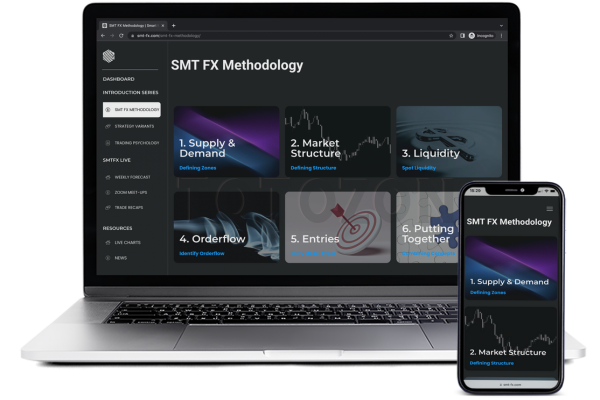 SMT FX Trading
1 × $5.00
SMT FX Trading
1 × $5.00 -
×
 Andy’s EMini Bar – 40 Min System with Joe Ross
1 × $6.00
Andy’s EMini Bar – 40 Min System with Joe Ross
1 × $6.00 -
×
 Stealth Trader (Ebook) with Andy Jordan - Trading Educators
1 × $132.00
Stealth Trader (Ebook) with Andy Jordan - Trading Educators
1 × $132.00 -
×
 All About Bonds, Bond Mutual Funds & Bond ETFs (3rd Ed.) with Esme Faerber
1 × $6.00
All About Bonds, Bond Mutual Funds & Bond ETFs (3rd Ed.) with Esme Faerber
1 × $6.00 -
×
 Trading in the Bluff with John Templeton
1 × $6.00
Trading in the Bluff with John Templeton
1 × $6.00 -
×
 Forex Trading Bootcamp For Traders & Investors (2020)
1 × $6.00
Forex Trading Bootcamp For Traders & Investors (2020)
1 × $6.00 -
×
 The Janus Factor with Gary Anderson
1 × $6.00
The Janus Factor with Gary Anderson
1 × $6.00 -
×
 3 Technical Indicators to Help You Ride the Elliott Wave Trend with Chris Carolan
1 × $6.00
3 Technical Indicators to Help You Ride the Elliott Wave Trend with Chris Carolan
1 × $6.00 -
×
 Trading with the Gods Fibonacci Series with Alan Oliver
1 × $6.00
Trading with the Gods Fibonacci Series with Alan Oliver
1 × $6.00 -
×
 My Forex League - The Course
1 × $5.00
My Forex League - The Course
1 × $5.00 -
×
 Unsorted Articles about the Psychology of Trading with Brett N.Steenbarger
1 × $6.00
Unsorted Articles about the Psychology of Trading with Brett N.Steenbarger
1 × $6.00 -
×
 Applied Quantitative Methods for Trading and Investment with Christian Dunis, Jason Laws & Patrick Na¿m
1 × $6.00
Applied Quantitative Methods for Trading and Investment with Christian Dunis, Jason Laws & Patrick Na¿m
1 × $6.00 -
×
 The Nasdaq Investor with Max Isaacman
1 × $6.00
The Nasdaq Investor with Max Isaacman
1 × $6.00 -
×
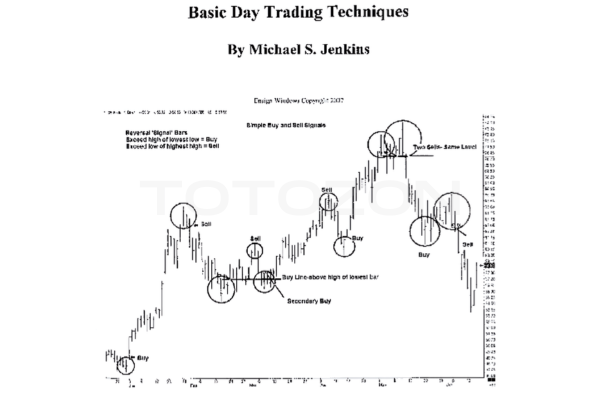 Basic Day Trading Techniques with Michael Jenkins
1 × $6.00
Basic Day Trading Techniques with Michael Jenkins
1 × $6.00 -
×
 Forex Education Trading System (Video 469 MB)
1 × $23.00
Forex Education Trading System (Video 469 MB)
1 × $23.00 -
×
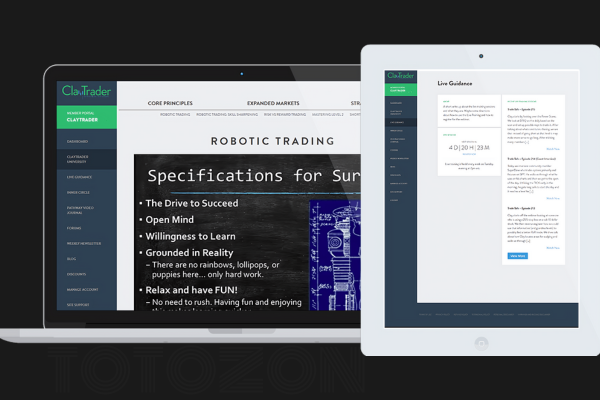 Robotic trading interactive
1 × $31.00
Robotic trading interactive
1 × $31.00 -
×
 The Psychology of Investing with John Nofsinger
1 × $6.00
The Psychology of Investing with John Nofsinger
1 × $6.00 -
×
 Dominate Stocks (Swing Trading) 2023 with J. Bravo
1 × $5.00
Dominate Stocks (Swing Trading) 2023 with J. Bravo
1 × $5.00 -
×
 Crash Course Special Edition Set with Chris Martenson
1 × $6.00
Crash Course Special Edition Set with Chris Martenson
1 × $6.00 -
×
 Capital Flows and Crises with Barry Eichengreen
1 × $6.00
Capital Flows and Crises with Barry Eichengreen
1 × $6.00 -
×
 Cotton Trading Manual with Terry Townsend
1 × $6.00
Cotton Trading Manual with Terry Townsend
1 × $6.00 -
×
 Advanced Ichimoku Kinkō Hyō - Ichimoku Cloud Strategy with Rafał Zuchowicz - TopMasterTrader
1 × $17.00
Advanced Ichimoku Kinkō Hyō - Ichimoku Cloud Strategy with Rafał Zuchowicz - TopMasterTrader
1 × $17.00 -
×
 Trading Hub 4.0 with Mr. Khan
1 × $27.00
Trading Hub 4.0 with Mr. Khan
1 × $27.00 -
×
 Better Trading with the Guppy Multiple Moving Average WorkBook with Daryl Guppy
1 × $6.00
Better Trading with the Guppy Multiple Moving Average WorkBook with Daryl Guppy
1 × $6.00 -
×
 Essentials in Quantitative Trading QT01 By HangukQuant's
1 × $23.00
Essentials in Quantitative Trading QT01 By HangukQuant's
1 × $23.00 -
×
 The Jupiter Effect with John Gribbin & Stephen Plagemann
1 × $6.00
The Jupiter Effect with John Gribbin & Stephen Plagemann
1 × $6.00 -
×
 Infectious Greed with John Nofsinger & Kenneth Kim
1 × $6.00
Infectious Greed with John Nofsinger & Kenneth Kim
1 × $6.00 -
×
 The Realistic Trader - Crypto Currencies
1 × $31.00
The Realistic Trader - Crypto Currencies
1 × $31.00 -
×
 The Sweep Show with Scott Pulcini Trader
1 × $23.00
The Sweep Show with Scott Pulcini Trader
1 × $23.00 -
×
 David Weis Stock Market Update Nightly Report 2014-2019
1 × $20.00
David Weis Stock Market Update Nightly Report 2014-2019
1 × $20.00 -
×
 Become A Quant Trader Bundle with Lachezar Haralampiev & Radoslav Haralampiev - Quant Factory
1 × $17.00
Become A Quant Trader Bundle with Lachezar Haralampiev & Radoslav Haralampiev - Quant Factory
1 × $17.00 -
×
 Order flow self-study training program with iMFtracker
1 × $10.00
Order flow self-study training program with iMFtracker
1 × $10.00 -
×
 Advanced Stock Trading Course + Strategies
1 × $15.00
Advanced Stock Trading Course + Strategies
1 × $15.00 -
×
 Fibonacci – CCI Workshop Recording Series (2006 & 2008)
1 × $6.00
Fibonacci – CCI Workshop Recording Series (2006 & 2008)
1 × $6.00 -
×
 Oportunities in Forex Calendar Trading Patterns with Anduril Analytics
1 × $6.00
Oportunities in Forex Calendar Trading Patterns with Anduril Analytics
1 × $6.00 -
×
 Key to Speculation on the New York Stock Exchange
1 × $6.00
Key to Speculation on the New York Stock Exchange
1 × $6.00 -
×
 The STRAT Execution Basics with Jermaine McGruder
1 × $31.00
The STRAT Execution Basics with Jermaine McGruder
1 × $31.00 -
×
 The Greatest Trade Ever with Gregory Zuckerman
1 × $6.00
The Greatest Trade Ever with Gregory Zuckerman
1 × $6.00 -
×
 ICT Mentorship – 2019
1 × $13.00
ICT Mentorship – 2019
1 × $13.00 -
×
 The Way to Trade with John Piper
1 × $6.00
The Way to Trade with John Piper
1 × $6.00 -
×
 A Really Friendly Guide to Wavelets with C.Vallens
1 × $6.00
A Really Friendly Guide to Wavelets with C.Vallens
1 × $6.00 -
×
 The Nature of Risk with Justin Mamis
1 × $6.00
The Nature of Risk with Justin Mamis
1 × $6.00 -
×
 Transforms and Applications Handbook (2nd Edition) with Alexander Poularikas
1 × $6.00
Transforms and Applications Handbook (2nd Edition) with Alexander Poularikas
1 × $6.00 -
×
 Forecast, Filings, & News with Jtrader
1 × $6.00
Forecast, Filings, & News with Jtrader
1 × $6.00 -
×
 Cluster Delta with Gova Trading Academy
1 × $5.00
Cluster Delta with Gova Trading Academy
1 × $5.00 -
×
 $20 – 52k 20 pips a day challange with Rafał Zuchowicz - TopMasterTrader
1 × $5.00
$20 – 52k 20 pips a day challange with Rafał Zuchowicz - TopMasterTrader
1 × $5.00 -
×
 Confessions of a Street Addict with James Cramer
1 × $6.00
Confessions of a Street Addict with James Cramer
1 × $6.00 -
×
 Advanced Trading Strategies with Larry Connors
1 × $6.00
Advanced Trading Strategies with Larry Connors
1 × $6.00 -
×
 The Global Money Markets with Frank Fabozzi, Steven Mann & Moorad Choudhry
1 × $6.00
The Global Money Markets with Frank Fabozzi, Steven Mann & Moorad Choudhry
1 × $6.00 -
×
 From Wall Street to the Great Wall with Jonathan Worrall
1 × $6.00
From Wall Street to the Great Wall with Jonathan Worrall
1 × $6.00 -
×
 Advanced Price Action Course with Chris Capre
1 × $7.00
Advanced Price Action Course with Chris Capre
1 × $7.00 -
×
 The Complete Guide to Multiple Time Frame Analysis & Reading Price Action with Aiman Almansoori
1 × $13.00
The Complete Guide to Multiple Time Frame Analysis & Reading Price Action with Aiman Almansoori
1 × $13.00
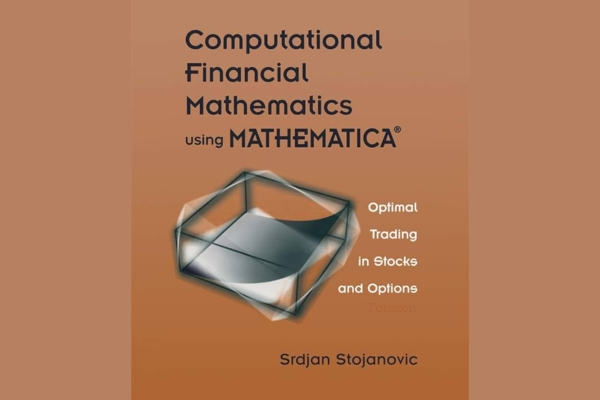
Computational Financial Mathematics with Mathematica
$6.00
File Size: Coming soon!
Delivery Time: 1–12 hours
Media Type: Online Course
Computational Financial Mathematics with Mathematica
Introduction
In the fast-paced world of finance, computational tools play a crucial role in analyzing and predicting market trends. Mathematica, developed by Wolfram Research, is one such powerful tool that offers extensive capabilities for financial mathematics. This article explores how Mathematica can be used in computational financial mathematics, its key features, and the benefits it brings to financial analysts and traders.
What is Computational Financial Mathematics?
Overview
Computational financial mathematics involves the application of mathematical models and computational techniques to solve problems in finance. It encompasses a wide range of areas, including risk management, option pricing, portfolio optimization, and financial forecasting.
Importance in Finance
- Risk Management: Helps in identifying and mitigating financial risks.
- Option Pricing: Provides accurate pricing models for derivatives.
- Portfolio Optimization: Aids in constructing portfolios that maximize returns for a given risk level.
- Forecasting: Enhances the prediction of market trends and financial outcomes.
Why Mathematica?
Advanced Computational Capabilities
Mathematica is renowned for its powerful computational engine that can handle complex mathematical models and large datasets.
Versatility
It supports a wide range of mathematical and statistical functions, making it suitable for various financial applications.
User-Friendly Interface
With its intuitive interface, Mathematica is accessible to both novice and experienced users.
Key Features of Mathematica for Financial Mathematics
Symbolic Computation
Algebraic Manipulation
- Simplifying Expressions: Automatically simplifies complex algebraic expressions.
- Solving Equations: Solves linear and nonlinear equations symbolically.
Differentiation and Integration
- Symbolic Differentiation: Calculates derivatives of functions symbolically.
- Symbolic Integration: Computes integrals, both definite and indefinite, symbolically.
Numerical Computation
Precision Control
- Arbitrary Precision: Performs calculations with arbitrary precision, crucial for financial models.
- Error Management: Manages numerical errors effectively.
Optimization
- Linear Programming: Solves linear optimization problems.
- Nonlinear Optimization: Handles complex nonlinear optimization problems.
Statistical Analysis
Descriptive Statistics
- Summary Statistics: Provides summary statistics like mean, median, variance, and standard deviation.
- Data Visualization: Creates histograms, box plots, and other visualizations.
Inferential Statistics
- Hypothesis Testing: Conducts various hypothesis tests.
- Regression Analysis: Performs linear and nonlinear regression analysis.
Financial Modeling
Time Series Analysis
- Data Manipulation: Handles time series data effectively.
- Forecasting Models: Develops and tests forecasting models.
Option Pricing
- Black-Scholes Model: Implements the Black-Scholes option pricing model.
- Monte Carlo Simulations: Performs Monte Carlo simulations for option pricing.
Practical Applications of Mathematica in Finance
Risk Management
Value at Risk (VaR)
- Calculation: Computes VaR for different confidence levels.
- Stress Testing: Conducts stress tests to evaluate financial resilience.
Portfolio Optimization
Markowitz Model
- Mean-Variance Optimization: Constructs an optimal portfolio based on the Markowitz model.
- Efficient Frontier: Plots the efficient frontier for portfolio selection.
Option Pricing
Black-Scholes Model
- Implementation: Uses Mathematica to implement and visualize the Black-Scholes model.
- Sensitivity Analysis: Conducts sensitivity analysis for various parameters.
Financial Forecasting
ARIMA Models
- Building Models: Develops ARIMA models for time series forecasting.
- Model Validation: Validates models using statistical tests and diagnostics.
Benefits of Using Mathematica
Accuracy
Mathematica provides high-precision computations, ensuring accurate financial analysis.
Efficiency
Automates complex calculations and data analysis, saving time and effort.
Flexibility
Adapts to various financial models and scenarios, making it a versatile tool for financial analysts.
Visualization
Creates high-quality visualizations that enhance the interpretation of financial data.
Getting Started with Mathematica
Installation
- Download: Obtain Mathematica from Wolfram Research’s official website.
- Setup: Follow the installation instructions to set up the software.
Basic Operations
- Interface Overview: Familiarize yourself with the Mathematica interface.
- Basic Commands: Learn essential commands for performing basic operations.
Advanced Techniques
- Custom Functions: Create custom functions for specific financial models.
- Automation: Automate repetitive tasks to improve efficiency.
Success Stories
Financial Institutions
Many financial institutions use Mathematica for risk management, portfolio optimization, and market analysis.
Individual Traders
Individual traders leverage Mathematica to develop and test trading strategies, enhancing their decision-making process.
Common Challenges and Solutions
Complexity of Models
Start with simpler models and gradually move to more complex ones to build confidence and understanding.
Data Integration
Ensure seamless integration of data sources to enhance the accuracy of your analysis.
Learning Curve
Utilize online tutorials, forums, and support from Wolfram Research to overcome the learning curve.
Conclusion
Computational financial mathematics with Mathematica offers unparalleled capabilities for financial analysis and modeling. Its advanced computational power, versatility, and user-friendly interface make it an essential tool for financial professionals. By leveraging Mathematica, you can enhance your analytical skills, improve decision-making, and achieve better financial outcomes.
FAQs
1. What is Computational Financial Mathematics?
It involves applying mathematical models and computational techniques to solve problems in finance.
2. Why use Mathematica for financial mathematics?
Mathematica offers powerful computational capabilities, versatility, and a user-friendly interface, making it ideal for financial analysis.
3. What are the key features of Mathematica?
Key features include symbolic and numerical computation, statistical analysis, financial modeling, and high-quality visualization.
4. How can Mathematica be used in risk management?
It can compute Value at Risk (VaR), conduct stress tests, and perform other risk management analyses.
5. What are some practical applications of Mathematica in finance?
Applications include risk management, portfolio optimization, option pricing, and financial forecasting.
Be the first to review “Computational Financial Mathematics with Mathematica”
You must be logged in to post a review.
Related products

Original price was: $497.00.$11.00Current price is: $11.00.

Forex Trading
Original price was: $125.00.$17.00Current price is: $17.00.

Original price was: $1,800.00.$54.00Current price is: $54.00.

Forex Trading
Original price was: $1,098.00.$39.00Current price is: $39.00.

Forex Trading
Original price was: $500.00.$5.00Current price is: $5.00.

Original price was: $799.00.$15.00Current price is: $15.00.

Forex Trading
Original price was: $499.00.$15.00Current price is: $15.00.
Forex Trading
Original price was: $850.00.$23.00Current price is: $23.00.

Original price was: $649.00.$20.00Current price is: $20.00.

Forex Trading
Original price was: $550.00.$5.00Current price is: $5.00.
Forex Trading
The Complete Guide to Multiple Time Frame Analysis & Reading Price Action with Aiman Almansoori
Original price was: $1,399.00.$13.00Current price is: $13.00.

Forex Trading
Original price was: $2,000.00.$23.00Current price is: $23.00.

Original price was: $1,200.00.$23.00Current price is: $23.00.
Forex Trading
Original price was: $1,898.00.$10.00Current price is: $10.00.

Original price was: $310.00.$23.00Current price is: $23.00.
Original price was: $197.00.$5.00Current price is: $5.00.

Original price was: $299.00.$8.00Current price is: $8.00.

Original price was: $497.00.$31.00Current price is: $31.00.

Forex Trading
Original price was: $2,995.00.$31.00Current price is: $31.00.
Original price was: $1,849.00.$15.00Current price is: $15.00.
Reviews
There are no reviews yet.