
-
×
 Forecast 2024 Clarification with Larry Williams
1 × $15.00
Forecast 2024 Clarification with Larry Williams
1 × $15.00 -
×
 Trading Freak Academy (Full Course) with JP - Trading Freak
1 × $5.00
Trading Freak Academy (Full Course) with JP - Trading Freak
1 × $5.00 -
×
 Sell & Sell Short with Alexander Elder
1 × $6.00
Sell & Sell Short with Alexander Elder
1 × $6.00 -
×
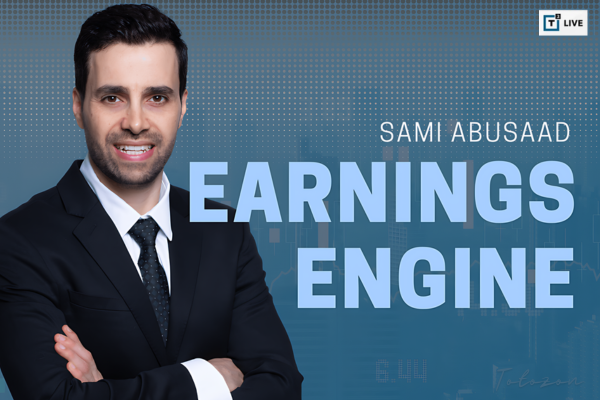 Earnings Engine Class with Sami Abusaad - T3 Live
1 × $23.00
Earnings Engine Class with Sami Abusaad - T3 Live
1 × $23.00 -
×
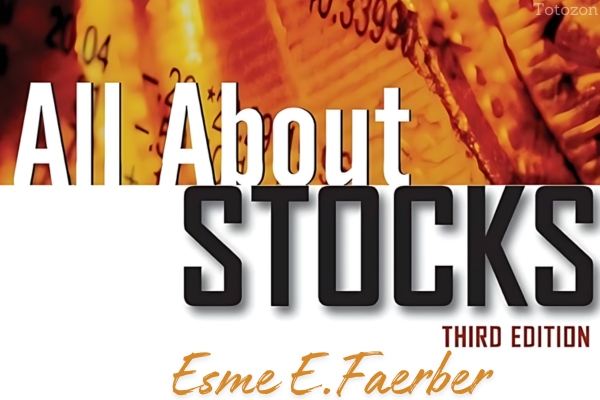 All About Stocks (3rd Ed.) withEsme E.Faerber
1 × $6.00
All About Stocks (3rd Ed.) withEsme E.Faerber
1 × $6.00 -
×
 Hit The Mark Trading - Boot Camp 2016 Courses
1 × $23.00
Hit The Mark Trading - Boot Camp 2016 Courses
1 × $23.00 -
×
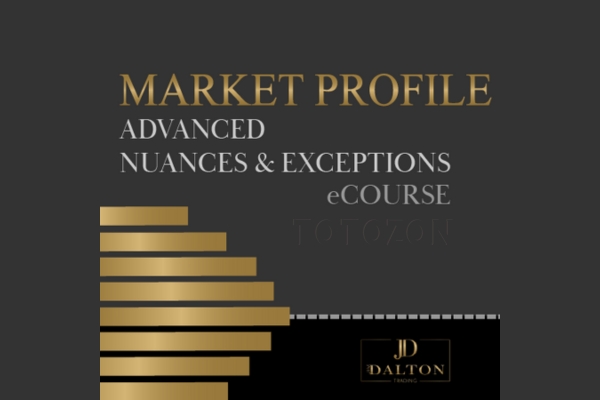 Advanced Nuances & Exceptions eCourse with Jim Dalton
1 × $15.00
Advanced Nuances & Exceptions eCourse with Jim Dalton
1 × $15.00 -
×
 7 Day FX Mastery Course with Market Masters
1 × $6.00
7 Day FX Mastery Course with Market Masters
1 × $6.00 -
×
 Reading & Understanding Charts with Andrew Baxter
1 × $6.00
Reading & Understanding Charts with Andrew Baxter
1 × $6.00 -
×
 CFA Level 3 - Examination Morning Session – Essay (2002)
1 × $6.00
CFA Level 3 - Examination Morning Session – Essay (2002)
1 × $6.00 -
×
 5-Week Portfolio (No Bonus) - Criticaltrading
1 × $39.00
5-Week Portfolio (No Bonus) - Criticaltrading
1 × $39.00 -
×
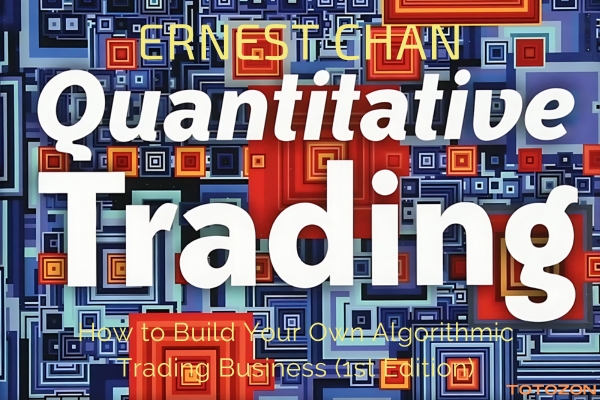 Quantitative Trading: How to Build Your Own Algorithmic Trading Business (1st Edition) with Ernest Chan
1 × $6.00
Quantitative Trading: How to Build Your Own Algorithmic Trading Business (1st Edition) with Ernest Chan
1 × $6.00 -
×
 From Walden to Wall Street: Frontiers of Conservation Finance with James Levitt
1 × $6.00
From Walden to Wall Street: Frontiers of Conservation Finance with James Levitt
1 × $6.00 -
×
 Market Forecasting. Stocks and Grain
1 × $6.00
Market Forecasting. Stocks and Grain
1 × $6.00 -
×
 Candlesticks Explained with Martin Pring
1 × $6.00
Candlesticks Explained with Martin Pring
1 × $6.00 -
×
 The Stock Rocket Trading System with Dave Wooding
1 × $6.00
The Stock Rocket Trading System with Dave Wooding
1 × $6.00 -
×
 Read The Market RTM Master Trader Course + Journals
1 × $5.00
Read The Market RTM Master Trader Course + Journals
1 × $5.00 -
×
 Artificial Neural Networks Technology with Dave Anderson, George McNeill
1 × $6.00
Artificial Neural Networks Technology with Dave Anderson, George McNeill
1 × $6.00 -
×
 Weekly Options Trading Advantage Class with Doc Severson
1 × $6.00
Weekly Options Trading Advantage Class with Doc Severson
1 × $6.00 -
×
 PFAZoneSuite [Trading Indicator] 2017
1 × $109.00
PFAZoneSuite [Trading Indicator] 2017
1 × $109.00 -
×
 Cycles: What they are, what they mean, how to profit by them - Dick Stoken
1 × $6.00
Cycles: What they are, what they mean, how to profit by them - Dick Stoken
1 × $6.00 -
×
 DApp Mastermind (Crypto DApps) – Passive Income with DApps and SMART Contracts with Jason BTO
1 × $6.00
DApp Mastermind (Crypto DApps) – Passive Income with DApps and SMART Contracts with Jason BTO
1 × $6.00 -
×
 ActiveBeta Indexes. Capturing Systematic Sources of Active Equity Returns (HTML) with Andrew Lo
1 × $6.00
ActiveBeta Indexes. Capturing Systematic Sources of Active Equity Returns (HTML) with Andrew Lo
1 × $6.00 -
×
 Advanced Trading Course with Edney Pinheiro
1 × $5.00
Advanced Trading Course with Edney Pinheiro
1 × $5.00 -
×
 Activedaytrader - Elite Earnings Pusuit
1 × $54.00
Activedaytrader - Elite Earnings Pusuit
1 × $54.00 -
×
 7 Commandments of Stock Investing with Gene Marcial
1 × $6.00
7 Commandments of Stock Investing with Gene Marcial
1 × $6.00 -
×
 Deep Dive Butterfly Trading Strategy Class with SJG Trades
1 × $41.00
Deep Dive Butterfly Trading Strategy Class with SJG Trades
1 × $41.00 -
×
 Affinity Foundation Option Course with Affinitytrading
1 × $6.00
Affinity Foundation Option Course with Affinitytrading
1 × $6.00 -
×
 The Loyalty Effect with Frederick Reichheld
1 × $6.00
The Loyalty Effect with Frederick Reichheld
1 × $6.00 -
×
 Market Profile E-Course with Charles Gough - Pirate Traders
1 × $17.00
Market Profile E-Course with Charles Gough - Pirate Traders
1 × $17.00 -
×
 Indicator Companion for Metastock with Martin Pring
1 × $6.00
Indicator Companion for Metastock with Martin Pring
1 × $6.00 -
×
 5 Steps to Investment Success with Tyler Bolhorn
1 × $6.00
5 Steps to Investment Success with Tyler Bolhorn
1 × $6.00 -
×
 Advanced Stock Trading Course + Strategies
1 × $15.00
Advanced Stock Trading Course + Strategies
1 × $15.00 -
×
 Alternative Assets and Strategic Allocation with John Abbink
1 × $6.00
Alternative Assets and Strategic Allocation with John Abbink
1 × $6.00 -
×
 Active Trading Course Notes with Alan Hull
1 × $6.00
Active Trading Course Notes with Alan Hull
1 × $6.00 -
×
 Wealth Management with Dimitris Chorafas
1 × $6.00
Wealth Management with Dimitris Chorafas
1 × $6.00 -
×
 All Access Online Trading Course with Steve Luke
1 × $6.00
All Access Online Trading Course with Steve Luke
1 × $6.00 -
×
 Tradingriot Bootcamp + Blueprint 3.0
1 × $6.00
Tradingriot Bootcamp + Blueprint 3.0
1 × $6.00 -
×
 The Day Trader: From the Pit to the PC with Lewis Borsellino
1 × $6.00
The Day Trader: From the Pit to the PC with Lewis Borsellino
1 × $6.00 -
×
 Study Guide for Technical Analysis Explained (1st Edition) with Martin Pring
1 × $6.00
Study Guide for Technical Analysis Explained (1st Edition) with Martin Pring
1 × $6.00 -
×
 Trading For A Living Course with Yvan Byeajee - Trading Composure
1 × $6.00
Trading For A Living Course with Yvan Byeajee - Trading Composure
1 × $6.00 -
×
 A Comparison of Twelve Technical Trading Systems with Louis Lukac
1 × $6.00
A Comparison of Twelve Technical Trading Systems with Louis Lukac
1 × $6.00 -
×
 The Prop Trading Code with Brannigan Barrett - Axia Futures
1 × $23.00
The Prop Trading Code with Brannigan Barrett - Axia Futures
1 × $23.00 -
×
 Whats In Your Name – The Science of Letters and Numbers (1916)
1 × $6.00
Whats In Your Name – The Science of Letters and Numbers (1916)
1 × $6.00 -
×
 Stock Market Winners with Maria Crawford Scott, John Bajkowski
1 × $6.00
Stock Market Winners with Maria Crawford Scott, John Bajkowski
1 × $6.00 -
×
 Inside the Minds Leading Wall Street Investors with Aspatore Books
1 × $6.00
Inside the Minds Leading Wall Street Investors with Aspatore Books
1 × $6.00 -
×
 Trading Short TermSame Day Trades Sep 2023 with Dan Sheridan & Mark Fenton - Sheridan Options Mentoring
1 × $31.00
Trading Short TermSame Day Trades Sep 2023 with Dan Sheridan & Mark Fenton - Sheridan Options Mentoring
1 × $31.00 -
×
 A Trader's Guide to Self-Discipline: Proven Techniques to Improve Trading Profits
1 × $6.00
A Trader's Guide to Self-Discipline: Proven Techniques to Improve Trading Profits
1 × $6.00 -
×
 Crystal Ball Pack PLUS bonus Live Trade By Pat Mitchell - Trick Trades
1 × $20.00
Crystal Ball Pack PLUS bonus Live Trade By Pat Mitchell - Trick Trades
1 × $20.00 -
×
 Wyckoff Analytics Courses Collection
1 × $27.00
Wyckoff Analytics Courses Collection
1 × $27.00 -
×
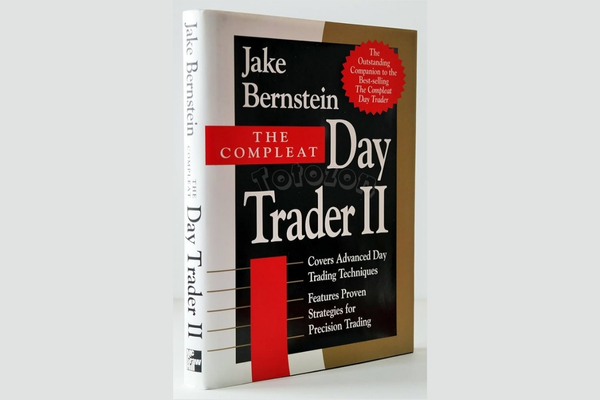 The Compleat DayTrader I & II with Jack Bernstein
1 × $6.00
The Compleat DayTrader I & II with Jack Bernstein
1 × $6.00 -
×
 The Great Divergence: China, Europe, and the Making of the Modern World Economy with Kenneth Pomeranz
1 × $6.00
The Great Divergence: China, Europe, and the Making of the Modern World Economy with Kenneth Pomeranz
1 × $6.00 -
×
 Hedge Funds for Dummies
1 × $6.00
Hedge Funds for Dummies
1 × $6.00 -
×
 After Hour Trading Made Easy with Joe Duarte & Roland Burke
1 × $6.00
After Hour Trading Made Easy with Joe Duarte & Roland Burke
1 × $6.00 -
×
 Trading Dave Landry’s Ultimate Bow Ties Strategy with Dave Landry
1 × $6.00
Trading Dave Landry’s Ultimate Bow Ties Strategy with Dave Landry
1 × $6.00 -
×
 Behavior and Performance of Investment Newsletter Analysts (Article) with Alok Kumar
1 × $6.00
Behavior and Performance of Investment Newsletter Analysts (Article) with Alok Kumar
1 × $6.00 -
×
 Quantamentals - The Next Great Forefront Of Trading and Investing with Trading Markets
1 × $8.00
Quantamentals - The Next Great Forefront Of Trading and Investing with Trading Markets
1 × $8.00 -
×
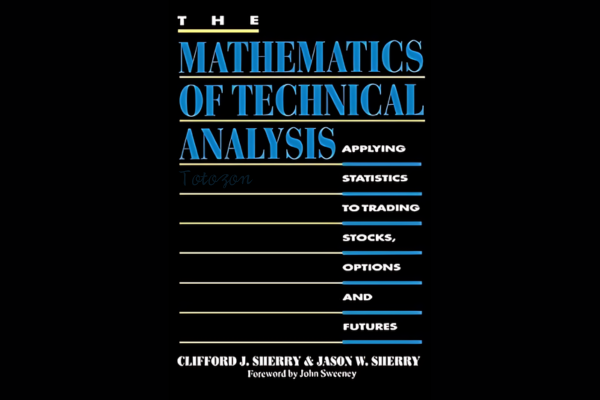 The Mathematics of Technical Analysis with Clifford Sherry
1 × $6.00
The Mathematics of Technical Analysis with Clifford Sherry
1 × $6.00 -
×
 TraderSumo Academy Course
1 × $13.00
TraderSumo Academy Course
1 × $13.00 -
×
 Better Trading with the Guppy Multiple Moving Average WorkBook with Daryl Guppy
1 × $6.00
Better Trading with the Guppy Multiple Moving Average WorkBook with Daryl Guppy
1 × $6.00 -
×
 Ichimokutrade - Fibonacci 101
1 × $15.00
Ichimokutrade - Fibonacci 101
1 × $15.00 -
×
 Matrix Spread Options Trading Course with Base Camp Trading
1 × $31.00
Matrix Spread Options Trading Course with Base Camp Trading
1 × $31.00 -
×
 Bond Market Course with The Macro Compass
1 × $15.00
Bond Market Course with The Macro Compass
1 × $15.00 -
×
 Surefire Trading Plans with Mark McRae
1 × $6.00
Surefire Trading Plans with Mark McRae
1 × $6.00 -
×
 The Q’s (2nd Ed.) with Darlene Nelson
1 × $6.00
The Q’s (2nd Ed.) with Darlene Nelson
1 × $6.00 -
×
 A Conservative Plan to Make $3K Monthly on $25K with Dan Sheridan – Sheridan Options Mentoring
1 × $23.00
A Conservative Plan to Make $3K Monthly on $25K with Dan Sheridan – Sheridan Options Mentoring
1 × $23.00 -
×
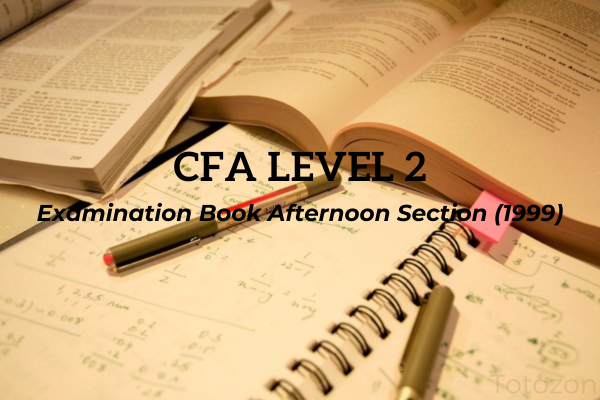 CFA Level 2 - Examination Book Afternoon Section (1999)
1 × $6.00
CFA Level 2 - Examination Book Afternoon Section (1999)
1 × $6.00 -
×
 Carolyn Boroden Package
1 × $15.00
Carolyn Boroden Package
1 × $15.00 -
×
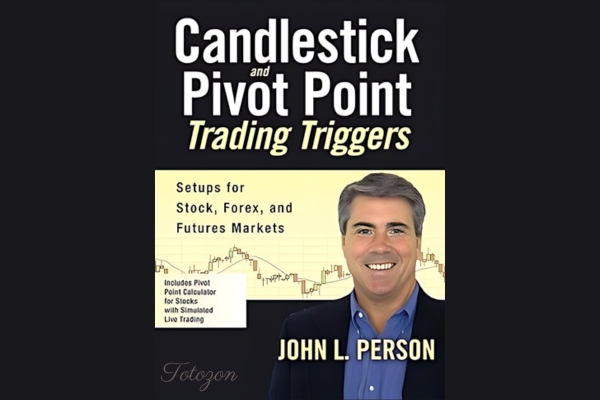 Candlestick and Pivot Point Trading Triggers with John Person
1 × $6.00
Candlestick and Pivot Point Trading Triggers with John Person
1 × $6.00 -
×
 The Orderflow Masterclass with PrimeTrading
1 × $17.00
The Orderflow Masterclass with PrimeTrading
1 × $17.00 -
×
 System Building Masterclass with Scott Phillips
1 × $15.00
System Building Masterclass with Scott Phillips
1 × $15.00 -
×
 5-Step-Trading Stocks II - Avoid Common Trading Mistakes - Online Course (April 2014)
1 × $23.00
5-Step-Trading Stocks II - Avoid Common Trading Mistakes - Online Course (April 2014)
1 × $23.00 -
×
 The Michanics of Futures Trading - Roy Habben
1 × $6.00
The Michanics of Futures Trading - Roy Habben
1 × $6.00 -
×
 Advanced Technical Strategies Home Study Course with T3 LIVE
1 × $31.00
Advanced Technical Strategies Home Study Course with T3 LIVE
1 × $31.00 -
×
 Bird Watch in Lion Country 2010 Ed with Dirk Du Toit
1 × $6.00
Bird Watch in Lion Country 2010 Ed with Dirk Du Toit
1 × $6.00 -
×
 The LP Trading Course
1 × $13.00
The LP Trading Course
1 × $13.00 -
×
 WondaFX Signature Strategy with WondaFX
1 × $5.00
WondaFX Signature Strategy with WondaFX
1 × $5.00 -
×
 Learn Investing & Trading with Danny Devan
1 × $23.00
Learn Investing & Trading with Danny Devan
1 × $23.00 -
×
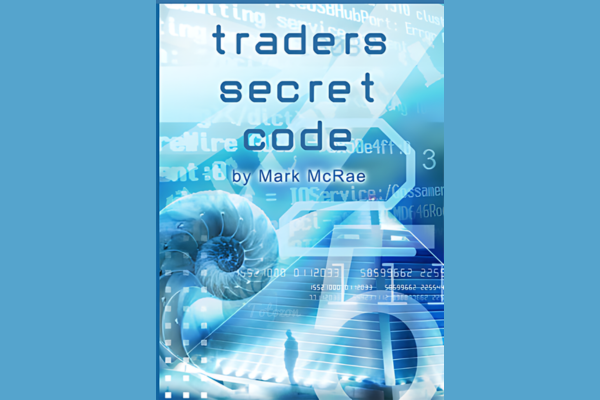 Traders Secret Code Complete Course with Mark McRae
1 × $6.00
Traders Secret Code Complete Course with Mark McRae
1 × $6.00 -
×
 0 DTE Options Trading Workshop with Aeromir Corporation
1 × $15.00
0 DTE Options Trading Workshop with Aeromir Corporation
1 × $15.00
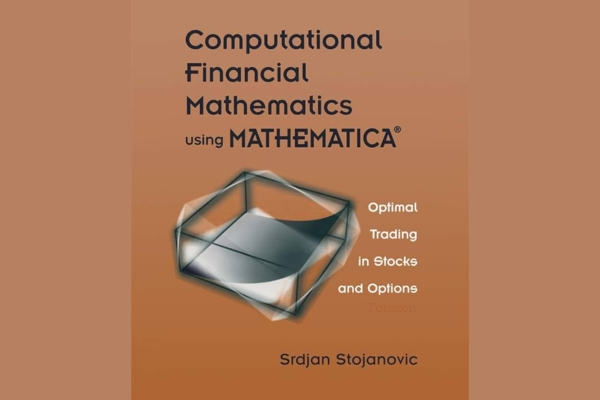
Computational Financial Mathematics with Mathematica
$6.00
File Size: Coming soon!
Delivery Time: 1–12 hours
Media Type: Online Course
Computational Financial Mathematics with Mathematica
Introduction
In the fast-paced world of finance, computational tools play a crucial role in analyzing and predicting market trends. Mathematica, developed by Wolfram Research, is one such powerful tool that offers extensive capabilities for financial mathematics. This article explores how Mathematica can be used in computational financial mathematics, its key features, and the benefits it brings to financial analysts and traders.
What is Computational Financial Mathematics?
Overview
Computational financial mathematics involves the application of mathematical models and computational techniques to solve problems in finance. It encompasses a wide range of areas, including risk management, option pricing, portfolio optimization, and financial forecasting.
Importance in Finance
- Risk Management: Helps in identifying and mitigating financial risks.
- Option Pricing: Provides accurate pricing models for derivatives.
- Portfolio Optimization: Aids in constructing portfolios that maximize returns for a given risk level.
- Forecasting: Enhances the prediction of market trends and financial outcomes.
Why Mathematica?
Advanced Computational Capabilities
Mathematica is renowned for its powerful computational engine that can handle complex mathematical models and large datasets.
Versatility
It supports a wide range of mathematical and statistical functions, making it suitable for various financial applications.
User-Friendly Interface
With its intuitive interface, Mathematica is accessible to both novice and experienced users.
Key Features of Mathematica for Financial Mathematics
Symbolic Computation
Algebraic Manipulation
- Simplifying Expressions: Automatically simplifies complex algebraic expressions.
- Solving Equations: Solves linear and nonlinear equations symbolically.
Differentiation and Integration
- Symbolic Differentiation: Calculates derivatives of functions symbolically.
- Symbolic Integration: Computes integrals, both definite and indefinite, symbolically.
Numerical Computation
Precision Control
- Arbitrary Precision: Performs calculations with arbitrary precision, crucial for financial models.
- Error Management: Manages numerical errors effectively.
Optimization
- Linear Programming: Solves linear optimization problems.
- Nonlinear Optimization: Handles complex nonlinear optimization problems.
Statistical Analysis
Descriptive Statistics
- Summary Statistics: Provides summary statistics like mean, median, variance, and standard deviation.
- Data Visualization: Creates histograms, box plots, and other visualizations.
Inferential Statistics
- Hypothesis Testing: Conducts various hypothesis tests.
- Regression Analysis: Performs linear and nonlinear regression analysis.
Financial Modeling
Time Series Analysis
- Data Manipulation: Handles time series data effectively.
- Forecasting Models: Develops and tests forecasting models.
Option Pricing
- Black-Scholes Model: Implements the Black-Scholes option pricing model.
- Monte Carlo Simulations: Performs Monte Carlo simulations for option pricing.
Practical Applications of Mathematica in Finance
Risk Management
Value at Risk (VaR)
- Calculation: Computes VaR for different confidence levels.
- Stress Testing: Conducts stress tests to evaluate financial resilience.
Portfolio Optimization
Markowitz Model
- Mean-Variance Optimization: Constructs an optimal portfolio based on the Markowitz model.
- Efficient Frontier: Plots the efficient frontier for portfolio selection.
Option Pricing
Black-Scholes Model
- Implementation: Uses Mathematica to implement and visualize the Black-Scholes model.
- Sensitivity Analysis: Conducts sensitivity analysis for various parameters.
Financial Forecasting
ARIMA Models
- Building Models: Develops ARIMA models for time series forecasting.
- Model Validation: Validates models using statistical tests and diagnostics.
Benefits of Using Mathematica
Accuracy
Mathematica provides high-precision computations, ensuring accurate financial analysis.
Efficiency
Automates complex calculations and data analysis, saving time and effort.
Flexibility
Adapts to various financial models and scenarios, making it a versatile tool for financial analysts.
Visualization
Creates high-quality visualizations that enhance the interpretation of financial data.
Getting Started with Mathematica
Installation
- Download: Obtain Mathematica from Wolfram Research’s official website.
- Setup: Follow the installation instructions to set up the software.
Basic Operations
- Interface Overview: Familiarize yourself with the Mathematica interface.
- Basic Commands: Learn essential commands for performing basic operations.
Advanced Techniques
- Custom Functions: Create custom functions for specific financial models.
- Automation: Automate repetitive tasks to improve efficiency.
Success Stories
Financial Institutions
Many financial institutions use Mathematica for risk management, portfolio optimization, and market analysis.
Individual Traders
Individual traders leverage Mathematica to develop and test trading strategies, enhancing their decision-making process.
Common Challenges and Solutions
Complexity of Models
Start with simpler models and gradually move to more complex ones to build confidence and understanding.
Data Integration
Ensure seamless integration of data sources to enhance the accuracy of your analysis.
Learning Curve
Utilize online tutorials, forums, and support from Wolfram Research to overcome the learning curve.
Conclusion
Computational financial mathematics with Mathematica offers unparalleled capabilities for financial analysis and modeling. Its advanced computational power, versatility, and user-friendly interface make it an essential tool for financial professionals. By leveraging Mathematica, you can enhance your analytical skills, improve decision-making, and achieve better financial outcomes.
FAQs
1. What is Computational Financial Mathematics?
It involves applying mathematical models and computational techniques to solve problems in finance.
2. Why use Mathematica for financial mathematics?
Mathematica offers powerful computational capabilities, versatility, and a user-friendly interface, making it ideal for financial analysis.
3. What are the key features of Mathematica?
Key features include symbolic and numerical computation, statistical analysis, financial modeling, and high-quality visualization.
4. How can Mathematica be used in risk management?
It can compute Value at Risk (VaR), conduct stress tests, and perform other risk management analyses.
5. What are some practical applications of Mathematica in finance?
Applications include risk management, portfolio optimization, option pricing, and financial forecasting.
Be the first to review “Computational Financial Mathematics with Mathematica”
You must be logged in to post a review.
Related products

Original price was: $2,120.00.$15.00Current price is: $15.00.
Forex Trading
Original price was: $125.00.$17.00Current price is: $17.00.

Forex Trading
Original price was: $239.00.$8.00Current price is: $8.00.

Forex Trading
Original price was: $697.00.$5.00Current price is: $5.00.
Forex Trading
Quantamentals – The Next Great Forefront Of Trading and Investing with Trading Markets
Original price was: $1,495.00.$8.00Current price is: $8.00.

Original price was: $700.00.$39.00Current price is: $39.00.

Forex Trading
Original price was: $799.00.$15.00Current price is: $15.00.

Forex Trading
Original price was: $1,898.00.$10.00Current price is: $10.00.

Forex Trading
Original price was: $4,997.00.$27.00Current price is: $27.00.

Forex Trading
Original price was: $500.00.$5.00Current price is: $5.00.

Original price was: $139.00.$23.00Current price is: $23.00.

Forex Trading
Original price was: $2,995.00.$31.00Current price is: $31.00.
Original price was: $695.00.$41.00Current price is: $41.00.

Forex Trading
The Complete Guide to Multiple Time Frame Analysis & Reading Price Action with Aiman Almansoori
Original price was: $1,399.00.$13.00Current price is: $13.00.
Forex Trading
Original price was: $550.00.$5.00Current price is: $5.00.

Original price was: $997.00.$8.00Current price is: $8.00.
Forex Trading
Original price was: $999.00.$15.00Current price is: $15.00.

Original price was: $1,800.00.$54.00Current price is: $54.00.

Forex Trading
Original price was: $2,000.00.$23.00Current price is: $23.00.

Original price was: $799.00.$15.00Current price is: $15.00.
Reviews
There are no reviews yet.