
-
×
 Four Steps to Trading Economic Indicators
1 × $6.00
Four Steps to Trading Economic Indicators
1 × $6.00 -
×
 The SPY Beginners Flys & Calendars Deep Dive 2023 with Dan Sheridan - Sheridan Options Mentoring
1 × $31.00
The SPY Beginners Flys & Calendars Deep Dive 2023 with Dan Sheridan - Sheridan Options Mentoring
1 × $31.00 -
×
 What is Strategy with Michael E.Porter
1 × $6.00
What is Strategy with Michael E.Porter
1 × $6.00 -
×
 The Orderflows Trade Opportunities Encyclopedia with Michael Valtos
1 × $8.00
The Orderflows Trade Opportunities Encyclopedia with Michael Valtos
1 × $8.00 -
×
 High Probability Continuation and Reversal Patterns
1 × $23.00
High Probability Continuation and Reversal Patterns
1 × $23.00 -
×
 Special Webinars Module 1 with Trader Dante
1 × $6.00
Special Webinars Module 1 with Trader Dante
1 × $6.00 -
×
 Train & Trade Academy with Omar Agag
1 × $5.00
Train & Trade Academy with Omar Agag
1 × $5.00 -
×
 Options, Futures & Other Derivatives . Solutions Manual
1 × $6.00
Options, Futures & Other Derivatives . Solutions Manual
1 × $6.00 -
×
 Market Expectations & Option Prices with Martin Mandler
1 × $6.00
Market Expectations & Option Prices with Martin Mandler
1 × $6.00 -
×
 Online Course: Forex Trading By Fxtc.co
1 × $5.00
Online Course: Forex Trading By Fxtc.co
1 × $5.00 -
×
 Volume, Trend and Momentum with Philip Roth
1 × $6.00
Volume, Trend and Momentum with Philip Roth
1 × $6.00 -
×
 Getting Rich in America with Dwight Lee
1 × $6.00
Getting Rich in America with Dwight Lee
1 × $6.00 -
×
 Nasdaq Trading Strategies Book with French Trader
1 × $6.00
Nasdaq Trading Strategies Book with French Trader
1 × $6.00 -
×
 Advanced Spread Trading with Guy Bower - MasterClass Trader
1 × $15.00
Advanced Spread Trading with Guy Bower - MasterClass Trader
1 × $15.00 -
×
 How Charts Can Help You in the Stock Market with William Jiller
1 × $6.00
How Charts Can Help You in the Stock Market with William Jiller
1 × $6.00 -
×
 30 Days to Market Mastery: A Step-by-Step Guide to Profitable Trading with Jack Bernstein
1 × $6.00
30 Days to Market Mastery: A Step-by-Step Guide to Profitable Trading with Jack Bernstein
1 × $6.00 -
×
 Power Charting - Robert’s Indicator Webinar
1 × $6.00
Power Charting - Robert’s Indicator Webinar
1 × $6.00 -
×
 ICT Charter 2020 with Inner Circle Trader
1 × $13.00
ICT Charter 2020 with Inner Circle Trader
1 × $13.00 -
×
 New York Institute of Finance – Futures. A Personal Seminar
1 × $6.00
New York Institute of Finance – Futures. A Personal Seminar
1 × $6.00 -
×
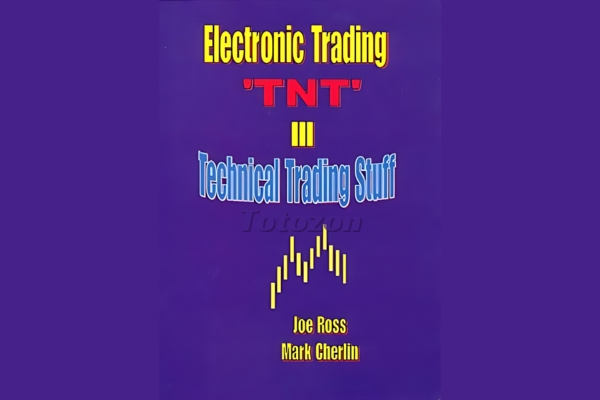 Electronic Trading "TNT" III Technical Trading Stuff with Joe Ross & Mark Cherlin
1 × $6.00
Electronic Trading "TNT" III Technical Trading Stuff with Joe Ross & Mark Cherlin
1 × $6.00 -
×
 Trading Instruments & Strategies with Andrew Baxter
1 × $6.00
Trading Instruments & Strategies with Andrew Baxter
1 × $6.00 -
×
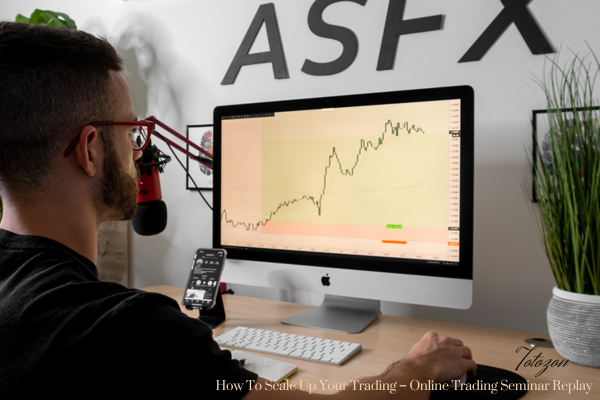 How To Scale Up Your Trading - Online Trading Seminar Replay with Austin Silver - ASFX
1 × $31.00
How To Scale Up Your Trading - Online Trading Seminar Replay with Austin Silver - ASFX
1 × $31.00 -
×
 Trading Psychology Masterclass with Jared Tendler - TraderLion
1 × $5.00
Trading Psychology Masterclass with Jared Tendler - TraderLion
1 × $5.00 -
×
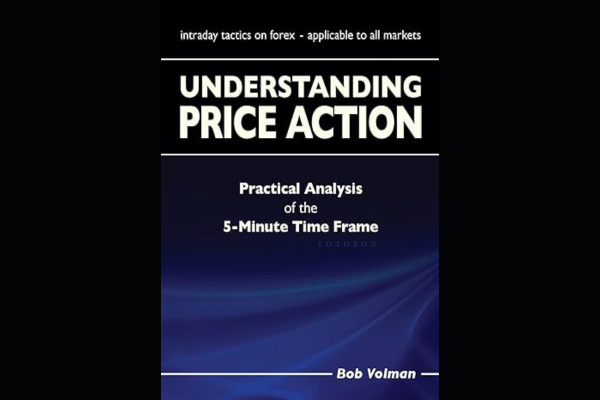 Understanding Price Action: practical analysis of the 5-minute time frame with Bob Volman
1 × $5.00
Understanding Price Action: practical analysis of the 5-minute time frame with Bob Volman
1 × $5.00 -
×
 Short Skirt Trading, the Most Bang for the Buck with Linda Raschke
1 × $6.00
Short Skirt Trading, the Most Bang for the Buck with Linda Raschke
1 × $6.00 -
×
 Understanding Wall Street (4th Ed.) with Jeffrey Little
1 × $6.00
Understanding Wall Street (4th Ed.) with Jeffrey Little
1 × $6.00 -
×
 Offshore Keys (2023)
1 × $5.00
Offshore Keys (2023)
1 × $5.00 -
×
 Forex Strategy Course with Angel Traders
1 × $6.00
Forex Strategy Course with Angel Traders
1 × $6.00 -
×
 Trading Short TermSame Day Trades Sep 2023 with Dan Sheridan & Mark Fenton - Sheridan Options Mentoring
1 × $31.00
Trading Short TermSame Day Trades Sep 2023 with Dan Sheridan & Mark Fenton - Sheridan Options Mentoring
1 × $31.00 -
×
 The Complete Guide to Multiple Time Frame Analysis & Reading Price Action with Aiman Almansoori
1 × $13.00
The Complete Guide to Multiple Time Frame Analysis & Reading Price Action with Aiman Almansoori
1 × $13.00 -
×
 Algo Trading Masterclass with Ali Casey - StatOasis
1 × $23.00
Algo Trading Masterclass with Ali Casey - StatOasis
1 × $23.00 -
×
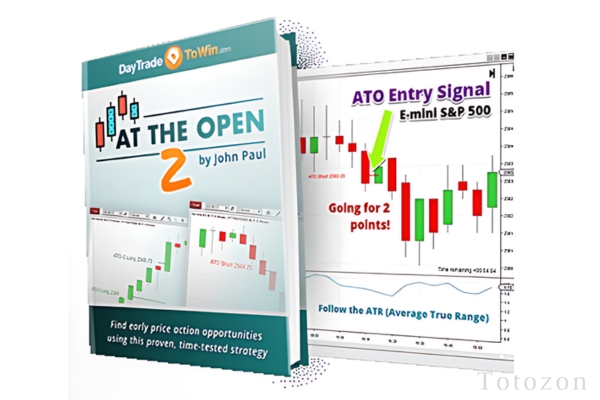 Day Trade to Win E-Course with John Paul
1 × $6.00
Day Trade to Win E-Course with John Paul
1 × $6.00 -
×
 Best of the Best: Collars with Amy Meissner & Scott Ruble
1 × $15.00
Best of the Best: Collars with Amy Meissner & Scott Ruble
1 × $15.00 -
×
 The A14 Weekly Option Strategy Workshop with Amy Meissner
1 × $23.00
The A14 Weekly Option Strategy Workshop with Amy Meissner
1 × $23.00 -
×
 Scalping Master Class with Day One Traders
1 × $5.00
Scalping Master Class with Day One Traders
1 × $5.00 -
×
 The Rare Writings of W.D Gann
1 × $6.00
The Rare Writings of W.D Gann
1 × $6.00 -
×
 The Prop Trading Code with Brannigan Barrett - Axia Futures
1 × $23.00
The Prop Trading Code with Brannigan Barrett - Axia Futures
1 × $23.00 -
×
 Profitable Binary Options Strategies
1 × $5.00
Profitable Binary Options Strategies
1 × $5.00 -
×
 How to Create & Manage a Mutal Fund or ETF with Melinda Gerber
1 × $6.00
How to Create & Manage a Mutal Fund or ETF with Melinda Gerber
1 × $6.00 -
×
 Quantamentals - The Next Great Forefront Of Trading and Investing with Trading Markets
1 × $8.00
Quantamentals - The Next Great Forefront Of Trading and Investing with Trading Markets
1 × $8.00 -
×
 Info Product Mastery - Ron Douglas & Alice Seba
1 × $6.00
Info Product Mastery - Ron Douglas & Alice Seba
1 × $6.00 -
×
 The GBP USD Trading System with A.Heuscher
1 × $6.00
The GBP USD Trading System with A.Heuscher
1 × $6.00 -
×
 CNBC 24-7 Trading with Barbara Rockefeller
1 × $6.00
CNBC 24-7 Trading with Barbara Rockefeller
1 × $6.00 -
×
 Prasna Tantra. Horary Astrology with Bangalore Venkata Raman
1 × $6.00
Prasna Tantra. Horary Astrology with Bangalore Venkata Raman
1 × $6.00 -
×
 White Phoenix’s The Smart (Money) Approach to Trading with Jayson Casper
1 × $39.00
White Phoenix’s The Smart (Money) Approach to Trading with Jayson Casper
1 × $39.00 -
×
 The Trading Blueprint with Brad Goh - The Trading Geek
1 × $5.00
The Trading Blueprint with Brad Goh - The Trading Geek
1 × $5.00 -
×
 Professor Jeff Bierman's 15 Class Bundle (The Professor's Package)
1 × $6.00
Professor Jeff Bierman's 15 Class Bundle (The Professor's Package)
1 × $6.00 -
×
 Deep Dive Butterfly Trading Strategy Class with SJG Trades
1 × $41.00
Deep Dive Butterfly Trading Strategy Class with SJG Trades
1 × $41.00 -
×
 AI For Traders with Trading Markets
1 × $31.00
AI For Traders with Trading Markets
1 × $31.00 -
×
 Tracking & Kalman Filtering Made Easy with Eli Brookner
1 × $6.00
Tracking & Kalman Filtering Made Easy with Eli Brookner
1 × $6.00 -
×
 TradeCraft: Your Path to Peak Performance Trading By Adam Grimes
1 × $15.00
TradeCraft: Your Path to Peak Performance Trading By Adam Grimes
1 × $15.00 -
×
 TRADING NFX Course with Andrew NFX
1 × $5.00
TRADING NFX Course with Andrew NFX
1 × $5.00
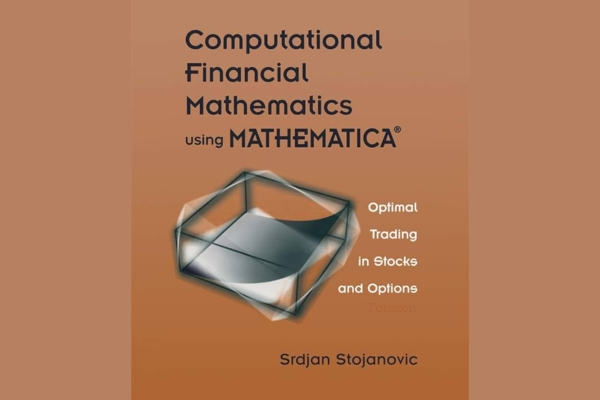
Computational Financial Mathematics with Mathematica
$6.00
File Size: Coming soon!
Delivery Time: 1–12 hours
Media Type: Online Course
Computational Financial Mathematics with Mathematica
Introduction
In the fast-paced world of finance, computational tools play a crucial role in analyzing and predicting market trends. Mathematica, developed by Wolfram Research, is one such powerful tool that offers extensive capabilities for financial mathematics. This article explores how Mathematica can be used in computational financial mathematics, its key features, and the benefits it brings to financial analysts and traders.
What is Computational Financial Mathematics?
Overview
Computational financial mathematics involves the application of mathematical models and computational techniques to solve problems in finance. It encompasses a wide range of areas, including risk management, option pricing, portfolio optimization, and financial forecasting.
Importance in Finance
- Risk Management: Helps in identifying and mitigating financial risks.
- Option Pricing: Provides accurate pricing models for derivatives.
- Portfolio Optimization: Aids in constructing portfolios that maximize returns for a given risk level.
- Forecasting: Enhances the prediction of market trends and financial outcomes.
Why Mathematica?
Advanced Computational Capabilities
Mathematica is renowned for its powerful computational engine that can handle complex mathematical models and large datasets.
Versatility
It supports a wide range of mathematical and statistical functions, making it suitable for various financial applications.
User-Friendly Interface
With its intuitive interface, Mathematica is accessible to both novice and experienced users.
Key Features of Mathematica for Financial Mathematics
Symbolic Computation
Algebraic Manipulation
- Simplifying Expressions: Automatically simplifies complex algebraic expressions.
- Solving Equations: Solves linear and nonlinear equations symbolically.
Differentiation and Integration
- Symbolic Differentiation: Calculates derivatives of functions symbolically.
- Symbolic Integration: Computes integrals, both definite and indefinite, symbolically.
Numerical Computation
Precision Control
- Arbitrary Precision: Performs calculations with arbitrary precision, crucial for financial models.
- Error Management: Manages numerical errors effectively.
Optimization
- Linear Programming: Solves linear optimization problems.
- Nonlinear Optimization: Handles complex nonlinear optimization problems.
Statistical Analysis
Descriptive Statistics
- Summary Statistics: Provides summary statistics like mean, median, variance, and standard deviation.
- Data Visualization: Creates histograms, box plots, and other visualizations.
Inferential Statistics
- Hypothesis Testing: Conducts various hypothesis tests.
- Regression Analysis: Performs linear and nonlinear regression analysis.
Financial Modeling
Time Series Analysis
- Data Manipulation: Handles time series data effectively.
- Forecasting Models: Develops and tests forecasting models.
Option Pricing
- Black-Scholes Model: Implements the Black-Scholes option pricing model.
- Monte Carlo Simulations: Performs Monte Carlo simulations for option pricing.
Practical Applications of Mathematica in Finance
Risk Management
Value at Risk (VaR)
- Calculation: Computes VaR for different confidence levels.
- Stress Testing: Conducts stress tests to evaluate financial resilience.
Portfolio Optimization
Markowitz Model
- Mean-Variance Optimization: Constructs an optimal portfolio based on the Markowitz model.
- Efficient Frontier: Plots the efficient frontier for portfolio selection.
Option Pricing
Black-Scholes Model
- Implementation: Uses Mathematica to implement and visualize the Black-Scholes model.
- Sensitivity Analysis: Conducts sensitivity analysis for various parameters.
Financial Forecasting
ARIMA Models
- Building Models: Develops ARIMA models for time series forecasting.
- Model Validation: Validates models using statistical tests and diagnostics.
Benefits of Using Mathematica
Accuracy
Mathematica provides high-precision computations, ensuring accurate financial analysis.
Efficiency
Automates complex calculations and data analysis, saving time and effort.
Flexibility
Adapts to various financial models and scenarios, making it a versatile tool for financial analysts.
Visualization
Creates high-quality visualizations that enhance the interpretation of financial data.
Getting Started with Mathematica
Installation
- Download: Obtain Mathematica from Wolfram Research’s official website.
- Setup: Follow the installation instructions to set up the software.
Basic Operations
- Interface Overview: Familiarize yourself with the Mathematica interface.
- Basic Commands: Learn essential commands for performing basic operations.
Advanced Techniques
- Custom Functions: Create custom functions for specific financial models.
- Automation: Automate repetitive tasks to improve efficiency.
Success Stories
Financial Institutions
Many financial institutions use Mathematica for risk management, portfolio optimization, and market analysis.
Individual Traders
Individual traders leverage Mathematica to develop and test trading strategies, enhancing their decision-making process.
Common Challenges and Solutions
Complexity of Models
Start with simpler models and gradually move to more complex ones to build confidence and understanding.
Data Integration
Ensure seamless integration of data sources to enhance the accuracy of your analysis.
Learning Curve
Utilize online tutorials, forums, and support from Wolfram Research to overcome the learning curve.
Conclusion
Computational financial mathematics with Mathematica offers unparalleled capabilities for financial analysis and modeling. Its advanced computational power, versatility, and user-friendly interface make it an essential tool for financial professionals. By leveraging Mathematica, you can enhance your analytical skills, improve decision-making, and achieve better financial outcomes.
FAQs
1. What is Computational Financial Mathematics?
It involves applying mathematical models and computational techniques to solve problems in finance.
2. Why use Mathematica for financial mathematics?
Mathematica offers powerful computational capabilities, versatility, and a user-friendly interface, making it ideal for financial analysis.
3. What are the key features of Mathematica?
Key features include symbolic and numerical computation, statistical analysis, financial modeling, and high-quality visualization.
4. How can Mathematica be used in risk management?
It can compute Value at Risk (VaR), conduct stress tests, and perform other risk management analyses.
5. What are some practical applications of Mathematica in finance?
Applications include risk management, portfolio optimization, option pricing, and financial forecasting.
Be the first to review “Computational Financial Mathematics with Mathematica”
You must be logged in to post a review.
Related products

Forex Trading
Original price was: $2,997.00.$23.00Current price is: $23.00.
Forex Trading
Original price was: $397.00.$31.00Current price is: $31.00.

Original price was: $450.00.$23.00Current price is: $23.00.

Forex Trading
Original price was: $799.00.$15.00Current price is: $15.00.
Original price was: $895.00.$15.00Current price is: $15.00.
Original price was: $695.00.$41.00Current price is: $41.00.

Forex Trading
Original price was: $797.00.$10.00Current price is: $10.00.

Original price was: $497.00.$31.00Current price is: $31.00.

Forex Trading
Original price was: $4,997.00.$27.00Current price is: $27.00.

Original price was: $1,849.00.$15.00Current price is: $15.00.

Original price was: $649.00.$20.00Current price is: $20.00.

Forex Trading
Original price was: $249.00.$15.00Current price is: $15.00.
Original price was: $700.00.$39.00Current price is: $39.00.
Forex Trading
Original price was: $697.00.$5.00Current price is: $5.00.
Original price was: $4,995.00.$15.00Current price is: $15.00.

Original price was: $1,800.00.$54.00Current price is: $54.00.

Forex Trading
Original price was: $239.00.$8.00Current price is: $8.00.

Original price was: $2,120.00.$15.00Current price is: $15.00.

Original price was: $999.00.$5.00Current price is: $5.00.

Original price was: $197.00.$5.00Current price is: $5.00.
Reviews
There are no reviews yet.