
-
×
 Volume Profile 2023 (Elite Pack) with Trader Dale
1 × $5.00
Volume Profile 2023 (Elite Pack) with Trader Dale
1 × $5.00 -
×
 SO FX Educational Course with SO FX
1 × $5.00
SO FX Educational Course with SO FX
1 × $5.00 -
×
 SQX Mentorship with Tip Toe Hippo
1 × $23.00
SQX Mentorship with Tip Toe Hippo
1 × $23.00 -
×
 The Trading Blueprint with Brad Goh - The Trading Geek
1 × $5.00
The Trading Blueprint with Brad Goh - The Trading Geek
1 × $5.00 -
×
 Capital Asset Investment with Anthony F.Herbst
1 × $6.00
Capital Asset Investment with Anthony F.Herbst
1 × $6.00 -
×
 The All Put Flat Butterfly with Dan Sheridan - Sheridan Options Mentoring
1 × $6.00
The All Put Flat Butterfly with Dan Sheridan - Sheridan Options Mentoring
1 × $6.00 -
×
 How To Flip All Those “Hard To Flip” Deals
1 × $6.00
How To Flip All Those “Hard To Flip” Deals
1 × $6.00 -
×
 Managing Debt for Dummies with John Ventura
1 × $6.00
Managing Debt for Dummies with John Ventura
1 × $6.00 -
×
 Small and Mighty Association with Ryan Lee
1 × $6.00
Small and Mighty Association with Ryan Lee
1 × $6.00 -
×
 Trading Natural Resources in a Volatile Market with Kevin Kerr
1 × $6.00
Trading Natural Resources in a Volatile Market with Kevin Kerr
1 × $6.00 -
×
 Forex Millionaire Course with Willis University
1 × $6.00
Forex Millionaire Course with Willis University
1 × $6.00 -
×
 Daytraders Bulletin – Recurrent Structures for Profit with Charles Holt
1 × $6.00
Daytraders Bulletin – Recurrent Structures for Profit with Charles Holt
1 × $6.00 -
×
 Price Action Trading Volume 3 with Fractal Flow Pro
1 × $6.00
Price Action Trading Volume 3 with Fractal Flow Pro
1 × $6.00 -
×
 Global Product with John Stark
1 × $6.00
Global Product with John Stark
1 × $6.00 -
×
 Master Trader with InvestingSimple
1 × $15.00
Master Trader with InvestingSimple
1 × $15.00 -
×
 Gap Trading for Stock and Options Traders with Damon Verial
1 × $6.00
Gap Trading for Stock and Options Traders with Damon Verial
1 × $6.00 -
×
 Option Strategies with Courtney Smith
1 × $6.00
Option Strategies with Courtney Smith
1 × $6.00 -
×
 Advanced Spread Trading with Guy Bower - MasterClass Trader
1 × $15.00
Advanced Spread Trading with Guy Bower - MasterClass Trader
1 × $15.00 -
×
 Change Happens. Do You Profit Or Does Someone Else (Traders Expo Las Vegas Dec 2005) by Tobin Smith
1 × $6.00
Change Happens. Do You Profit Or Does Someone Else (Traders Expo Las Vegas Dec 2005) by Tobin Smith
1 × $6.00 -
×
 Future Energy with Bill Paul
1 × $6.00
Future Energy with Bill Paul
1 × $6.00 -
×
 Commodities and Commodity Derivatives: Modeling and Pricing for Agriculturals, Metals and Energy - Helyette Geman
1 × $6.00
Commodities and Commodity Derivatives: Modeling and Pricing for Agriculturals, Metals and Energy - Helyette Geman
1 × $6.00 -
×
 The Indices Orderflow Masterclass with The Forex Scalpers
1 × $23.00
The Indices Orderflow Masterclass with The Forex Scalpers
1 × $23.00 -
×
 Kicker Signals with Stephen W.Bigalow
1 × $6.00
Kicker Signals with Stephen W.Bigalow
1 × $6.00 -
×
 Candle Charting Essentials & Beyond Volume 1 & 2 with Steve Nison - Candle Charts
1 × $15.00
Candle Charting Essentials & Beyond Volume 1 & 2 with Steve Nison - Candle Charts
1 × $15.00 -
×
 Learn To Trade with Tori Trades
1 × $8.00
Learn To Trade with Tori Trades
1 × $8.00 -
×
 Advanced Forex Mastery Course with Alpha Forex Global
1 × $5.00
Advanced Forex Mastery Course with Alpha Forex Global
1 × $5.00 -
×
 A Mathematician Plays The Stock Market with John Allen Paulos
1 × $6.00
A Mathematician Plays The Stock Market with John Allen Paulos
1 × $6.00 -
×
 Core Strategy Program + Extended Learning Track with Ota Courses
1 × $124.00
Core Strategy Program + Extended Learning Track with Ota Courses
1 × $124.00 -
×
 The LP Trading Course
1 × $13.00
The LP Trading Course
1 × $13.00 -
×
 Timing the Market with Curtis Arnold
1 × $6.00
Timing the Market with Curtis Arnold
1 × $6.00 -
×
 Learn how to trade Volatility 75 Index Technical Analysis with Patrick Muke
1 × $6.00
Learn how to trade Volatility 75 Index Technical Analysis with Patrick Muke
1 × $6.00 -
×
 NASDAQ Level II Trading Strategies
1 × $6.00
NASDAQ Level II Trading Strategies
1 × $6.00 -
×
 Best of AM Review (Volume 1-3) with Peter Bain
1 × $6.00
Best of AM Review (Volume 1-3) with Peter Bain
1 × $6.00 -
×
 More on the Short Cycles of Interest Rates (Article) with Arie Melnik, Alan Kraus
1 × $6.00
More on the Short Cycles of Interest Rates (Article) with Arie Melnik, Alan Kraus
1 × $6.00 -
×
 Become A Quant Trader Bundle with Lachezar Haralampiev & Radoslav Haralampiev - Quant Factory
1 × $17.00
Become A Quant Trader Bundle with Lachezar Haralampiev & Radoslav Haralampiev - Quant Factory
1 × $17.00 -
×
 Master Class Recording 2019 with Oil Trading Academy
1 × $17.00
Master Class Recording 2019 with Oil Trading Academy
1 × $17.00 -
×
 3_8’s to Wealth (Audio 84 MB+ WorkBooks) with Darlene Nelson
1 × $6.00
3_8’s to Wealth (Audio 84 MB+ WorkBooks) with Darlene Nelson
1 × $6.00 -
×
 The Practical Fractal with Bill Williams
1 × $6.00
The Practical Fractal with Bill Williams
1 × $6.00 -
×
 Advanced Bond Trading Course
1 × $62.00
Advanced Bond Trading Course
1 × $62.00 -
×
 Dynamic Trader 6 Dynamic Trader Real Time and End Of Day
1 × $6.00
Dynamic Trader 6 Dynamic Trader Real Time and End Of Day
1 × $6.00 -
×
 Diary of an Internet Trader with Alpesh Patel
1 × $6.00
Diary of an Internet Trader with Alpesh Patel
1 × $6.00 -
×
 Learn To Profit From The Forex Market with FX Hustle
1 × $6.00
Learn To Profit From The Forex Market with FX Hustle
1 × $6.00 -
×
 Pristine - Dan Gibby – Mastering Breakouts & Breakdowns
1 × $6.00
Pristine - Dan Gibby – Mastering Breakouts & Breakdowns
1 × $6.00 -
×
 7 Day FX Mastery Course with Market Masters
1 × $6.00
7 Day FX Mastery Course with Market Masters
1 × $6.00 -
×
 Measuring & Controlling Interest Rate & Credit Risk (2nd Ed.) with Frank Fabozzi, Steven Mann & Moorad Choudhry
1 × $6.00
Measuring & Controlling Interest Rate & Credit Risk (2nd Ed.) with Frank Fabozzi, Steven Mann & Moorad Choudhry
1 × $6.00 -
×
 Reading & Understanding Charts with Andrew Baxter
1 × $6.00
Reading & Understanding Charts with Andrew Baxter
1 × $6.00 -
×
 Forex Trading Using Fibonacci & Elliott Wave with Todd Gordon
1 × $6.00
Forex Trading Using Fibonacci & Elliott Wave with Todd Gordon
1 × $6.00 -
×
 How the Stock Market Works with Ramon DeGennaro
1 × $5.00
How the Stock Market Works with Ramon DeGennaro
1 × $5.00 -
×
 Pairs Trading The Final Frontier with Don Kaufman
1 × $6.00
Pairs Trading The Final Frontier with Don Kaufman
1 × $6.00 -
×
 Big Profit Patterns Using Candlestick Signals & Gaps with Stephen W.Bigalow
1 × $6.00
Big Profit Patterns Using Candlestick Signals & Gaps with Stephen W.Bigalow
1 × $6.00 -
×
 Professional Chart Reading Bootcamp - 2 CDs
1 × $6.00
Professional Chart Reading Bootcamp - 2 CDs
1 × $6.00 -
×
 Cryptocurrency Investment Course 2021 Fund your Retirement with Suppoman
1 × $5.00
Cryptocurrency Investment Course 2021 Fund your Retirement with Suppoman
1 × $5.00 -
×
 From Walden to Wall Street: Frontiers of Conservation Finance with James Levitt
1 × $6.00
From Walden to Wall Street: Frontiers of Conservation Finance with James Levitt
1 × $6.00 -
×
 How To Read The Market Professionally with TradeSmart
1 × $27.00
How To Read The Market Professionally with TradeSmart
1 × $27.00 -
×
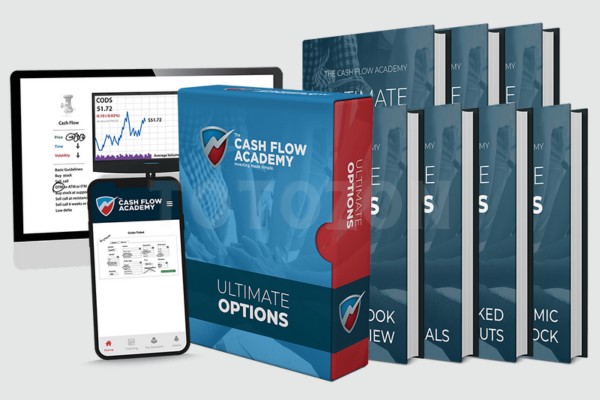 Ultimate Options with Andy Tanner & Corey Halliday - The Cashflow Academy
1 × $139.00
Ultimate Options with Andy Tanner & Corey Halliday - The Cashflow Academy
1 × $139.00 -
×
 D5 Render Course with Nuno Silva
1 × $27.00
D5 Render Course with Nuno Silva
1 × $27.00 -
×
 The Practical Application of Fibonacci Analysis to Investment Markets
1 × $6.00
The Practical Application of Fibonacci Analysis to Investment Markets
1 × $6.00 -
×
 How to Buy Stocks Before They Skyrocket
1 × $6.00
How to Buy Stocks Before They Skyrocket
1 × $6.00 -
×
 Trading Against the Crowd with John Summa
1 × $6.00
Trading Against the Crowd with John Summa
1 × $6.00 -
×
 The Trading Vault with Anne-Marie Baiynd
1 × $54.00
The Trading Vault with Anne-Marie Baiynd
1 × $54.00 -
×
 Advanced Course with Jtrader
1 × $6.00
Advanced Course with Jtrader
1 × $6.00 -
×
 Best of the Best: Collars with Amy Meissner & Scott Ruble
1 × $15.00
Best of the Best: Collars with Amy Meissner & Scott Ruble
1 × $15.00
Trading the Elliott Waves with Robert Prechter
Original price was: $79.00.$15.00Current price is: $15.00.
File Size: Coming soon!
Delivery Time: 1–12 hours
Media Type: Online Course
Trading the Elliott Waves with Robert Prechter
Introduction to Elliott Wave Theory
The financial markets are often seen as unpredictable and chaotic. However, Ralph Nelson Elliott proposed a theory that markets move in repetitive patterns or waves. Trading the Elliott Waves with Robert Prechter delves deep into this theory, offering traders valuable insights and strategies to capitalize on these patterns.
What is Elliott Wave Theory?
Basic Concepts
Elliott Wave Theory suggests that market prices move in predictable patterns called waves. These waves are a reflection of the collective investor psychology, which swings between optimism and pessimism.
Structure of Waves
- Impulse Waves: Move in the direction of the overall trend and consist of five waves.
- Corrective Waves: Move against the trend and consist of three waves.
Who is Robert Prechter?
A Pioneer in Elliott Wave Theory
Robert Prechter is one of the most renowned experts in Elliott Wave Theory. He popularized the theory through his books and founded Elliott Wave International, providing comprehensive market analysis and forecasts based on the theory.
Prechter’s Contributions
- Educational Resources: Authored numerous books and articles on Elliott Wave Theory.
- Market Forecasting: Provided accurate market predictions using wave analysis.
Understanding Impulse Waves
Five-Wave Structure
Impulse waves are composed of five distinct waves: three motive waves (1, 3, and 5) and two corrective waves (2 and 4).
Wave Characteristics
- Wave 1: The initial move up.
- Wave 2: A retracement that never goes beyond the start of wave 1.
- Wave 3: Typically the longest and strongest wave.
- Wave 4: Another retracement.
- Wave 5: The final leg up in the direction of the trend.
Understanding Corrective Waves
Three-Wave Structure
Corrective waves consist of three waves labeled A, B, and C.
Types of Corrective Waves
- Zigzag: A simple 5-3-5 pattern.
- Flat: A 3-3-5 pattern where wave B ends near the start of wave A.
- Triangle: A sideways corrective pattern.
Trading Strategies Using Elliott Wave Theory
Identifying Wave Patterns
The first step in trading with Elliott Waves is to identify the wave patterns. This involves analyzing market charts to distinguish between impulse and corrective waves.
Entry and Exit Points
- Entry Points: Often at the beginning of wave 3 or wave 5.
- Exit Points: Near the end of wave 5 or during corrective wave patterns.
Risk Management
- Stop-Loss Orders: Place stop-loss orders below the beginning of wave 1 for long positions.
- Position Sizing: Adjust position sizes based on the wave structure and market conditions.
Combining Elliott Wave with Other Indicators
Moving Averages
Moving averages can help confirm wave patterns by smoothing out price data and highlighting the trend direction.
Fibonacci Retracements
Fibonacci retracement levels often correspond with the end of corrective waves, providing potential entry points.
Relative Strength Index (RSI)
RSI can help identify overbought or oversold conditions, aligning with the end of impulse or corrective waves.
Common Challenges in Elliott Wave Trading
Subjectivity
Elliott Wave Theory is somewhat subjective, as identifying wave patterns can vary between analysts.
Complexity
The theory requires a deep understanding and practice to apply effectively, as wave patterns can be complex and multifaceted.
Market Volatility
High market volatility can make wave patterns less clear and harder to interpret.
Case Studies and Real-World Examples
Historical Market Movements
Examining historical market movements through the lens of Elliott Wave Theory can provide insights into its effectiveness.
Success Stories
Traders who have successfully used Elliott Wave Theory to predict market movements and make profitable trades.
Educational Resources for Elliott Wave Theory
Books by Robert Prechter
- Elliott Wave Principle: Prechter’s definitive guide to the theory.
- Conquer the Crash: A guide to surviving and prospering during a deflationary depression.
Online Courses and Seminars
Elliott Wave International offers a variety of online courses, webinars, and seminars to help traders master the theory.
Software and Tools for Elliott Wave Analysis
Charting Software
Many charting software programs include tools specifically for Elliott Wave analysis, making it easier to identify and track wave patterns.
Automated Wave Counting Tools
Some platforms offer automated wave counting tools to help traders identify wave patterns without manual charting.
Future Trends in Elliott Wave Theory
Integration with AI
AI and machine learning are beginning to play a role in Elliott Wave analysis, providing more precise and automated wave identification.
Increased Adoption
As more traders recognize the value of Elliott Wave Theory, its adoption continues to grow in the trading community.
Conclusion
Trading the Elliott Waves with Robert Prechter provides traders with a powerful framework for understanding and predicting market movements. By mastering the principles of Elliott Wave Theory and applying them in conjunction with other technical indicators, traders can enhance their market analysis and improve their trading success. Whether you are a novice or an experienced trader, the insights offered by Robert Prechter can help you navigate the complexities of the financial markets with greater confidence.
Frequently Asked Questions
1. What is Elliott Wave Theory?
Elliott Wave Theory is a technical analysis framework that suggests market prices move in predictable patterns or waves.
2. Who is Robert Prechter?
Robert Prechter is a renowned expert in Elliott Wave Theory, known for his educational contributions and market forecasts.
3. How can I use Elliott Wave Theory in trading?
Identify wave patterns to determine entry and exit points, and use additional indicators like moving averages and RSI for confirmation.
4. What are the main challenges in using Elliott Wave Theory?
The theory can be subjective and complex, requiring practice and deep understanding to apply effectively.
5. Where can I learn more about Elliott Wave Theory?
Books by Robert Prechter and online co
Be the first to review “Trading the Elliott Waves with Robert Prechter”
You must be logged in to post a review.
Related products

Original price was: $4,995.00.$15.00Current price is: $15.00.

Original price was: $139.00.$23.00Current price is: $23.00.

Forex Trading
Original price was: $249.00.$15.00Current price is: $15.00.

Forex Trading
Original price was: $550.00.$5.00Current price is: $5.00.

Original price was: $2,120.00.$15.00Current price is: $15.00.

Original price was: $310.00.$23.00Current price is: $23.00.

Forex Trading
Original price was: $125.00.$17.00Current price is: $17.00.
Forex Trading
Original price was: $2,997.00.$23.00Current price is: $23.00.

Forex Trading
Original price was: $2,995.00.$31.00Current price is: $31.00.

Forex Trading
Original price was: $397.00.$31.00Current price is: $31.00.

Forex Trading
Original price was: $797.00.$10.00Current price is: $10.00.

Original price was: $197.00.$5.00Current price is: $5.00.

Forex Trading
Original price was: $850.00.$23.00Current price is: $23.00.

Forex Trading
Original price was: $799.00.$15.00Current price is: $15.00.

Original price was: $299.00.$8.00Current price is: $8.00.

Original price was: $497.00.$31.00Current price is: $31.00.

Forex Trading
Original price was: $1,898.00.$10.00Current price is: $10.00.

Forex Trading
Original price was: $239.00.$8.00Current price is: $8.00.

Forex Trading
Quantamentals – The Next Great Forefront Of Trading and Investing with Trading Markets
Original price was: $1,495.00.$8.00Current price is: $8.00.

Original price was: $497.00.$11.00Current price is: $11.00.

Reviews
There are no reviews yet.