
-
×
 Advanced Risk Reversals and Rolling Thunder with Stratagem Trade
1 × $54.00
Advanced Risk Reversals and Rolling Thunder with Stratagem Trade
1 × $54.00 -
×
 Big Fish Shark Bite Strategy
1 × $15.00
Big Fish Shark Bite Strategy
1 × $15.00 -
×
 Bond Market Course with The Macro Compass
1 × $15.00
Bond Market Course with The Macro Compass
1 × $15.00 -
×
 Boomer Quick Profits Day Trading Course
1 × $23.00
Boomer Quick Profits Day Trading Course
1 × $23.00 -
×
 Quantamentals - The Next Great Forefront Of Trading and Investing with Trading Markets
1 × $8.00
Quantamentals - The Next Great Forefront Of Trading and Investing with Trading Markets
1 × $8.00 -
×
 Emini, Forex, Stock Course COMPLETE Series Recorded Seminar 2009 - 49 Modules in 3 DVDs (SpecialistTrading.com)
1 × $78.00
Emini, Forex, Stock Course COMPLETE Series Recorded Seminar 2009 - 49 Modules in 3 DVDs (SpecialistTrading.com)
1 × $78.00 -
×
 FestX Main Online video Course with Clint Fester
1 × $5.00
FestX Main Online video Course with Clint Fester
1 × $5.00 -
×
 The Dynamic Trading Master Course with Robert Miner
1 × $54.00
The Dynamic Trading Master Course with Robert Miner
1 × $54.00 -
×
 Investment Strategies for the 21th Century with Frank Amstrong
1 × $6.00
Investment Strategies for the 21th Century with Frank Amstrong
1 × $6.00 -
×
 Investing Guide For New Investor with Alfred Scillitani
1 × $6.00
Investing Guide For New Investor with Alfred Scillitani
1 × $6.00 -
×
 Acme
1 × $6.00
Acme
1 × $6.00 -
×
 Complete Guide to Online Stock Market Investing (2nd Edition) with Alexander Davidson
1 × $6.00
Complete Guide to Online Stock Market Investing (2nd Edition) with Alexander Davidson
1 × $6.00 -
×
 Complete Trading Course with Sean Dekmar
1 × $5.00
Complete Trading Course with Sean Dekmar
1 × $5.00 -
×
 Scalp Strategy and Flipping Small Accounts with Opes Trading Group
1 × $5.00
Scalp Strategy and Flipping Small Accounts with Opes Trading Group
1 × $5.00 -
×
 Full 2 Day Dark Pool And Market Strategy Training
1 × $6.00
Full 2 Day Dark Pool And Market Strategy Training
1 × $6.00 -
×
 Profit Generating System with Brian Williams
1 × $6.00
Profit Generating System with Brian Williams
1 × $6.00 -
×
 The Taylor Trading Technique with G.Douglas Taylor
1 × $6.00
The Taylor Trading Technique with G.Douglas Taylor
1 × $6.00 -
×
 Small and Mighty Association with Ryan Lee
1 × $6.00
Small and Mighty Association with Ryan Lee
1 × $6.00 -
×
 Prasna Tantra. Horary Astrology with Bangalore Venkata Raman
1 × $6.00
Prasna Tantra. Horary Astrology with Bangalore Venkata Raman
1 × $6.00 -
×
 White Phoenix’s The Smart (Money) Approach to Trading with Jayson Casper
1 × $39.00
White Phoenix’s The Smart (Money) Approach to Trading with Jayson Casper
1 × $39.00 -
×
 Hedged Strategy Series in Volatile Markets All 4 with Dan Sheridan
1 × $15.00
Hedged Strategy Series in Volatile Markets All 4 with Dan Sheridan
1 × $15.00 -
×
 Evolution Course with Kevin Trades
1 × $15.00
Evolution Course with Kevin Trades
1 × $15.00 -
×
 Revolutionary Proven 3 Step with NFTs Cracked
1 × $6.00
Revolutionary Proven 3 Step with NFTs Cracked
1 × $6.00 -
×
 The Science of Trading with Mark Boucher
1 × $6.00
The Science of Trading with Mark Boucher
1 × $6.00 -
×
 System Building Masterclass
1 × $31.00
System Building Masterclass
1 × $31.00 -
×
 Geometry of Markets I with Bruce Gilmore
1 × $6.00
Geometry of Markets I with Bruce Gilmore
1 × $6.00 -
×
 Options, Futures, and Other Derivative Securities
1 × $6.00
Options, Futures, and Other Derivative Securities
1 × $6.00 -
×
 Pricing of Bond Options with Detlef Repplinger
1 × $6.00
Pricing of Bond Options with Detlef Repplinger
1 × $6.00 -
×
 Ron Wagner – Creating a Profitable Trading & Investing Plan. 6 Key Components with Pristine
1 × $4.00
Ron Wagner – Creating a Profitable Trading & Investing Plan. 6 Key Components with Pristine
1 × $4.00 -
×
 Arcane 2.0 Course
1 × $6.00
Arcane 2.0 Course
1 × $6.00 -
×
 How to Spot a Trade Before it Happens (marketsmastered.com) with Markets Mastered
1 × $6.00
How to Spot a Trade Before it Happens (marketsmastered.com) with Markets Mastered
1 × $6.00 -
×
 Accelerated Learning Techniques in Action with Colin Rose, Jayne Nicholl & Malcolm Nicholl
1 × $6.00
Accelerated Learning Techniques in Action with Colin Rose, Jayne Nicholl & Malcolm Nicholl
1 × $6.00 -
×
 Forex Trading Course. Turn $1,260 Into $12,300 In 30 Days with David Arena
1 × $6.00
Forex Trading Course. Turn $1,260 Into $12,300 In 30 Days with David Arena
1 × $6.00 -
×
 Ron Wagner - Creating a Profitable Trading & Investing Plan + Techniques to Perfect Your Intraday GAP
1 × $6.00
Ron Wagner - Creating a Profitable Trading & Investing Plan + Techniques to Perfect Your Intraday GAP
1 × $6.00 -
×
 The Ten Most Powerful Option Trading Secrets with Bernie Schaeffer
1 × $6.00
The Ten Most Powerful Option Trading Secrets with Bernie Schaeffer
1 × $6.00 -
×
 Discounted Cash Flow Valuation: Spot Undervalued Stocks Fast with Jari Roomer
1 × $6.00
Discounted Cash Flow Valuation: Spot Undervalued Stocks Fast with Jari Roomer
1 × $6.00 -
×
 Precise Exits & Entries with Charles LeBeau
1 × $6.00
Precise Exits & Entries with Charles LeBeau
1 × $6.00 -
×
 Consistent Small Account Growth Formula with Matt Williamson
1 × $6.00
Consistent Small Account Growth Formula with Matt Williamson
1 × $6.00 -
×
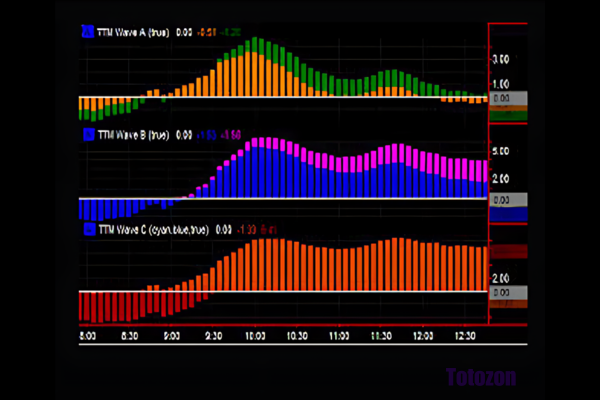 ABC Waves TOS Indicator & Live Class with Simpler Options
1 × $6.00
ABC Waves TOS Indicator & Live Class with Simpler Options
1 × $6.00 -
×
 Active Investment Management: Finding and Harnessing Investment Skill with Charles Jackson
1 × $6.00
Active Investment Management: Finding and Harnessing Investment Skill with Charles Jackson
1 × $6.00 -
×
 Advanced Scalping Techniques Home Study Course with Sami Abusaad - T3Live
1 × $31.00
Advanced Scalping Techniques Home Study Course with Sami Abusaad - T3Live
1 × $31.00

Trading the Elliott Waves with Robert Prechter
Original price was: $79.00.$15.00Current price is: $15.00.
File Size: Coming soon!
Delivery Time: 1–12 hours
Media Type: Online Course
Trading the Elliott Waves with Robert Prechter
Introduction to Elliott Wave Theory
The financial markets are often seen as unpredictable and chaotic. However, Ralph Nelson Elliott proposed a theory that markets move in repetitive patterns or waves. Trading the Elliott Waves with Robert Prechter delves deep into this theory, offering traders valuable insights and strategies to capitalize on these patterns.
What is Elliott Wave Theory?
Basic Concepts
Elliott Wave Theory suggests that market prices move in predictable patterns called waves. These waves are a reflection of the collective investor psychology, which swings between optimism and pessimism.
Structure of Waves
- Impulse Waves: Move in the direction of the overall trend and consist of five waves.
- Corrective Waves: Move against the trend and consist of three waves.
Who is Robert Prechter?
A Pioneer in Elliott Wave Theory
Robert Prechter is one of the most renowned experts in Elliott Wave Theory. He popularized the theory through his books and founded Elliott Wave International, providing comprehensive market analysis and forecasts based on the theory.
Prechter’s Contributions
- Educational Resources: Authored numerous books and articles on Elliott Wave Theory.
- Market Forecasting: Provided accurate market predictions using wave analysis.
Understanding Impulse Waves
Five-Wave Structure
Impulse waves are composed of five distinct waves: three motive waves (1, 3, and 5) and two corrective waves (2 and 4).
Wave Characteristics
- Wave 1: The initial move up.
- Wave 2: A retracement that never goes beyond the start of wave 1.
- Wave 3: Typically the longest and strongest wave.
- Wave 4: Another retracement.
- Wave 5: The final leg up in the direction of the trend.
Understanding Corrective Waves
Three-Wave Structure
Corrective waves consist of three waves labeled A, B, and C.
Types of Corrective Waves
- Zigzag: A simple 5-3-5 pattern.
- Flat: A 3-3-5 pattern where wave B ends near the start of wave A.
- Triangle: A sideways corrective pattern.
Trading Strategies Using Elliott Wave Theory
Identifying Wave Patterns
The first step in trading with Elliott Waves is to identify the wave patterns. This involves analyzing market charts to distinguish between impulse and corrective waves.
Entry and Exit Points
- Entry Points: Often at the beginning of wave 3 or wave 5.
- Exit Points: Near the end of wave 5 or during corrective wave patterns.
Risk Management
- Stop-Loss Orders: Place stop-loss orders below the beginning of wave 1 for long positions.
- Position Sizing: Adjust position sizes based on the wave structure and market conditions.
Combining Elliott Wave with Other Indicators
Moving Averages
Moving averages can help confirm wave patterns by smoothing out price data and highlighting the trend direction.
Fibonacci Retracements
Fibonacci retracement levels often correspond with the end of corrective waves, providing potential entry points.
Relative Strength Index (RSI)
RSI can help identify overbought or oversold conditions, aligning with the end of impulse or corrective waves.
Common Challenges in Elliott Wave Trading
Subjectivity
Elliott Wave Theory is somewhat subjective, as identifying wave patterns can vary between analysts.
Complexity
The theory requires a deep understanding and practice to apply effectively, as wave patterns can be complex and multifaceted.
Market Volatility
High market volatility can make wave patterns less clear and harder to interpret.
Case Studies and Real-World Examples
Historical Market Movements
Examining historical market movements through the lens of Elliott Wave Theory can provide insights into its effectiveness.
Success Stories
Traders who have successfully used Elliott Wave Theory to predict market movements and make profitable trades.
Educational Resources for Elliott Wave Theory
Books by Robert Prechter
- Elliott Wave Principle: Prechter’s definitive guide to the theory.
- Conquer the Crash: A guide to surviving and prospering during a deflationary depression.
Online Courses and Seminars
Elliott Wave International offers a variety of online courses, webinars, and seminars to help traders master the theory.
Software and Tools for Elliott Wave Analysis
Charting Software
Many charting software programs include tools specifically for Elliott Wave analysis, making it easier to identify and track wave patterns.
Automated Wave Counting Tools
Some platforms offer automated wave counting tools to help traders identify wave patterns without manual charting.
Future Trends in Elliott Wave Theory
Integration with AI
AI and machine learning are beginning to play a role in Elliott Wave analysis, providing more precise and automated wave identification.
Increased Adoption
As more traders recognize the value of Elliott Wave Theory, its adoption continues to grow in the trading community.
Conclusion
Trading the Elliott Waves with Robert Prechter provides traders with a powerful framework for understanding and predicting market movements. By mastering the principles of Elliott Wave Theory and applying them in conjunction with other technical indicators, traders can enhance their market analysis and improve their trading success. Whether you are a novice or an experienced trader, the insights offered by Robert Prechter can help you navigate the complexities of the financial markets with greater confidence.
Frequently Asked Questions
1. What is Elliott Wave Theory?
Elliott Wave Theory is a technical analysis framework that suggests market prices move in predictable patterns or waves.
2. Who is Robert Prechter?
Robert Prechter is a renowned expert in Elliott Wave Theory, known for his educational contributions and market forecasts.
3. How can I use Elliott Wave Theory in trading?
Identify wave patterns to determine entry and exit points, and use additional indicators like moving averages and RSI for confirmation.
4. What are the main challenges in using Elliott Wave Theory?
The theory can be subjective and complex, requiring practice and deep understanding to apply effectively.
5. Where can I learn more about Elliott Wave Theory?
Books by Robert Prechter and online co
Be the first to review “Trading the Elliott Waves with Robert Prechter”
You must be logged in to post a review.
Related products
Original price was: $999.00.$5.00Current price is: $5.00.

Original price was: $450.00.$23.00Current price is: $23.00.

Original price was: $1,800.00.$54.00Current price is: $54.00.

Original price was: $997.00.$13.00Current price is: $13.00.

Forex Trading
Original price was: $797.00.$10.00Current price is: $10.00.

Original price was: $197.00.$5.00Current price is: $5.00.

Forex Trading
The Complete Guide to Multiple Time Frame Analysis & Reading Price Action with Aiman Almansoori
Original price was: $1,399.00.$13.00Current price is: $13.00.

Original price was: $139.00.$23.00Current price is: $23.00.

Forex Trading
Original price was: $397.00.$31.00Current price is: $31.00.

Forex Trading
Original price was: $2,997.00.$23.00Current price is: $23.00.

Forex Trading
Original price was: $239.00.$8.00Current price is: $8.00.
Forex Trading
Quantamentals – The Next Great Forefront Of Trading and Investing with Trading Markets
Original price was: $1,495.00.$8.00Current price is: $8.00.

Forex Trading
Original price was: $999.00.$15.00Current price is: $15.00.

Original price was: $4,995.00.$15.00Current price is: $15.00.

Forex Trading
Original price was: $1,898.00.$10.00Current price is: $10.00.

Forex Trading
Original price was: $4,997.00.$27.00Current price is: $27.00.

Forex Trading
Original price was: $799.00.$15.00Current price is: $15.00.

Forex Trading
Original price was: $500.00.$5.00Current price is: $5.00.

Forex Trading
Original price was: $2,995.00.$31.00Current price is: $31.00.
Forex Trading
Original price was: $499.00.$15.00Current price is: $15.00.

Reviews
There are no reviews yet.