
-
×
 LEAPS Trading Strategies- Powerful Techniques for Options Trading Success - Marty Kearney
1 × $6.00
LEAPS Trading Strategies- Powerful Techniques for Options Trading Success - Marty Kearney
1 × $6.00 -
×
 The Management of Equity Investments with Dimitris Chorafas
1 × $6.00
The Management of Equity Investments with Dimitris Chorafas
1 × $6.00 -
×
 Options Trading & Ultimate MasterClass With Tyrone Abela - FX Evolution
1 × $54.00
Options Trading & Ultimate MasterClass With Tyrone Abela - FX Evolution
1 × $54.00 -
×
 Mastering Risk Modeling with Excel by Alastair Day
1 × $6.00
Mastering Risk Modeling with Excel by Alastair Day
1 × $6.00 -
×
 The Correlation Code with Jason Fielder
1 × $6.00
The Correlation Code with Jason Fielder
1 × $6.00 -
×
 The Mathematics of Money Management. Risk Analysis Techniques for Traders
1 × $6.00
The Mathematics of Money Management. Risk Analysis Techniques for Traders
1 × $6.00 -
×
 Crypto Trading Academy with Cheeky Investor - Aussie Day Trader
1 × $13.00
Crypto Trading Academy with Cheeky Investor - Aussie Day Trader
1 × $13.00 -
×
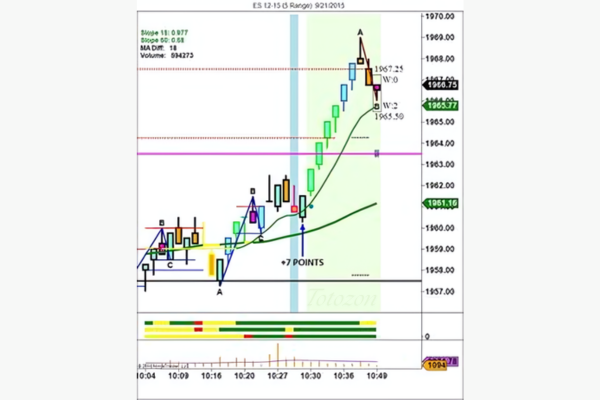 Right Line Trading IndicatorSuite (May 2015)
1 × $31.00
Right Line Trading IndicatorSuite (May 2015)
1 × $31.00 -
×
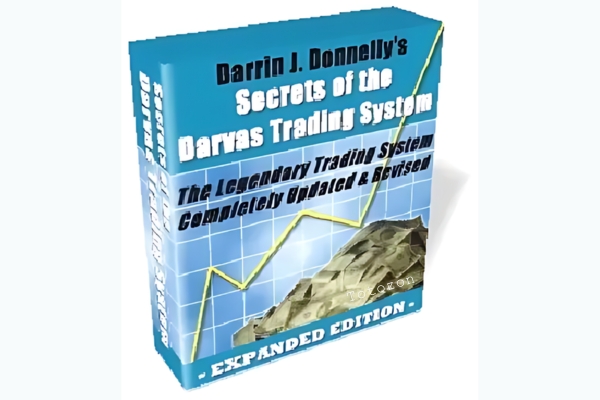 Secrets of the Darvas Trading System
1 × $6.00
Secrets of the Darvas Trading System
1 × $6.00 -
×
 Sacredscience - R.N.Elliott – Nature’s Law. The secret of the Universe
1 × $6.00
Sacredscience - R.N.Elliott – Nature’s Law. The secret of the Universe
1 × $6.00 -
×
 HINT (High Income No Taxes) with Jeff Watson
1 × $54.00
HINT (High Income No Taxes) with Jeff Watson
1 × $54.00 -
×
 Elite Gap Trading with Nick Santiago - InTheMoneyStocks
1 × $93.00
Elite Gap Trading with Nick Santiago - InTheMoneyStocks
1 × $93.00 -
×
 Studies in Stock Speculation (Volume I & II) with H.J.Wolf
1 × $6.00
Studies in Stock Speculation (Volume I & II) with H.J.Wolf
1 × $6.00 -
×
 EasyLanguage Home Study Course PDF Book + CD
1 × $6.00
EasyLanguage Home Study Course PDF Book + CD
1 × $6.00 -
×
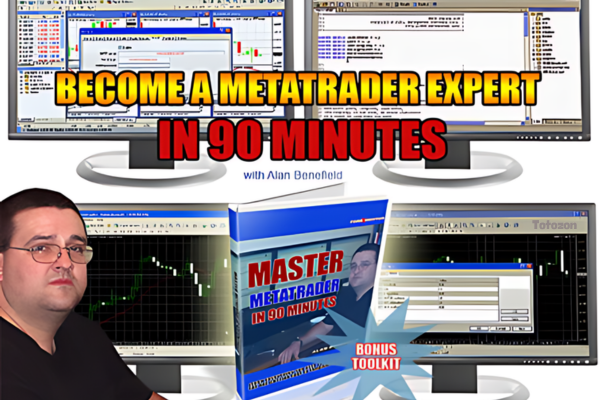 Mastering Metatrader 4 in 90 Minutes & Members Site with Alan Benefield
1 × $15.00
Mastering Metatrader 4 in 90 Minutes & Members Site with Alan Benefield
1 × $15.00 -
×
 Deep Dive Butterfly Trading Strategy Class with SJG Trades
1 × $41.00
Deep Dive Butterfly Trading Strategy Class with SJG Trades
1 × $41.00 -
×
 Acclimation Course with Base Camp Trading
1 × $10.00
Acclimation Course with Base Camp Trading
1 × $10.00 -
×
 Catching the Big Moves with Jack Bernstein
1 × $6.00
Catching the Big Moves with Jack Bernstein
1 × $6.00 -
×
 HST Mobile
1 × $31.00
HST Mobile
1 × $31.00 -
×
 Cecil Robles Advent Forex Course & Indicators with Adventforex
1 × $6.00
Cecil Robles Advent Forex Course & Indicators with Adventforex
1 × $6.00 -
×
 How To Read The Market Professionally with TradeSmart
1 × $27.00
How To Read The Market Professionally with TradeSmart
1 × $27.00
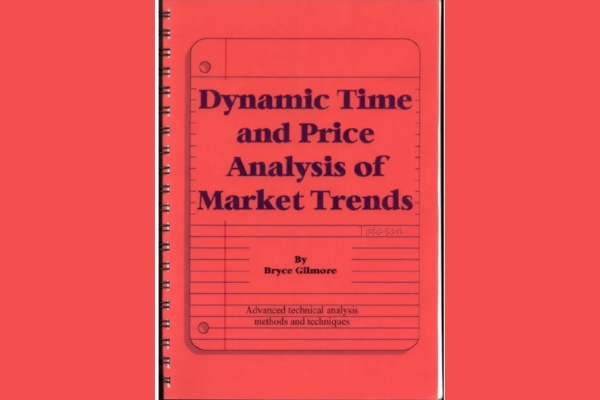
Dynamic Time and Price Analysis of Market Trends with Bruce Gilmore
$6.00
File Size: Coming soon!
Delivery Time: 1–12 hours
Media Type: Online Course
Content Proof: Watch Here!
You may check content proof of “Dynamic Time and Price Analysis of Market Trends with Bruce Gilmore” below:

Dynamic Time and Price Analysis of Market Trends with Bruce Gilmore
Introduction: Unveiling Market Rhythms
“Dynamic Time and Price Analysis of Market Trends” by Bruce Gilmore offers traders a sophisticated approach to understanding market movements through the lenses of time and price. This article delves into Gilmore’s methodologies that help predict market trends with remarkable precision.
Who is Bruce Gilmore?
Background of a Financial Innovator
Bruce Gilmore is celebrated for his significant contributions to technical analysis, particularly in the areas of time and price dynamics, which have helped shape modern trading strategies.
Philosophy of Dynamic Analysis
Gilmore’s approach is based on the belief that markets move in predictable patterns which can be decoded using historical data and mathematical models.
Understanding Dynamic Analysis
The Concept of Time/Price Analysis
Exploring how the intersection of time and price can provide predictive indicators of market movements.
Foundations of Market Trends
Understanding the underlying principles that govern market dynamics according to Gilmore’s research.
Tools for Dynamic Analysis
Gann Theory in Practice
An introduction to W.D. Gann’s influence on Gilmore’s methods, focusing on geometric, numerical, and time factors.
Fibonacci Sequences
How Fibonacci ratios are used to determine potential reversal points in the market.
Implementing Time and Price Strategies
Setting Up Charts for Analysis
Guidance on configuring charts and graphs to effectively apply time and price analysis techniques.
Identifying Key Time Cycles
Techniques for pinpointing significant cycles that impact market trends.
Case Studies: Dynamic Analysis in Action
Historical Market Turns
Examining past market data where time and price analysis successfully predicted reversals.
Real-Time Application
Discussing how these strategies apply to current market conditions and trading.
Advanced Techniques in Market Forecasting
Elliot Wave Theory Integration
Incorporating Elliott Wave principles to enhance the predictive power of time and price analysis.
Quantitative Approaches
Utilizing algorithms and quantitative methods to refine dynamic analysis strategies.
Challenges and Pitfalls
Complexity of Dynamic Analysis
Addressing the complexities and learning curve associated with mastering time and price analysis.
Avoiding Common Mistakes
Common errors traders make when first applying dynamic analysis and how to avoid them.
Practical Trading Tips
Risk Management with Dynamic Analysis
Strategies to manage risk when utilizing time and price analysis in trading decisions.
Portfolio Diversification
How to use dynamic analysis to diversify trading strategies effectively.
The Future of Time and Price Analysis
Technological Advances
Exploring future technological improvements that could impact dynamic analysis techniques.
Growing Trends in Market Analysis
Predictions for how dynamic time and price analysis will evolve in the trading world.
Learning from Bruce Gilmore
Recommended Reading and Resources
Books and materials by Gilmore that are essential for any technical trader’s library.
Workshops and Seminars
Upcoming educational opportunities where traders can learn directly from Gilmore or his certified instructors.
Conclusion: Mastering Market Dynamics
Bruce Gilmore’s “Dynamic Time and Price Analysis of Market Trends” provides a crucial framework for traders aiming to understand and capitalize on the rhythmic patterns of the market. By integrating these strategies, traders can enhance their market analysis skills and improve their decision-making process.
Frequently Asked Questions:
1. What is the best way to start learning dynamic time and price analysis?
Begin with basic principles of technical analysis and gradually integrate more complex concepts like those discussed by Gilmore.
2. How important is software in dynamic analysis?
While manual analysis is possible, advanced software can significantly enhance the accuracy and efficiency of applying dynamic analysis techniques.
3. Can dynamic analysis be applied to all types of markets?
Yes, while originally used in stock and commodities markets, these methods are applicable to cryptocurrencies, Forex, and more.
4. What is the biggest challenge when using time and price analysis?
The biggest challenge is accurately interpreting data and avoiding bias in drawing conclusions from market behavior patterns.
5. Where can I find more advanced courses on time and price analysis?
Look for specialized trading education platforms that offer courses on advanced technical analysis techniques, including those taught by experts like Bruce Gilmore.
Be the first to review “Dynamic Time and Price Analysis of Market Trends with Bruce Gilmore”
You must be logged in to post a review.
Related products
Forex Trading
Original price was: $4,997.00.$27.00Current price is: $27.00.

Forex Trading
Original price was: $999.00.$15.00Current price is: $15.00.

Forex Trading
Original price was: $697.00.$5.00Current price is: $5.00.

Forex Trading
Original price was: $397.00.$31.00Current price is: $31.00.

Original price was: $450.00.$23.00Current price is: $23.00.

Original price was: $649.00.$20.00Current price is: $20.00.

Original price was: $999.00.$5.00Current price is: $5.00.

Forex Trading
The Complete Guide to Multiple Time Frame Analysis & Reading Price Action with Aiman Almansoori
Original price was: $1,399.00.$13.00Current price is: $13.00.

Forex Trading
Original price was: $850.00.$23.00Current price is: $23.00.

Forex Trading
Original price was: $2,000.00.$23.00Current price is: $23.00.

Original price was: $1,200.00.$23.00Current price is: $23.00.

Original price was: $895.00.$15.00Current price is: $15.00.

Original price was: $2,120.00.$15.00Current price is: $15.00.

Forex Trading
Quantamentals – The Next Great Forefront Of Trading and Investing with Trading Markets
Original price was: $1,495.00.$8.00Current price is: $8.00.

Forex Trading
Original price was: $2,997.00.$23.00Current price is: $23.00.

Forex Trading
Original price was: $797.00.$10.00Current price is: $10.00.

Forex Trading
Original price was: $799.00.$15.00Current price is: $15.00.
Original price was: $1,800.00.$54.00Current price is: $54.00.

Original price was: $799.00.$15.00Current price is: $15.00.

Forex Trading
Original price was: $500.00.$5.00Current price is: $5.00.
Reviews
There are no reviews yet.