
-
×
 Deep Dive Butterfly Trading Strategy Class with SJG Trades
1 × $41.00
Deep Dive Butterfly Trading Strategy Class with SJG Trades
1 × $41.00 -
×
 Momentum Options Trading Course with Eric Jellerson
1 × $272.00
Momentum Options Trading Course with Eric Jellerson
1 × $272.00 -
×
 Trade Options Like a DPM with The Admiral Webinar Series with Hamzei Analytics
1 × $6.00
Trade Options Like a DPM with The Admiral Webinar Series with Hamzei Analytics
1 × $6.00 -
×
 4 Class Bundle
1 × $31.00
4 Class Bundle
1 × $31.00 -
×
 Crystal Ball Pack PLUS bonus Live Trade By Pat Mitchell - Trick Trades
1 × $20.00
Crystal Ball Pack PLUS bonus Live Trade By Pat Mitchell - Trick Trades
1 × $20.00 -
×
 Scalp Strategy and Flipping Small Accounts with Opes Trading Group
1 × $5.00
Scalp Strategy and Flipping Small Accounts with Opes Trading Group
1 × $5.00 -
×
 Monthly Cash Flow Trading Options (Intermediate Option Trading Course) with Randy Perez
1 × $85.00
Monthly Cash Flow Trading Options (Intermediate Option Trading Course) with Randy Perez
1 × $85.00 -
×
 CFA Level 1,2 & 3 Complete Course 2010 48 CD’s with Schweser
1 × $6.00
CFA Level 1,2 & 3 Complete Course 2010 48 CD’s with Schweser
1 × $6.00 -
×
 David Weis Stock Market Update Nightly Report 2014-2019
1 × $20.00
David Weis Stock Market Update Nightly Report 2014-2019
1 × $20.00 -
×
 Complete Day Trading Course with The Trading Floor
1 × $13.00
Complete Day Trading Course with The Trading Floor
1 × $13.00 -
×
 Point and Figure Mentorship Course
1 × $54.00
Point and Figure Mentorship Course
1 × $54.00 -
×
 Pinpoint Profit Method Class
1 × $31.00
Pinpoint Profit Method Class
1 × $31.00 -
×
 Best of the Best: Collars with Amy Meissner & Scott Ruble
1 × $15.00
Best of the Best: Collars with Amy Meissner & Scott Ruble
1 × $15.00 -
×
 Naked Put Selling Acquiring Blue Chip Stocks and Creating Cash Flow with Lee Lowell
1 × $6.00
Naked Put Selling Acquiring Blue Chip Stocks and Creating Cash Flow with Lee Lowell
1 × $6.00 -
×
 Butterfly and Condor Workshop with Aeromir
1 × $15.00
Butterfly and Condor Workshop with Aeromir
1 × $15.00 -
×
 The Heretics of Finance with Andrew Lo & Jasmina Hasanhodzic
1 × $4.00
The Heretics of Finance with Andrew Lo & Jasmina Hasanhodzic
1 × $4.00 -
×
 Matrix Spread Options Trading Course with Base Camp Trading
1 × $31.00
Matrix Spread Options Trading Course with Base Camp Trading
1 × $31.00 -
×
 Weekly Credit Spreads for Income
1 × $6.00
Weekly Credit Spreads for Income
1 × $6.00 -
×
 The Indices Orderflow Masterclass with The Forex Scalpers
1 × $23.00
The Indices Orderflow Masterclass with The Forex Scalpers
1 × $23.00 -
×
 Order flow self-study training program with iMFtracker
1 × $10.00
Order flow self-study training program with iMFtracker
1 × $10.00 -
×
 Forex Strategy Master with Russ Horn
1 × $6.00
Forex Strategy Master with Russ Horn
1 × $6.00 -
×
 Asset Markets, Portfolio Choice and Macroeconomic Activity: A Keynesian Perspective - Toichiro Asadra, Peter Flaschel, Tarik Mouakil & Christian Proaño
1 × $6.00
Asset Markets, Portfolio Choice and Macroeconomic Activity: A Keynesian Perspective - Toichiro Asadra, Peter Flaschel, Tarik Mouakil & Christian Proaño
1 × $6.00 -
×
 Bond Market Course with The Macro Compass
1 × $15.00
Bond Market Course with The Macro Compass
1 × $15.00 -
×
 Generative AI for Asset Managers Workshop Recording with Ernest Chan
1 × $55.00
Generative AI for Asset Managers Workshop Recording with Ernest Chan
1 × $55.00 -
×
 Be Smart, Act Fast, Get Rich with Charles Payne
1 × $6.00
Be Smart, Act Fast, Get Rich with Charles Payne
1 × $6.00 -
×
 How To Read The Market Professionally with TradeSmart
1 × $27.00
How To Read The Market Professionally with TradeSmart
1 × $27.00 -
×
 The Top Tier Pro System Basic with Raghee Horner
1 × $41.00
The Top Tier Pro System Basic with Raghee Horner
1 × $41.00 -
×
 The Trading Blueprint with Brad Goh - The Trading Geek
1 × $5.00
The Trading Blueprint with Brad Goh - The Trading Geek
1 × $5.00
The Reducing Risk and Maximizing Returns Blueprint (Atomic Hedge Strategy) with Don Kaufman
Original price was: $297.00.$6.00Current price is: $6.00.
File Size: 0.99 GB
Delivery Time: 1–12 hours
Media Type: Online Course
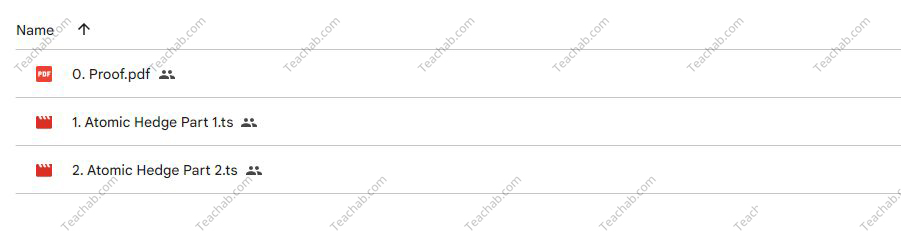
Content Proof: Watch Here!
You may check content proof of “The Reducing Risk and Maximizing Returns Blueprint (Atomic Hedge Strategy) with Don Kaufman” below:
The Reducing Risk and Maximizing Returns Blueprint (Atomic Hedge Strategy) with Don Kaufman
Introduction
In the volatile world of investing, balancing risk and return is a crucial skill. Don Kaufman’s “Reducing Risk and Maximizing Returns Blueprint,” featuring the Atomic Hedge Strategy, offers a sophisticated approach to achieving this balance. This guide delves into the method and practical applications taught in Kaufman’s groundbreaking class.
Understanding the Atomic Hedge Strategy
What is the Atomic Hedge Strategy?
The Atomic Hedge Strategy is an investment approach designed to minimize risk while enhancing potential returns through strategic asset allocation and derivatives use.
Core Principles of the Strategy
This strategy integrates principles of hedging, diversification, and leverage to protect and grow capital.
Components of the Strategy
Risk Assessment Techniques
Tools and methods for assessing potential risks in investment portfolios.
Derivative Instruments
Overview of the derivative instruments used in the Atomic Hedge Strategy, such as options and futures.
Building a Diversified Portfolio
Asset Allocation
How to allocate assets effectively to balance risk and return.
Sector Rotation
Utilizing sector rotation to capitalize on market cycles and economic indicators.
Implementing Hedge Techniques
Options Strategies
Detailed exploration of options strategies used to hedge positions and reduce portfolio volatility.
Using Futures for Hedging
How to use futures contracts as a hedge against market downturns and volatility.
Optimizing the Strategy
Backtesting
The importance of backtesting the strategy to ensure its effectiveness across different market conditions.
Adjustments and Tweaks
How to make necessary adjustments to the strategy as market conditions change.
Risk Management
Setting Stop Losses
Guidance on setting stop losses to protect against significant losses.
Risk/Reward Ratios
Calculating and utilizing risk/reward ratios to make informed trading decisions.
Performance Monitoring
Tracking and Analysis
Methods for monitoring the performance of your investments under the Atomic Hedge Strategy.
Key Performance Indicators (KPIs)
Identifying which KPIs to track to assess the success of your strategy.
Advanced Applications
Leveraging Machine Learning
Exploring how machine learning can enhance prediction accuracy and investment decisions.
Global Macro Strategies
Incorporating global macroeconomic factors into the Atomic Hedge Strategy to improve its robustness and return potential.
Real-World Case Studies
Successful Implementations
Analysis of successful real-world applications of the Atomic Hedge Strategy.
Lessons Learned from Failures
What can be learned from less successful attempts and how to avoid common pitfalls.
Continued Education and Resources
Ongoing Learning
Opportunities for further education through workshops, webinars, and advanced courses offered by Don Kaufman.
Supplementary Materials
Recommendations for books, articles, and online resources to enhance understanding and application of the strategy.
Conclusion
Don Kaufman’s Atomic Hedge Strategy provides a systematic approach to reducing risk while striving for higher returns. By applying the principles outlined in his class, investors can develop a more resilient and dynamic investment portfolio.
FAQs
1. Is the Atomic Hedge Strategy suitable for all types of investors?
The strategy is best suited for investors who have a basic understanding of derivatives and are comfortable with a moderate level of risk.
2. How much capital is needed to effectively implement this strategy?
While there is no set minimum, having a substantial capital base allows for more flexibility in diversification and hedging techniques.
3. Can the Atomic Hedge Strategy be applied during market downturns?
Yes, one of the key strengths of this strategy is its potential to hedge against market downturns effectively.
4. How often should the strategy be reviewed or adjusted?
Regular review, at least quarterly, is recommended to adjust for market changes and rebalance the portfolio as necessary.
5. What are the first steps to take if interested in learning this strategy?
Enrolling in Don Kaufman’s class is an excellent start, providing both foundational knowledge and practical insights.
Be the first to review “The Reducing Risk and Maximizing Returns Blueprint (Atomic Hedge Strategy) with Don Kaufman”
You must be logged in to post a review.
Related products

Forex Trading
Original price was: $500.00.$5.00Current price is: $5.00.

Forex Trading
The Complete Guide to Multiple Time Frame Analysis & Reading Price Action with Aiman Almansoori
Original price was: $1,399.00.$13.00Current price is: $13.00.

Original price was: $1,800.00.$54.00Current price is: $54.00.
Forex Trading
Original price was: $499.00.$15.00Current price is: $15.00.

Forex Trading
Original price was: $550.00.$5.00Current price is: $5.00.

Forex Trading
Original price was: $1,098.00.$39.00Current price is: $39.00.

Original price was: $139.00.$23.00Current price is: $23.00.
Original price was: $999.00.$5.00Current price is: $5.00.

Forex Trading
Original price was: $2,000.00.$23.00Current price is: $23.00.

Original price was: $895.00.$15.00Current price is: $15.00.

Forex Trading
Original price was: $2,995.00.$31.00Current price is: $31.00.

Forex Trading
Quantamentals – The Next Great Forefront Of Trading and Investing with Trading Markets
Original price was: $1,495.00.$8.00Current price is: $8.00.
Forex Trading
Original price was: $4,997.00.$27.00Current price is: $27.00.

Forex Trading
Original price was: $797.00.$10.00Current price is: $10.00.

Original price was: $4,995.00.$15.00Current price is: $15.00.

Forex Trading
Original price was: $249.00.$15.00Current price is: $15.00.

Original price was: $2,120.00.$15.00Current price is: $15.00.

Original price was: $310.00.$23.00Current price is: $23.00.

Forex Trading
Original price was: $239.00.$8.00Current price is: $8.00.
Original price was: $450.00.$23.00Current price is: $23.00.

Reviews
There are no reviews yet.