
-
×
 The Art And Science Of Trading with Adam Grimes
1 × $6.00
The Art And Science Of Trading with Adam Grimes
1 × $6.00 -
×
 The PPS Trading System with Curtis Arnold
1 × $6.00
The PPS Trading System with Curtis Arnold
1 × $6.00 -
×
 Advanced Gap Trading Strategies with Master Trader
1 × $31.00
Advanced Gap Trading Strategies with Master Trader
1 × $31.00 -
×
 Asset Allocation for the Individual Investor with CFA Institute
1 × $6.00
Asset Allocation for the Individual Investor with CFA Institute
1 × $6.00 -
×
 Adx Mastery Complete Course
1 × $6.00
Adx Mastery Complete Course
1 × $6.00 -
×
 Read the Greed – LIVE!: Vol. II with Mike Reed
1 × $6.00
Read the Greed – LIVE!: Vol. II with Mike Reed
1 × $6.00 -
×
 The Complete Guide to Option Selling, 2nd 2009 with James Cordier & Michael Gross
1 × $6.00
The Complete Guide to Option Selling, 2nd 2009 with James Cordier & Michael Gross
1 × $6.00 -
×
 Using Robert’s Indicators with Rob Hoffman
1 × $6.00
Using Robert’s Indicators with Rob Hoffman
1 × $6.00 -
×
 Advanced Trader with Nikos Trading Academy
1 × $5.00
Advanced Trader with Nikos Trading Academy
1 × $5.00 -
×
 Futures Trading Blueprint with Day Trader Next Door
1 × $5.00
Futures Trading Blueprint with Day Trader Next Door
1 × $5.00 -
×
 Matrix Spread Options Trading Course with Base Camp Trading
1 × $31.00
Matrix Spread Options Trading Course with Base Camp Trading
1 × $31.00 -
×
 4-Hour Income Strategy with Todd Mitchell & Craig Hill
1 × $62.00
4-Hour Income Strategy with Todd Mitchell & Craig Hill
1 × $62.00 -
×
 Best of the Best: Collars with Amy Meissner & Scott Ruble
1 × $15.00
Best of the Best: Collars with Amy Meissner & Scott Ruble
1 × $15.00 -
×
 Wyckoff Unleashed Official Online Course (2018) with Wyckoffsmi
1 × $23.00
Wyckoff Unleashed Official Online Course (2018) with Wyckoffsmi
1 × $23.00 -
×
 Module I - Foundation with FX MindShift
1 × $6.00
Module I - Foundation with FX MindShift
1 × $6.00 -
×
 Rule Based Price Action with Trader Divergent
1 × $5.00
Rule Based Price Action with Trader Divergent
1 × $5.00 -
×
 Applications of Abstract Algebra with Maple - Richard E.Kline, Neil Sigmon, Ernst Stitzinger
1 × $6.00
Applications of Abstract Algebra with Maple - Richard E.Kline, Neil Sigmon, Ernst Stitzinger
1 × $6.00 -
×
 5-Step-Trading Stocks II - Avoid Common Trading Mistakes - Online Course (April 2014)
1 × $23.00
5-Step-Trading Stocks II - Avoid Common Trading Mistakes - Online Course (April 2014)
1 × $23.00 -
×
 Evidence Based Technical Analysis with David Aronson
1 × $6.00
Evidence Based Technical Analysis with David Aronson
1 × $6.00 -
×
 Traders Forge with Ryan Litchfield
1 × $6.00
Traders Forge with Ryan Litchfield
1 × $6.00 -
×
 Fundamentals of the Securities Industry with William A.Rini
1 × $6.00
Fundamentals of the Securities Industry with William A.Rini
1 × $6.00 -
×
 Advanced Volume Profile + Order Flow Video Course with Trader Dale
1 × $13.00
Advanced Volume Profile + Order Flow Video Course with Trader Dale
1 × $13.00 -
×
 Trading Full Circle with Jea Yu
1 × $6.00
Trading Full Circle with Jea Yu
1 × $6.00 -
×
 How I Make A Living Daytrading Stocks with David Floyd
1 × $4.00
How I Make A Living Daytrading Stocks with David Floyd
1 × $4.00 -
×
 Trend Trading My Way with Markay Latimer
1 × $15.00
Trend Trading My Way with Markay Latimer
1 × $15.00 -
×
 Capital On Demand Masterclass with Attorney & Nate Dodson
1 × $311.00
Capital On Demand Masterclass with Attorney & Nate Dodson
1 × $311.00 -
×
 How to Manage Profit and Cash Flow: Mining the Numbers for Gold with John Tracy & Tage Tracy
1 × $6.00
How to Manage Profit and Cash Flow: Mining the Numbers for Gold with John Tracy & Tage Tracy
1 × $6.00 -
×
 The Stock Rocket Trading System with Dave Wooding
1 × $6.00
The Stock Rocket Trading System with Dave Wooding
1 × $6.00 -
×
 Base Camp Trading - Swing Trade Success
1 × $23.00
Base Camp Trading - Swing Trade Success
1 × $23.00 -
×
 Hedged Strategy Series in Volatile Markets All 4 with Dan Sheridan
1 × $15.00
Hedged Strategy Series in Volatile Markets All 4 with Dan Sheridan
1 × $15.00 -
×
 Building High-Performance Trading Systems. What Works & What Doesn’t with Nelson Freeburg
1 × $6.00
Building High-Performance Trading Systems. What Works & What Doesn’t with Nelson Freeburg
1 × $6.00 -
×
 CFA Pro Level 1 2004 CD - Scheweser
1 × $6.00
CFA Pro Level 1 2004 CD - Scheweser
1 × $6.00 -
×
 All Access Online Trading Course with Steve Luke
1 × $6.00
All Access Online Trading Course with Steve Luke
1 × $6.00 -
×
 The Orderflows Trade Opportunities Encyclopedia with Michael Valtos
1 × $8.00
The Orderflows Trade Opportunities Encyclopedia with Michael Valtos
1 × $8.00 -
×
 How To Flip All Those “Hard To Flip” Deals
1 × $6.00
How To Flip All Those “Hard To Flip” Deals
1 × $6.00 -
×
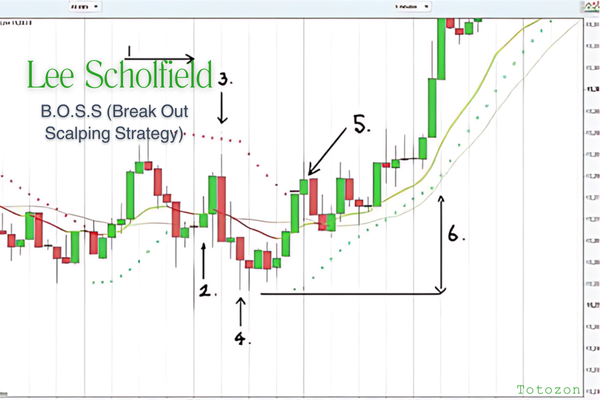 B.O.S.S (Break Out Scalping Strategy) with Lee Scholfield
1 × $6.00
B.O.S.S (Break Out Scalping Strategy) with Lee Scholfield
1 × $6.00 -
×
 Cluster Delta with Gova Trading Academy
1 × $5.00
Cluster Delta with Gova Trading Academy
1 × $5.00 -
×
 Hedge Fund Investment Management with Izze Nelken
1 × $6.00
Hedge Fund Investment Management with Izze Nelken
1 × $6.00 -
×
 Divorcing the Dow: Using Revolutionary Market Indicators to Profit from the Stealth Boom Ahead - Jim Troup & Sharon Michalsky
1 × $6.00
Divorcing the Dow: Using Revolutionary Market Indicators to Profit from the Stealth Boom Ahead - Jim Troup & Sharon Michalsky
1 × $6.00 -
×
 The Sweep Show with Scott Pulcini Trader
1 × $23.00
The Sweep Show with Scott Pulcini Trader
1 × $23.00 -
×
 Practical Portfolio Performance Measurement and Attribution (2nd Ed.) with Carl Bacon
1 × $6.00
Practical Portfolio Performance Measurement and Attribution (2nd Ed.) with Carl Bacon
1 × $6.00 -
×
 Quantamentals - The Next Great Forefront Of Trading and Investing with Trading Markets
1 × $8.00
Quantamentals - The Next Great Forefront Of Trading and Investing with Trading Markets
1 × $8.00
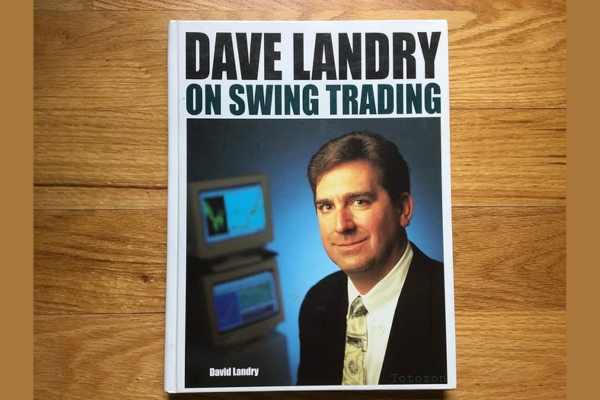
David Landry On Swing Trading
$6.00
File Size: Coming soon!
Delivery Time: 1–12 hours
Media Type: Online Course
Content Proof: Watch Here!
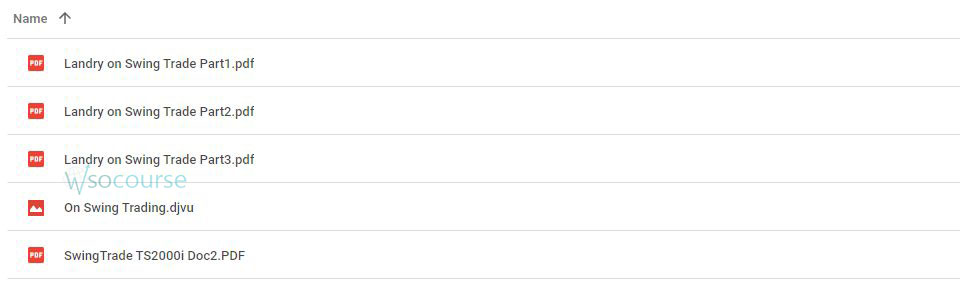
You may check content proof of “David Landry On Swing Trading” below:
David Landry On Swing Trading
Swing trading is a popular trading strategy that aims to capture short-to-medium-term gains in a stock (or any financial instrument) over a period of a few days to several weeks. David Landry, a renowned trader and author, has been a significant influence in the world of swing trading. His insights and strategies have helped countless traders understand and succeed in swing trading. This article delves into Landry’s methodologies and how you can apply them to enhance your trading performance.
Introduction to Swing Trading
Swing trading involves holding positions for several days to weeks, aiming to profit from expected price moves. It sits between day trading and trend trading, offering flexibility and potential for substantial gains.
Why Choose Swing Trading?
- Time Flexibility: Requires less time compared to day trading.
- Potential for Profits: Captures significant price movements.
- Reduced Stress: Less pressure compared to day trading.
Who is David Landry?
David Landry is a seasoned trader, author, and educator known for his practical and straightforward approach to trading.
Author’s Credentials
- Experience: Over two decades in the trading industry.
- Education: Background in finance and market analysis.
- Publications: Numerous books and articles on trading strategies.
Core Concepts of Swing Trading
1. Identifying Trends
Understanding market trends is crucial for successful swing trading.
Uptrends
- Higher Highs and Higher Lows: Indicative of an uptrend.
- Bullish Signals: Look for buying opportunities.
Downtrends
- Lower Highs and Lower Lows: Indicative of a downtrend.
- Bearish Signals: Look for selling opportunities.
2. Using Technical Indicators
Technical indicators help in identifying entry and exit points.
Moving Averages
- Simple Moving Average (SMA): Useful for identifying trends.
- Exponential Moving Average (EMA): Responds more quickly to price changes.
Relative Strength Index (RSI)
- Overbought/Oversold Conditions: Indicates potential reversal points.
Bollinger Bands
- Volatility Measurement: Helps identify overbought or oversold conditions.
3. Chart Patterns
Recognizing chart patterns can provide insights into future price movements.
Head and Shoulders
- Reversal Pattern: Indicates a trend reversal.
Triangles
- Continuation Pattern: Suggests the continuation of the current trend.
4. Risk Management
Managing risk is essential to protect your capital.
Position Sizing
- Appropriate Size: Determines the number of shares to trade based on risk tolerance.
Stop-Loss Orders
- Limiting Losses: Protects against significant losses.
Implementing David Landry’s Swing Trading Strategies
Step-by-Step Guide
- Analyze Market Trends: Use technical indicators to identify market trends.
- Identify Entry Points: Look for signals from indicators and chart patterns.
- Place Trades: Enter trades based on identified signals.
- Set Stop-Loss Orders: Protect your capital by setting stop-loss orders.
- Monitor Trades: Adjust your strategy based on market movements.
Example Trade Setup
- Identify Trend: Spot an uptrend using moving averages.
- Find Entry Point: Use RSI to identify an oversold condition.
- Place Trade: Enter a long position.
- Set Stop-Loss: Place a stop-loss below the recent low.
- Monitor Trade: Adjust stop-loss and take profit levels as the trade progresses.
Advantages of Swing Trading
Time Efficiency
Swing trading does not require constant market monitoring, making it suitable for those with other commitments.
Potential for High Returns
Capturing significant price movements can lead to substantial gains.
Reduced Stress
Holding positions for days or weeks reduces the pressure of making quick decisions.
Challenges in Swing Trading
Market Volatility
Market fluctuations can impact trades, requiring careful analysis and strategy adjustment.
Risk Management
Effective risk management is crucial to protect against potential losses.
Practical Tips for Success
1. Continuous Learning
Stay updated with market trends and continuously refine your trading strategy.
2. Regular Practice
Use demo accounts to practice and fine-tune your swing trading techniques without financial risk.
3. Maintain Discipline
Stick to your trading plan and avoid emotional decision-making.
Conclusion
David Landry’s insights on swing trading provide a comprehensive guide to capturing short-to-medium-term gains in the market. By understanding market trends, using technical indicators, recognizing chart patterns, and managing risks, traders can enhance their swing trading strategies. Whether you’re a novice or an experienced trader, applying Landry’s techniques can help you achieve consistent trading success.
FAQs
1. What is swing trading?
Swing trading involves holding positions for several days to weeks to profit from expected price moves.
2. Who can benefit from swing trading?
Both novice and experienced traders can benefit from swing trading due to its time efficiency and potential for high returns.
3. How do technical indicators help in swing trading?
Technical indicators help identify entry and exit points, providing signals for buying and selling.
4. Why is risk management important in swing trading?
Risk management protects your capital and limits potential losses, ensuring long-term trading success.
5. How can I practice swing trading without financial risk?
Use demo accounts to practice and refine your swing trading techniques without risking real money.
Be the first to review “David Landry On Swing Trading”
You must be logged in to post a review.
Related products

Original price was: $139.00.$23.00Current price is: $23.00.

Original price was: $695.00.$41.00Current price is: $41.00.

Original price was: $450.00.$23.00Current price is: $23.00.

Forex Trading
Original price was: $799.00.$15.00Current price is: $15.00.

Forex Trading
Original price was: $397.00.$31.00Current price is: $31.00.

Forex Trading
Original price was: $697.00.$5.00Current price is: $5.00.

Forex Trading
Original price was: $4,997.00.$27.00Current price is: $27.00.

Forex Trading
Original price was: $1,098.00.$39.00Current price is: $39.00.

Forex Trading
Original price was: $999.00.$15.00Current price is: $15.00.

Original price was: $997.00.$8.00Current price is: $8.00.

Forex Trading
Original price was: $2,995.00.$31.00Current price is: $31.00.

Forex Trading
Original price was: $850.00.$23.00Current price is: $23.00.

Forex Trading
Original price was: $499.00.$15.00Current price is: $15.00.

Forex Trading
Original price was: $249.00.$15.00Current price is: $15.00.

Forex Trading
Original price was: $500.00.$5.00Current price is: $5.00.

Forex Trading
The Complete Guide to Multiple Time Frame Analysis & Reading Price Action with Aiman Almansoori
Original price was: $1,399.00.$13.00Current price is: $13.00.

Forex Trading
Original price was: $2,997.00.$23.00Current price is: $23.00.

Forex Trading
Original price was: $125.00.$17.00Current price is: $17.00.

Original price was: $999.00.$5.00Current price is: $5.00.

Forex Trading
Original price was: $239.00.$8.00Current price is: $8.00.
Reviews
There are no reviews yet.