
-
×
 Lifespan Investing with Clifford Pistolese
1 × $6.00
Lifespan Investing with Clifford Pistolese
1 × $6.00 -
×
 The Beginners Guide to Commodities Investing with Brian & Gayle Rice
1 × $6.00
The Beginners Guide to Commodities Investing with Brian & Gayle Rice
1 × $6.00 -
×
 Trading Using Ocean Theory with Pat Raffolovich
1 × $4.00
Trading Using Ocean Theory with Pat Raffolovich
1 × $4.00 -
×
 The Orderflow Masterclass with PrimeTrading
1 × $17.00
The Orderflow Masterclass with PrimeTrading
1 × $17.00 -
×
 Chart Reading Course with TraderSumo
1 × $5.00
Chart Reading Course with TraderSumo
1 × $5.00 -
×
 DaVinci FX Course
1 × $6.00
DaVinci FX Course
1 × $6.00 -
×
 Maximum Lots Trading Course with Joe Wright
1 × $34.00
Maximum Lots Trading Course with Joe Wright
1 × $34.00 -
×
 Scalp Strategy and Flipping Small Accounts with Opes Trading Group
1 × $5.00
Scalp Strategy and Flipping Small Accounts with Opes Trading Group
1 × $5.00 -
×
 CFA Pro Level 1 2004 CD - Scheweser
1 × $6.00
CFA Pro Level 1 2004 CD - Scheweser
1 × $6.00 -
×
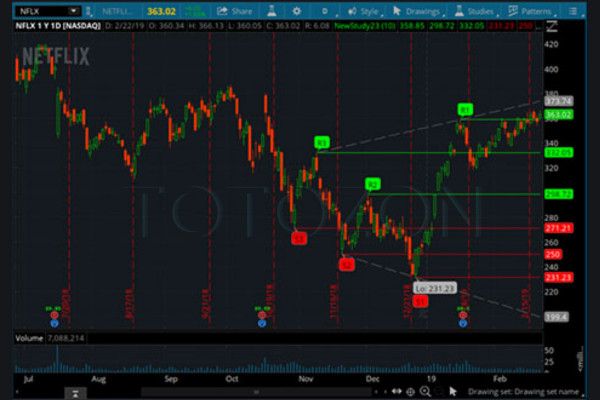 MQ Gravity Lines with Base Camp Trading
1 × $54.00
MQ Gravity Lines with Base Camp Trading
1 × $54.00 -
×
 Crypto Trading Academy with Cheeky Investor - Aussie Day Trader
1 × $13.00
Crypto Trading Academy with Cheeky Investor - Aussie Day Trader
1 × $13.00 -
×
 Electronic Trading "TNT" II How - To Win Trading Stuff with Joe Ross & Mark Cherlin
1 × $6.00
Electronic Trading "TNT" II How - To Win Trading Stuff with Joe Ross & Mark Cherlin
1 × $6.00 -
×
 Precise Exits & Entries with Charles LeBeau
1 × $6.00
Precise Exits & Entries with Charles LeBeau
1 × $6.00 -
×
 Evidence Based Technical Analysis with David Aronson
1 × $6.00
Evidence Based Technical Analysis with David Aronson
1 × $6.00 -
×
 DNA Wealth Blueprint 3 (Complete)
1 × $54.00
DNA Wealth Blueprint 3 (Complete)
1 × $54.00 -
×
 Fundamental Analysis with CA Rachana Ranade
1 × $5.00
Fundamental Analysis with CA Rachana Ranade
1 × $5.00 -
×
 New York Institute of Finance – Futures. A Personal Seminar
1 × $6.00
New York Institute of Finance – Futures. A Personal Seminar
1 × $6.00 -
×
 Starter Guide to Investing Stocks, Crypto & Precious Metals with Ryan Hogue
1 × $5.00
Starter Guide to Investing Stocks, Crypto & Precious Metals with Ryan Hogue
1 × $5.00 -
×
 The Loyalty Effect with Frederick Reichheld
1 × $6.00
The Loyalty Effect with Frederick Reichheld
1 × $6.00 -
×
 The EAP Training Program (Apr 2019)
1 × $6.00
The EAP Training Program (Apr 2019)
1 × $6.00 -
×
 Spartan Renko 2.0 Workshop 2017
1 × $23.00
Spartan Renko 2.0 Workshop 2017
1 × $23.00 -
×
 Naked Forex: High-Probability Techniques for Trading Without Indicators (2012) with Alex Nekritin & Walter Peters
1 × $6.00
Naked Forex: High-Probability Techniques for Trading Without Indicators (2012) with Alex Nekritin & Walter Peters
1 × $6.00 -
×
 Covered Calls Income Generation for Your Stocks With Don Kaufman
1 × $6.00
Covered Calls Income Generation for Your Stocks With Don Kaufman
1 × $6.00 -
×
 The Hindenburg Strategy with Todd Mitchell
1 × $23.00
The Hindenburg Strategy with Todd Mitchell
1 × $23.00 -
×
 Price Action Trader Training
1 × $6.00
Price Action Trader Training
1 × $6.00 -
×
 A Complete Guide to Technical Trading Tactics with John Person
1 × $6.00
A Complete Guide to Technical Trading Tactics with John Person
1 × $6.00 -
×
 Matrix Spread Options Trading Course with Base Camp Trading
1 × $31.00
Matrix Spread Options Trading Course with Base Camp Trading
1 × $31.00

Market Risk Analysis, Volume IV, Value at Risk Models with Carol Alexander
Original price was: $78.00.$6.00Current price is: $6.00.
File Size: Coming soon!
Delivery Time: 1–12 hours
Media Type: Online Course
Market Risk Analysis, Volume IV: Value at Risk Models with Carol Alexander
In the comprehensive world of market risk analysis, understanding and implementing effective risk management models is paramount. Carol Alexander’s “Market Risk Analysis, Volume IV: Value at Risk Models” provides an exhaustive exploration into Value at Risk (VaR) models, a cornerstone for financial risk assessment. This volume is a critical resource for finance professionals seeking to master VaR methodologies and apply them effectively in their risk management strategies.
Introduction to Value at Risk
Value at Risk is a statistical technique used to measure and quantify the level of financial risk within a firm or investment portfolio over a specific time frame.
What is Value at Risk?
- Definition: VaR estimates the maximum potential loss in value of a risky asset or portfolio over a defined period for a given confidence interval.
- Importance: It helps financial institutions limit their exposure to market risks.
Historical Context of VaR
Carol Alexander begins with a historical overview of VaR, tracing its development and integration into financial practice, highlighting its significance in contemporary finance.
Evolution of VaR
- Early Adoption: Initially used by major financial firms in the 1990s.
- Regulatory Endorsement: Later endorsed by regulators for its effectiveness in risk management.
Core Concepts of VaR Models
Understanding the core concepts is crucial for implementing VaR models effectively. Alexander dissects these models to provide a clear understanding of their function and utility.
Types of VaR Models
- Parametric VaR
- Historical Simulation VaR
- Monte Carlo Simulation VaR
Application of VaR in Financial Markets
Alexander thoroughly discusses the application of VaR in various financial markets, providing practical insights into managing market risks.
Using VaR in Different Sectors
- Banking
- Investment Management
- Insurance
Methodological Insights
Alexander offers in-depth methodological insights that help readers understand the complexities of VaR models, emphasizing accuracy in risk estimation.
Advanced Techniques
- Stress Testing
- Backtesting VaR Models
Case Studies and Examples
To illustrate the practical application, Alexander includes multiple case studies showing how VaR models function in real-world scenarios.
Real-World Applications
- Case Study: Global Financial Crisis
- Analysis: VaR Model Adaptation
Challenges and Critiques of VaR
Despite its widespread use, VaR is not without its critics. Alexander addresses these critiques head-on, discussing the model’s limitations and areas for improvement.
Limitations of VaR
- Risk of Underestimation
- Model Assumption Flaws
Implementing VaR Models
For practitioners, implementing VaR models effectively is crucial. Alexander provides a step-by-step guide to integration and operation.
Implementation Strategies
- Data Collection
- Model Selection
- Risk Assessment Procedures
Conclusion
Carol Alexander’s Volume IV of “Market Risk Analysis” is an invaluable resource for anyone involved in financial risk management. It provides a detailed, nuanced understanding of VaR models, equipping professionals with the knowledge to implement these models effectively.
Key Takeaways
- VaR is an essential tool in risk management.
- Understanding different VaR models can enhance risk assessment strategies.
- Continuous evaluation and adaptation are crucial for effective risk management.
Frequently Asked Questions
- What makes VaR models unique in risk management?
- VaR models provide a probabilistic estimate of potential losses, which is crucial for effective risk management.
- How often should VaR calculations be updated?
- VaR calculations should be updated regularly to reflect current market conditions and portfolio changes.
- Can small businesses use VaR models effectively?
- Yes, with the right data and tools, small businesses can implement VaR models to manage financial risks.
- What are common pitfalls in implementing VaR models?
- Common pitfalls include reliance on outdated data and incorrect model assumptions.
- Where can I learn more about advanced VaR techniques?
- Carol Alexander’s other volumes and publications provide extensive insights into advanced VaR techniques.
Be the first to review “Market Risk Analysis, Volume IV, Value at Risk Models with Carol Alexander”
You must be logged in to post a review.
Related products

Forex Trading
Original price was: $2,000.00.$23.00Current price is: $23.00.

Original price was: $695.00.$41.00Current price is: $41.00.

Original price was: $700.00.$39.00Current price is: $39.00.

Original price was: $649.00.$20.00Current price is: $20.00.
Original price was: $497.00.$31.00Current price is: $31.00.

Forex Trading
Original price was: $1,098.00.$39.00Current price is: $39.00.

Forex Trading
Original price was: $499.00.$15.00Current price is: $15.00.

Original price was: $895.00.$15.00Current price is: $15.00.

Forex Trading
Original price was: $239.00.$8.00Current price is: $8.00.

Original price was: $1,800.00.$54.00Current price is: $54.00.

Original price was: $1,200.00.$23.00Current price is: $23.00.

Forex Trading
Original price was: $550.00.$5.00Current price is: $5.00.

Original price was: $497.00.$11.00Current price is: $11.00.
Original price was: $999.00.$5.00Current price is: $5.00.

Original price was: $1,849.00.$15.00Current price is: $15.00.

Forex Trading
Original price was: $249.00.$15.00Current price is: $15.00.

Forex Trading
Original price was: $2,995.00.$31.00Current price is: $31.00.

Forex Trading
Original price was: $397.00.$31.00Current price is: $31.00.

Original price was: $450.00.$23.00Current price is: $23.00.

Forex Trading
Original price was: $1,898.00.$10.00Current price is: $10.00.

Reviews
There are no reviews yet.