
-
×
 Crash Profits Make Money When Stocks Sink and Soar with Martin D.Weiss
1 × $6.00
Crash Profits Make Money When Stocks Sink and Soar with Martin D.Weiss
1 × $6.00 -
×
 All About High-Frequency Trading with Michael Durbin
1 × $6.00
All About High-Frequency Trading with Michael Durbin
1 × $6.00 -
×
 From Walden to Wall Street: Frontiers of Conservation Finance with James Levitt
1 × $6.00
From Walden to Wall Street: Frontiers of Conservation Finance with James Levitt
1 × $6.00 -
×
 Simple Methods for Detecting Buying and Selling Points in Securities with James Liveright
1 × $6.00
Simple Methods for Detecting Buying and Selling Points in Securities with James Liveright
1 × $6.00 -
×
 News FX Strategy with Zain Agha
1 × $6.00
News FX Strategy with Zain Agha
1 × $6.00 -
×
 All in One Forex Course with VintagEducation
1 × $31.00
All in One Forex Course with VintagEducation
1 × $31.00 -
×
 Active Investing courses notes with Alan Hull
1 × $6.00
Active Investing courses notes with Alan Hull
1 × $6.00 -
×
 W. D Gann 's Square Of 9 Applied To Modern Markets with Sean Avidar - Hexatrade350
1 × $23.00
W. D Gann 's Square Of 9 Applied To Modern Markets with Sean Avidar - Hexatrade350
1 × $23.00 -
×
 Research And Trade Like The Pros with Lex Van Dam & James Helliwell
1 × $15.00
Research And Trade Like The Pros with Lex Van Dam & James Helliwell
1 × $15.00 -
×
 Selling Options For A Living Class with Don Kaufman
1 × $6.00
Selling Options For A Living Class with Don Kaufman
1 × $6.00 -
×
 ICT – Inner Circle Trader 2020 Weekly Review
1 × $20.00
ICT – Inner Circle Trader 2020 Weekly Review
1 × $20.00 -
×
 Learn Plan Profit – How To Trade Stocks
1 × $15.00
Learn Plan Profit – How To Trade Stocks
1 × $15.00 -
×
 CarterFX Membership with Duran Carter
1 × $23.00
CarterFX Membership with Duran Carter
1 × $23.00 -
×
 The Psychology Of Trading with Brett N.Steenbarger
1 × $6.00
The Psychology Of Trading with Brett N.Steenbarger
1 × $6.00 -
×
 MTA Master Trader Academy with Junior Charles
1 × $5.00
MTA Master Trader Academy with Junior Charles
1 × $5.00 -
×
 Kaizen On-Demand By Candle Charts
1 × $6.00
Kaizen On-Demand By Candle Charts
1 × $6.00 -
×
 Algohub 2023 Full Completed with Algohub
1 × $5.00
Algohub 2023 Full Completed with Algohub
1 × $5.00 -
×
 Lessons From A Trader’s Camp. Winning Psychology & Tactics with Alexander Elder
1 × $6.00
Lessons From A Trader’s Camp. Winning Psychology & Tactics with Alexander Elder
1 × $6.00 -
×
 Rise Precision Latest Course
1 × $10.00
Rise Precision Latest Course
1 × $10.00 -
×
 Candlestick - Training Videos (Videos 1.2 GB)
1 × $15.00
Candlestick - Training Videos (Videos 1.2 GB)
1 × $15.00 -
×
 F.A.M.E. Home Study Course with Doug Sutton
1 × $6.00
F.A.M.E. Home Study Course with Doug Sutton
1 × $6.00 -
×
 Master Trader - Advander Management Strategies
1 × $39.00
Master Trader - Advander Management Strategies
1 × $39.00 -
×
 The Prop Trading Code with Brannigan Barrett - Axia Futures
1 × $23.00
The Prop Trading Code with Brannigan Barrett - Axia Futures
1 × $23.00 -
×
 Formula to a Fortune with Steve Briese, Glen Ring
1 × $6.00
Formula to a Fortune with Steve Briese, Glen Ring
1 × $6.00 -
×
 High Probability Trading Using Elliott Wave And Fibonacci Analysis withVic Patel - Forex Training Group
1 × $10.00
High Probability Trading Using Elliott Wave And Fibonacci Analysis withVic Patel - Forex Training Group
1 × $10.00 -
×
 Pro9Trader 2016 Ultimate Suite v3.7
1 × $62.00
Pro9Trader 2016 Ultimate Suite v3.7
1 × $62.00 -
×
 Build Your Own Trading System with John Hill
1 × $6.00
Build Your Own Trading System with John Hill
1 × $6.00 -
×
 Financial Astrology Course with Brian James Sklenka
1 × $6.00
Financial Astrology Course with Brian James Sklenka
1 × $6.00 -
×
 Trading 3SMA System with Hector DeVille
1 × $6.00
Trading 3SMA System with Hector DeVille
1 × $6.00 -
×
 Full Members Area (Icludes 2006 Seminar & Webinars) with Tom Yeomans
1 × $6.00
Full Members Area (Icludes 2006 Seminar & Webinars) with Tom Yeomans
1 × $6.00 -
×
 Developing Profitable Systems from Discretionary to Mechanical with Fred Shutzman
1 × $6.00
Developing Profitable Systems from Discretionary to Mechanical with Fred Shutzman
1 × $6.00 -
×
 RiskDoctor RD1 – Introduction to Options Trading the RiskDoctor Way with Charles Cottle
1 × $6.00
RiskDoctor RD1 – Introduction to Options Trading the RiskDoctor Way with Charles Cottle
1 × $6.00 -
×
 Algo Trading Masterclass with Ali Casey - StatOasis
1 × $23.00
Algo Trading Masterclass with Ali Casey - StatOasis
1 × $23.00 -
×
 Secret $100k Meeting with Russell Brunson
1 × $6.00
Secret $100k Meeting with Russell Brunson
1 × $6.00 -
×
 Create Your Own Hedge Fund with Mark Wolfinger
1 × $6.00
Create Your Own Hedge Fund with Mark Wolfinger
1 × $6.00 -
×
 Order Flow Mastery (New 2024) with The Volume Traders
1 × $24.00
Order Flow Mastery (New 2024) with The Volume Traders
1 × $24.00 -
×
 Money Attraction Bootcamp - Video + Audio + Workbook by Greg Habstritt
1 × $6.00
Money Attraction Bootcamp - Video + Audio + Workbook by Greg Habstritt
1 × $6.00 -
×
 A Non-Random Walk Down Wall Street with Andrew W.Lo
1 × $6.00
A Non-Random Walk Down Wall Street with Andrew W.Lo
1 × $6.00 -
×
 Advanced Options Trading with Lucas Downey
1 × $15.00
Advanced Options Trading with Lucas Downey
1 × $15.00 -
×
 Matrix Spread Options Trading Course with Base Camp Trading
1 × $31.00
Matrix Spread Options Trading Course with Base Camp Trading
1 × $31.00
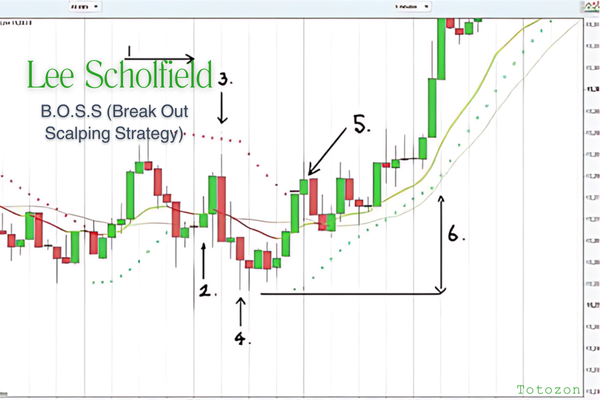
B.O.S.S (Break Out Scalping Strategy) with Lee Scholfield
$6.00
File Size: Coming soon!
Delivery Time: 1–12 hours
Media Type: Online Course
Content Proof: Watch Here!
You may check content proof of “B.O.S.S (Break Out Scalping Strategy) with Lee Scholfield” below:
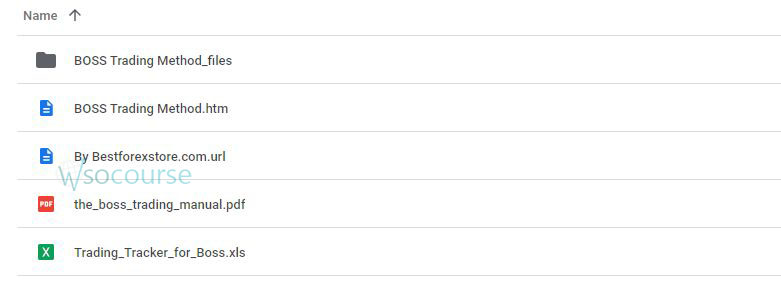
B.O.S.S (Break Out Scalping Strategy) with Lee Scholfield
In the fast-paced world of trading, scalping strategies are popular for their potential to yield quick profits. Lee Scholfield’s Break Out Scalping Strategy (B.O.S.S) is a powerful method that capitalizes on market breakouts. This article delves into the intricacies of B.O.S.S, offering a detailed guide on how to implement it effectively.
Understanding Scalping Strategies
Scalping involves making numerous trades over short periods to capitalize on small price movements.
What is Scalping?
- Definition: A trading style that aims to profit from small price changes.
- Objective: To accumulate numerous small gains over time.
Why Scalping?
- Quick Profits: Scalping allows for fast gains within a trading day.
- Reduced Risk Exposure: Short holding periods mean less exposure to market risk.
Introduction to B.O.S.S
B.O.S.S focuses on identifying and trading market breakouts, a situation where the price moves beyond a defined resistance or support level.
What is B.O.S.S?
- Break Out Scalping Strategy: A technique that targets breakout points for quick trades.
- Creator: Developed by trading expert Lee Scholfield.
Why Use B.O.S.S?
- High Probability Trades: Breakouts often lead to significant price movements.
- Clear Entry and Exit Points: Defined levels make it easier to plan trades.
Key Concepts of B.O.S.S
Understanding the key concepts behind B.O.S.S is crucial for successful implementation.
Breakouts
- Definition: A breakout occurs when the price moves above a resistance level or below a support level.
- Significance: Indicates potential for strong price movements.
Support and Resistance Levels
- Support: A price level where buying interest is strong enough to prevent the price from falling further.
- Resistance: A price level where selling interest is strong enough to prevent the price from rising further.
Implementing B.O.S.S
To implement B.O.S.S effectively, follow these steps:
1. Identify Key Levels
- Chart Analysis: Use technical analysis to identify support and resistance levels.
- Historical Data: Analyze past price movements to determine these levels.
2. Monitor for Breakouts
- Real-Time Analysis: Monitor price movements in real-time to spot potential breakouts.
- Confirmation: Wait for confirmation of the breakout before entering a trade.
3. Entering Trades
- Buy Breakouts: Enter a buy trade when the price breaks above a resistance level.
- Sell Breakouts: Enter a sell trade when the price breaks below a support level.
4. Setting Stop-Loss Orders
- Risk Management: Place stop-loss orders to limit potential losses.
- Strategic Placement: Position stop-loss orders just below the breakout level for buy trades and just above for sell trades.
5. Taking Profits
- Profit Targets: Set clear profit targets based on the size of the breakout.
- Trailing Stops: Use trailing stops to lock in profits as the price moves in your favor.
Tools and Indicators for B.O.S.S
Several tools and indicators can enhance the effectiveness of B.O.S.S.
Moving Averages
- Simple Moving Average (SMA): Helps identify the overall trend.
- Exponential Moving Average (EMA): Gives more weight to recent price movements, useful for detecting breakouts.
Volume Indicators
- Volume Analysis: High volume can confirm the strength of a breakout.
- On-Balance Volume (OBV): Measures buying and selling pressure.
Relative Strength Index (RSI)
- Overbought/Oversold Conditions: Helps identify potential reversal points that can lead to breakouts.
Common Mistakes in Scalping
Avoid these common pitfalls to maximize your success with B.O.S.S.
Overtrading
- Quality Over Quantity: Focus on high-probability trades rather than making numerous low-quality trades.
Ignoring Risk Management
- Set Stop-Loss Orders: Always use stop-loss orders to manage risk.
- Limit Exposure: Avoid risking too much capital on a single trade.
Failing to Adapt
- Market Conditions: Adapt your strategy to changing market conditions.
- Continuous Learning: Stay updated with new techniques and market trends.
The Psychology of Scalping
Successful scalping requires the right mindset.
Discipline
- Stick to the Plan: Follow your trading plan without deviation.
- Emotional Control: Manage emotions to avoid impulsive decisions.
Patience
- Wait for Confirmations: Be patient and wait for clear breakout signals before entering trades.
- Consistent Effort: Scalping requires consistent monitoring and effort.
Conclusion
The Break Out Scalping Strategy (B.O.S.S) by Lee Scholfield offers a structured approach to capitalize on market breakouts. By understanding and implementing the key concepts, tools, and techniques outlined in this article, traders can enhance their trading performance and achieve consistent profits. Remember, success in scalping requires discipline, patience, and continuous learning.
FAQs
1. What is the Break Out Scalping Strategy (B.O.S.S)?
B.O.S.S is a trading strategy that focuses on identifying and trading breakouts from support and resistance levels to capitalize on significant price movements.
2. Why are support and resistance levels important in B.O.S.S?
Support and resistance levels help identify potential breakout points, providing clear entry and exit signals for trades.
3. How can I confirm a breakout?
Confirm a breakout by monitoring real-time price movements and volume. High volume often indicates a stronger breakout.
4. What tools can enhance the B.O.S.S strategy?
Tools like moving averages, volume indicators, and RSI can help identify and confirm breakouts, enhancing the effectiveness of the B.O.S.S strategy.
5. How important is risk management in scalping?
Risk management is crucial in scalping to protect your capital and minimize losses. Always use stop-loss orders and avoid overtrading.
Be the first to review “B.O.S.S (Break Out Scalping Strategy) with Lee Scholfield”
You must be logged in to post a review.
Related products
Original price was: $497.00.$31.00Current price is: $31.00.
Original price was: $1,200.00.$23.00Current price is: $23.00.

Forex Trading
Original price was: $999.00.$15.00Current price is: $15.00.

Forex Trading
Original price was: $2,997.00.$23.00Current price is: $23.00.
Original price was: $139.00.$23.00Current price is: $23.00.

Original price was: $1,800.00.$54.00Current price is: $54.00.

Forex Trading
Original price was: $239.00.$8.00Current price is: $8.00.

Original price was: $450.00.$23.00Current price is: $23.00.

Forex Trading
Original price was: $550.00.$5.00Current price is: $5.00.

Forex Trading
Original price was: $2,995.00.$31.00Current price is: $31.00.

Forex Trading
Original price was: $499.00.$15.00Current price is: $15.00.

Original price was: $695.00.$41.00Current price is: $41.00.
Forex Trading
Original price was: $2,000.00.$23.00Current price is: $23.00.

Forex Trading
Original price was: $697.00.$5.00Current price is: $5.00.

Forex Trading
Original price was: $4,997.00.$27.00Current price is: $27.00.

Original price was: $2,120.00.$15.00Current price is: $15.00.

Forex Trading
Original price was: $850.00.$23.00Current price is: $23.00.

Forex Trading
Original price was: $397.00.$31.00Current price is: $31.00.

Original price was: $1,849.00.$15.00Current price is: $15.00.

Forex Trading
The Complete Guide to Multiple Time Frame Analysis & Reading Price Action with Aiman Almansoori
Original price was: $1,399.00.$13.00Current price is: $13.00.
Reviews
There are no reviews yet.