
-
×
 30 Days to Market Mastery: A Step-by-Step Guide to Profitable Trading with Jack Bernstein
1 × $6.00
30 Days to Market Mastery: A Step-by-Step Guide to Profitable Trading with Jack Bernstein
1 × $6.00 -
×
 Onyx Platinum Trading Accelerator 2.0 with Nick Deflorio
1 × $6.00
Onyx Platinum Trading Accelerator 2.0 with Nick Deflorio
1 × $6.00 -
×
 Latent Curve Models with Kenneth Bollen
1 × $6.00
Latent Curve Models with Kenneth Bollen
1 × $6.00 -
×
 The TradingKey Mastering Elliott Wave with Hubb Financial
1 × $6.00
The TradingKey Mastering Elliott Wave with Hubb Financial
1 × $6.00 -
×
 ETF Trading Strategies Revealed with David Vomund
1 × $6.00
ETF Trading Strategies Revealed with David Vomund
1 × $6.00 -
×
 Bond Markets, Analysis and Strategies with Frank Fabozzi
1 × $6.00
Bond Markets, Analysis and Strategies with Frank Fabozzi
1 × $6.00 -
×
 Precise Exits & Entries with Charles LeBeau
1 × $6.00
Precise Exits & Entries with Charles LeBeau
1 × $6.00 -
×
 Applied Portfolio Management with Catherine Shenoy
1 × $6.00
Applied Portfolio Management with Catherine Shenoy
1 × $6.00 -
×
 Reverse Engineering Deals on Wall Street with Microsoft Excel with Keith Allman
1 × $6.00
Reverse Engineering Deals on Wall Street with Microsoft Excel with Keith Allman
1 × $6.00 -
×
 Binary Defender
1 × $15.00
Binary Defender
1 × $15.00 -
×
 KP Trading Room w/ Paladin and JadeCapFX
1 × $5.00
KP Trading Room w/ Paladin and JadeCapFX
1 × $5.00 -
×
 Climate Behaviour with Feibel Trading
1 × $6.00
Climate Behaviour with Feibel Trading
1 × $6.00 -
×
 An Introduction to Market Risk Measurement with Kevin Dowd
1 × $6.00
An Introduction to Market Risk Measurement with Kevin Dowd
1 × $6.00 -
×
 Stock Traders Almanac 2010 with Jeffrey Hirsch & Yale Hirsch
1 × $6.00
Stock Traders Almanac 2010 with Jeffrey Hirsch & Yale Hirsch
1 × $6.00 -
×
 SNR Trader Course with Ariff T
1 × $6.00
SNR Trader Course with Ariff T
1 × $6.00 -
×
 Managing Investment Portfolios (3rd Ed.) with John Maginn
1 × $6.00
Managing Investment Portfolios (3rd Ed.) with John Maginn
1 × $6.00 -
×
 Expert Option Trading Course with David Vallieres & Tim Warren
1 × $23.00
Expert Option Trading Course with David Vallieres & Tim Warren
1 × $23.00 -
×
 Ultimate Trading Course with Dodgy's Dungeon
1 × $8.00
Ultimate Trading Course with Dodgy's Dungeon
1 × $8.00 -
×
 Stock Market Rules (2nd Ed.) with Michael Sheimo
1 × $6.00
Stock Market Rules (2nd Ed.) with Michael Sheimo
1 × $6.00 -
×
 Elite Keys to Trading Success Class
1 × $23.00
Elite Keys to Trading Success Class
1 × $23.00 -
×
 Tail Hedging - Learn to Insure Stocks Against Large Declines with James Marsh
1 × $15.00
Tail Hedging - Learn to Insure Stocks Against Large Declines with James Marsh
1 × $15.00 -
×
 Investment Illusions with Martin S.Fridson
1 × $6.00
Investment Illusions with Martin S.Fridson
1 × $6.00 -
×
 The Trader Mind Program
1 × $6.00
The Trader Mind Program
1 × $6.00 -
×
 When Buy Means Sell : An Investor's Guide to Investing When It Counts with Eric Shkolnik
1 × $6.00
When Buy Means Sell : An Investor's Guide to Investing When It Counts with Eric Shkolnik
1 × $6.00 -
×
 Steidlmayer On Markets. Trading with Market Profile with J.Peter Steidlmayer
1 × $6.00
Steidlmayer On Markets. Trading with Market Profile with J.Peter Steidlmayer
1 × $6.00 -
×
 Directional Option Strategies for Swing and Day Trading with Dan Gibby - Master Trader
1 × $54.00
Directional Option Strategies for Swing and Day Trading with Dan Gibby - Master Trader
1 × $54.00 -
×
 Stock Selection Course with Dave Landry
1 × $6.00
Stock Selection Course with Dave Landry
1 × $6.00 -
×
 The Oil Money (open code) (Nov 2013)
1 × $6.00
The Oil Money (open code) (Nov 2013)
1 × $6.00 -
×
 Quantitative Finance & Algorithmic Trading in Python with Holczer Balazs
1 × $4.00
Quantitative Finance & Algorithmic Trading in Python with Holczer Balazs
1 × $4.00 -
×
 TRADINGWITHRAYNER - PRICE ACTION TRADING INSTITUTE
1 × $23.00
TRADINGWITHRAYNER - PRICE ACTION TRADING INSTITUTE
1 × $23.00 -
×
 The Naked Eye: Raw Data Analytics with Edgar Torres - Raw Data Analytics
1 × $8.00
The Naked Eye: Raw Data Analytics with Edgar Torres - Raw Data Analytics
1 × $8.00
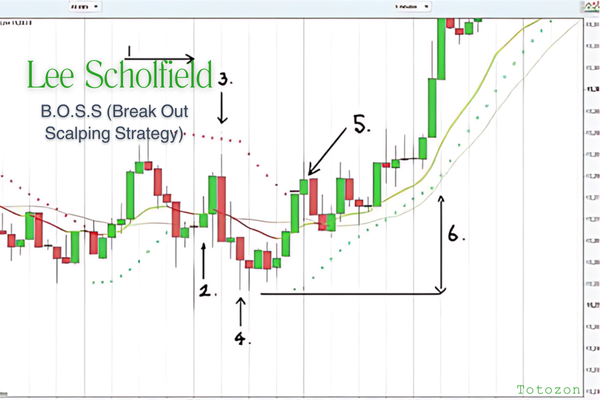
B.O.S.S (Break Out Scalping Strategy) with Lee Scholfield
$6.00
File Size: Coming soon!
Delivery Time: 1–12 hours
Media Type: Online Course
Content Proof: Watch Here!
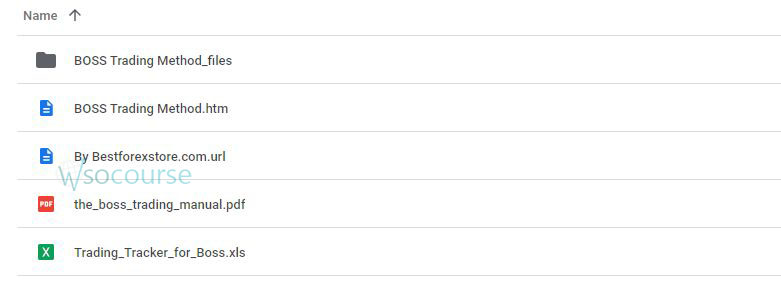
You may check content proof of “B.O.S.S (Break Out Scalping Strategy) with Lee Scholfield” below:
B.O.S.S (Break Out Scalping Strategy) with Lee Scholfield
In the fast-paced world of trading, scalping strategies are popular for their potential to yield quick profits. Lee Scholfield’s Break Out Scalping Strategy (B.O.S.S) is a powerful method that capitalizes on market breakouts. This article delves into the intricacies of B.O.S.S, offering a detailed guide on how to implement it effectively.
Understanding Scalping Strategies
Scalping involves making numerous trades over short periods to capitalize on small price movements.
What is Scalping?
- Definition: A trading style that aims to profit from small price changes.
- Objective: To accumulate numerous small gains over time.
Why Scalping?
- Quick Profits: Scalping allows for fast gains within a trading day.
- Reduced Risk Exposure: Short holding periods mean less exposure to market risk.
Introduction to B.O.S.S
B.O.S.S focuses on identifying and trading market breakouts, a situation where the price moves beyond a defined resistance or support level.
What is B.O.S.S?
- Break Out Scalping Strategy: A technique that targets breakout points for quick trades.
- Creator: Developed by trading expert Lee Scholfield.
Why Use B.O.S.S?
- High Probability Trades: Breakouts often lead to significant price movements.
- Clear Entry and Exit Points: Defined levels make it easier to plan trades.
Key Concepts of B.O.S.S
Understanding the key concepts behind B.O.S.S is crucial for successful implementation.
Breakouts
- Definition: A breakout occurs when the price moves above a resistance level or below a support level.
- Significance: Indicates potential for strong price movements.
Support and Resistance Levels
- Support: A price level where buying interest is strong enough to prevent the price from falling further.
- Resistance: A price level where selling interest is strong enough to prevent the price from rising further.
Implementing B.O.S.S
To implement B.O.S.S effectively, follow these steps:
1. Identify Key Levels
- Chart Analysis: Use technical analysis to identify support and resistance levels.
- Historical Data: Analyze past price movements to determine these levels.
2. Monitor for Breakouts
- Real-Time Analysis: Monitor price movements in real-time to spot potential breakouts.
- Confirmation: Wait for confirmation of the breakout before entering a trade.
3. Entering Trades
- Buy Breakouts: Enter a buy trade when the price breaks above a resistance level.
- Sell Breakouts: Enter a sell trade when the price breaks below a support level.
4. Setting Stop-Loss Orders
- Risk Management: Place stop-loss orders to limit potential losses.
- Strategic Placement: Position stop-loss orders just below the breakout level for buy trades and just above for sell trades.
5. Taking Profits
- Profit Targets: Set clear profit targets based on the size of the breakout.
- Trailing Stops: Use trailing stops to lock in profits as the price moves in your favor.
Tools and Indicators for B.O.S.S
Several tools and indicators can enhance the effectiveness of B.O.S.S.
Moving Averages
- Simple Moving Average (SMA): Helps identify the overall trend.
- Exponential Moving Average (EMA): Gives more weight to recent price movements, useful for detecting breakouts.
Volume Indicators
- Volume Analysis: High volume can confirm the strength of a breakout.
- On-Balance Volume (OBV): Measures buying and selling pressure.
Relative Strength Index (RSI)
- Overbought/Oversold Conditions: Helps identify potential reversal points that can lead to breakouts.
Common Mistakes in Scalping
Avoid these common pitfalls to maximize your success with B.O.S.S.
Overtrading
- Quality Over Quantity: Focus on high-probability trades rather than making numerous low-quality trades.
Ignoring Risk Management
- Set Stop-Loss Orders: Always use stop-loss orders to manage risk.
- Limit Exposure: Avoid risking too much capital on a single trade.
Failing to Adapt
- Market Conditions: Adapt your strategy to changing market conditions.
- Continuous Learning: Stay updated with new techniques and market trends.
The Psychology of Scalping
Successful scalping requires the right mindset.
Discipline
- Stick to the Plan: Follow your trading plan without deviation.
- Emotional Control: Manage emotions to avoid impulsive decisions.
Patience
- Wait for Confirmations: Be patient and wait for clear breakout signals before entering trades.
- Consistent Effort: Scalping requires consistent monitoring and effort.
Conclusion
The Break Out Scalping Strategy (B.O.S.S) by Lee Scholfield offers a structured approach to capitalize on market breakouts. By understanding and implementing the key concepts, tools, and techniques outlined in this article, traders can enhance their trading performance and achieve consistent profits. Remember, success in scalping requires discipline, patience, and continuous learning.
FAQs
1. What is the Break Out Scalping Strategy (B.O.S.S)?
B.O.S.S is a trading strategy that focuses on identifying and trading breakouts from support and resistance levels to capitalize on significant price movements.
2. Why are support and resistance levels important in B.O.S.S?
Support and resistance levels help identify potential breakout points, providing clear entry and exit signals for trades.
3. How can I confirm a breakout?
Confirm a breakout by monitoring real-time price movements and volume. High volume often indicates a stronger breakout.
4. What tools can enhance the B.O.S.S strategy?
Tools like moving averages, volume indicators, and RSI can help identify and confirm breakouts, enhancing the effectiveness of the B.O.S.S strategy.
5. How important is risk management in scalping?
Risk management is crucial in scalping to protect your capital and minimize losses. Always use stop-loss orders and avoid overtrading.
Be the first to review “B.O.S.S (Break Out Scalping Strategy) with Lee Scholfield”
You must be logged in to post a review.
Related products
Forex Trading
Original price was: $239.00.$8.00Current price is: $8.00.

Forex Trading
Original price was: $249.00.$15.00Current price is: $15.00.

Forex Trading
Original price was: $797.00.$10.00Current price is: $10.00.

Forex Trading
Quantamentals – The Next Great Forefront Of Trading and Investing with Trading Markets
Original price was: $1,495.00.$8.00Current price is: $8.00.

Forex Trading
Original price was: $397.00.$31.00Current price is: $31.00.

Original price was: $799.00.$15.00Current price is: $15.00.

Original price was: $1,800.00.$54.00Current price is: $54.00.

Original price was: $310.00.$23.00Current price is: $23.00.

Original price was: $497.00.$11.00Current price is: $11.00.

Original price was: $197.00.$5.00Current price is: $5.00.

Forex Trading
Original price was: $550.00.$5.00Current price is: $5.00.

Forex Trading
Original price was: $500.00.$5.00Current price is: $5.00.

Forex Trading
The Complete Guide to Multiple Time Frame Analysis & Reading Price Action with Aiman Almansoori
Original price was: $1,399.00.$13.00Current price is: $13.00.

Original price was: $497.00.$31.00Current price is: $31.00.

Forex Trading
Original price was: $499.00.$15.00Current price is: $15.00.

Forex Trading
Original price was: $999.00.$15.00Current price is: $15.00.

Forex Trading
Original price was: $799.00.$15.00Current price is: $15.00.

Forex Trading
Original price was: $1,898.00.$10.00Current price is: $10.00.

Forex Trading
Original price was: $125.00.$17.00Current price is: $17.00.

Original price was: $450.00.$23.00Current price is: $23.00.
Reviews
There are no reviews yet.