
-
×
 WondaFX Signature Strategy with WondaFX
1 × $5.00
WondaFX Signature Strategy with WondaFX
1 × $5.00 -
×
 ChangeWave Investing 2.0 with Tobin Smith
1 × $6.00
ChangeWave Investing 2.0 with Tobin Smith
1 × $6.00 -
×
 Supply and Demand 2023 with Willy Jay
1 × $5.00
Supply and Demand 2023 with Willy Jay
1 × $5.00 -
×
 The Bond Book (2nd Ed.) with Annette Thau
1 × $6.00
The Bond Book (2nd Ed.) with Annette Thau
1 × $6.00 -
×
 Spyglass LSS Day Trading Workshop
1 × $15.00
Spyglass LSS Day Trading Workshop
1 × $15.00 -
×
 Volatility and Timing with Jay Kaeppel – The Option Trader’s Guide to Probability
1 × $6.00
Volatility and Timing with Jay Kaeppel – The Option Trader’s Guide to Probability
1 × $6.00 -
×
 Investing Smart. How to Pick Stocks with Investors Business Daily By Dhun H.Sethna
1 × $4.00
Investing Smart. How to Pick Stocks with Investors Business Daily By Dhun H.Sethna
1 × $4.00 -
×
 Info Product Mastery - Ron Douglas & Alice Seba
1 × $6.00
Info Product Mastery - Ron Douglas & Alice Seba
1 × $6.00 -
×
 The Thirty-Second Jewel in PDF with Constance Brown
1 × $8.00
The Thirty-Second Jewel in PDF with Constance Brown
1 × $8.00 -
×
 Lessons 1-30 & Tradestation Code with Charles Drummond
1 × $6.00
Lessons 1-30 & Tradestation Code with Charles Drummond
1 × $6.00 -
×
 Kickstart Course with Tradelikerocket
1 × $46.00
Kickstart Course with Tradelikerocket
1 × $46.00 -
×
 Essentials in Quantitative Trading QT01 By HangukQuant's
1 × $23.00
Essentials in Quantitative Trading QT01 By HangukQuant's
1 × $23.00 -
×
 Read The Market RTM Master Trader Course + Journals
1 × $5.00
Read The Market RTM Master Trader Course + Journals
1 × $5.00 -
×
 Failure Rate Modelling for Reliabiliy & Risk with Maxim Finkelstein
1 × $6.00
Failure Rate Modelling for Reliabiliy & Risk with Maxim Finkelstein
1 × $6.00 -
×
 Volatility Trading with Fractal Flow Pro
1 × $15.00
Volatility Trading with Fractal Flow Pro
1 × $15.00 -
×
 Spike 35 Traders Manual with J.D.Hamon
1 × $6.00
Spike 35 Traders Manual with J.D.Hamon
1 × $6.00 -
×
 Sovereign Man Price Value International 2016
1 × $15.00
Sovereign Man Price Value International 2016
1 × $15.00 -
×
 Compass Trading System with Right Line Trading
1 × $39.00
Compass Trading System with Right Line Trading
1 × $39.00 -
×
 Advanced AmiBroker Coding with Matt Radtke & Connors Research
1 × $23.00
Advanced AmiBroker Coding with Matt Radtke & Connors Research
1 × $23.00 -
×
 CBOT Seminar on Market Profile (101 & 102) with Alex Benjamin
1 × $6.00
CBOT Seminar on Market Profile (101 & 102) with Alex Benjamin
1 × $6.00 -
×
 Practical Approach to Trend Following By Rajandran R
1 × $15.00
Practical Approach to Trend Following By Rajandran R
1 × $15.00 -
×
 Evolve MasterClass with Irek Piekarski
1 × $13.00
Evolve MasterClass with Irek Piekarski
1 × $13.00 -
×
 Forex Breakthrough Academy
1 × $31.00
Forex Breakthrough Academy
1 × $31.00 -
×
 HST Mobile
1 × $31.00
HST Mobile
1 × $31.00 -
×
 High Probability Option Trading - Seasonal Straddles
1 × $6.00
High Probability Option Trading - Seasonal Straddles
1 × $6.00 -
×
 Intro To Trading - 3 Module Bundle
1 × $23.00
Intro To Trading - 3 Module Bundle
1 × $23.00 -
×
 Mastering Amibroker Formula Language
1 × $15.00
Mastering Amibroker Formula Language
1 × $15.00 -
×
 Climate Behaviour with Feibel Trading
1 × $6.00
Climate Behaviour with Feibel Trading
1 × $6.00 -
×
 Project Gorilla
1 × $5.00
Project Gorilla
1 × $5.00 -
×
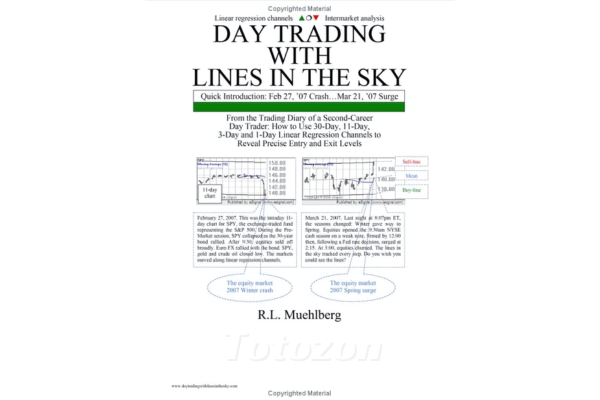 Day Trading with Lines in the Sky By R.L.Muehlberg
1 × $6.00
Day Trading with Lines in the Sky By R.L.Muehlberg
1 × $6.00 -
×
 Historical Stock Price Data For 8,000+ US Stocks with Joe Marwood
1 × $4.00
Historical Stock Price Data For 8,000+ US Stocks with Joe Marwood
1 × $4.00 -
×
 How I Trade Major First-Hour Reversals For Rapid Gains with Kevin Haggerty
1 × $6.00
How I Trade Major First-Hour Reversals For Rapid Gains with Kevin Haggerty
1 × $6.00 -
×
 Fundamental Analysis with CA Rachana Ranade
1 × $5.00
Fundamental Analysis with CA Rachana Ranade
1 × $5.00 -
×
 Understanding Wall Street (4th Ed.) with Jeffrey Little
1 × $6.00
Understanding Wall Street (4th Ed.) with Jeffrey Little
1 × $6.00 -
×
 Beyond Fibonacci Retracements with Dynamic Traders
1 × $5.00
Beyond Fibonacci Retracements with Dynamic Traders
1 × $5.00 -
×
 Forex Commander Package by Amin Sadak
1 × $6.00
Forex Commander Package by Amin Sadak
1 × $6.00 -
×
 Inner Circle Trader
1 × $6.00
Inner Circle Trader
1 × $6.00 -
×
 Mutual Funds for Dummies (6th edition) with Eric Tyson
1 × $6.00
Mutual Funds for Dummies (6th edition) with Eric Tyson
1 × $6.00 -
×
 LARGE CAP MOMENTUM STRATEGY with Nick Radge
1 × $179.00
LARGE CAP MOMENTUM STRATEGY with Nick Radge
1 × $179.00 -
×
 Traders Seminars – 7 CD
1 × $31.00
Traders Seminars – 7 CD
1 × $31.00 -
×
 Candlestick & Pivot Point Strategies with John L.Person
1 × $6.00
Candlestick & Pivot Point Strategies with John L.Person
1 × $6.00 -
×
 Trade Like a Pro in Currency Trading with Don Schellenberg
1 × $6.00
Trade Like a Pro in Currency Trading with Don Schellenberg
1 × $6.00 -
×
 Dynamic Time Cycles with Peter Eliades
1 × $6.00
Dynamic Time Cycles with Peter Eliades
1 × $6.00 -
×
 Complete Trading System with Segma Singh
1 × $6.00
Complete Trading System with Segma Singh
1 × $6.00 -
×
 Deep Dive Butterfly Trading Strategy Class with SJG Trades
1 × $41.00
Deep Dive Butterfly Trading Strategy Class with SJG Trades
1 × $41.00 -
×
 D5 Render Course with Nuno Silva
1 × $27.00
D5 Render Course with Nuno Silva
1 × $27.00 -
×
 The Introduction to the Magee System of Technical Analysis CD with John Magee
1 × $6.00
The Introduction to the Magee System of Technical Analysis CD with John Magee
1 × $6.00 -
×
 Profit in the Futures Markets! with Jack Bernstein
1 × $6.00
Profit in the Futures Markets! with Jack Bernstein
1 × $6.00 -
×
 Opening Price Principle: Best Kept Secret on Wall Street - Larry Pesavento & Peggy MacKay
1 × $6.00
Opening Price Principle: Best Kept Secret on Wall Street - Larry Pesavento & Peggy MacKay
1 × $6.00 -
×
 WITS Turbo Seminars with Brian James Sklenka
1 × $6.00
WITS Turbo Seminars with Brian James Sklenka
1 × $6.00 -
×
 A Seminar On Ocean Theory Home Study Trading Course with Pat Raffalovich
1 × $6.00
A Seminar On Ocean Theory Home Study Trading Course with Pat Raffalovich
1 × $6.00 -
×
 Mark Sebastian – Gamma Trading Class
1 × $6.00
Mark Sebastian – Gamma Trading Class
1 × $6.00 -
×
 The Complete Guide to Multiple Time Frame Analysis & Reading Price Action with Aiman Almansoori
1 × $13.00
The Complete Guide to Multiple Time Frame Analysis & Reading Price Action with Aiman Almansoori
1 × $13.00 -
×
 Reverse Engineering Deals on Wall Street with Microsoft Excel with Keith Allman
1 × $6.00
Reverse Engineering Deals on Wall Street with Microsoft Excel with Keith Allman
1 × $6.00 -
×
 0 DTE Options Trading Workshop with Aeromir Corporation
1 × $15.00
0 DTE Options Trading Workshop with Aeromir Corporation
1 × $15.00 -
×
 Crypto Trading Academy with Cheeky Investor - Aussie Day Trader
1 × $13.00
Crypto Trading Academy with Cheeky Investor - Aussie Day Trader
1 × $13.00 -
×
 Trade What You See, Not What You Believe with Larry Pesavento
1 × $6.00
Trade What You See, Not What You Believe with Larry Pesavento
1 × $6.00 -
×
 Beat the Market with Edward O.Thorp
1 × $6.00
Beat the Market with Edward O.Thorp
1 × $6.00 -
×
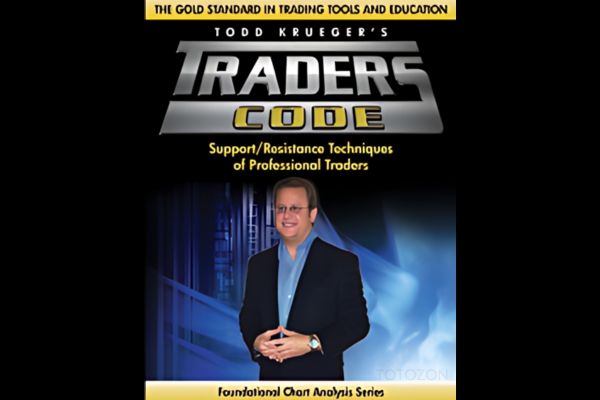 Foundational Chart Analysis Series: Support / Resistance Techniques of Professional Traders 6 DVD Home Study Course
1 × $54.00
Foundational Chart Analysis Series: Support / Resistance Techniques of Professional Traders 6 DVD Home Study Course
1 × $54.00 -
×
 Options Trading & Ultimate MasterClass With Tyrone Abela - FX Evolution
1 × $54.00
Options Trading & Ultimate MasterClass With Tyrone Abela - FX Evolution
1 × $54.00 -
×
 The Science of Trading with Mark Boucher
1 × $6.00
The Science of Trading with Mark Boucher
1 × $6.00 -
×
 ProfileTraders - Advanced Market Profile (May 2014)
1 × $6.00
ProfileTraders - Advanced Market Profile (May 2014)
1 × $6.00 -
×
 Advanced Nasdaq Trading Techniques with Alan Rich
1 × $6.00
Advanced Nasdaq Trading Techniques with Alan Rich
1 × $6.00 -
×
 Advanced Spread Trading with Guy Bower - MasterClass Trader
1 × $15.00
Advanced Spread Trading with Guy Bower - MasterClass Trader
1 × $15.00 -
×
 AI For Traders with Trading Markets
1 × $31.00
AI For Traders with Trading Markets
1 × $31.00
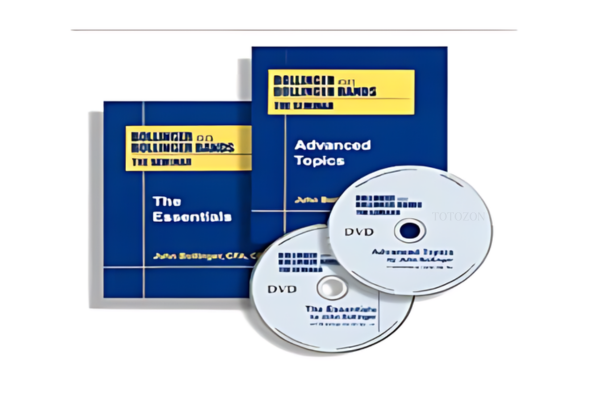
John Bollinger on Bollinger Bands
Original price was: $350.00.$6.00Current price is: $6.00.
File Size: Coming soon!
Delivery Time: 1–12 hours
Media Type: Online Course
John Bollinger on Bollinger Bands
Bollinger Bands are one of the most popular and versatile tools used in technical analysis, created by financial analyst John Bollinger. These bands help traders understand price volatility and identify potential trading opportunities. This article explores the concept of Bollinger Bands, their application in trading, and insights from John Bollinger himself.
Introduction to Bollinger Bands
What Are Bollinger Bands?
Bollinger Bands consist of a middle band (usually a simple moving average), and two outer bands that represent the standard deviation above and below the moving average. These bands adjust themselves based on market volatility.
Who Is John Bollinger?
John Bollinger is a renowned financial analyst and the creator of Bollinger Bands. He introduced this concept in the 1980s, and it has since become a staple in the toolkit of traders worldwide.
How Bollinger Bands Work
1. The Middle Band
The middle band is typically a 20-day simple moving average (SMA) that tracks the average price over the last 20 days.
2. The Upper and Lower Bands
The upper and lower bands are usually set two standard deviations away from the middle band, representing the price range within which the asset is expected to trade.
3. Volatility Measurement
Bollinger Bands expand and contract based on market volatility. Wider bands indicate higher volatility, while narrower bands suggest lower volatility.
Key Principles of Bollinger Bands
1. Price Envelopes
Bollinger Bands act as dynamic price envelopes, providing a relative definition of high and low prices.
2. Trend Identification
Traders use Bollinger Bands to identify trends and potential reversals. When prices touch the upper band, the asset might be overbought, and when they touch the lower band, it might be oversold.
3. Volatility Insight
The width of the bands provides insights into market volatility, helping traders gauge the strength of price movements.
Trading Strategies Using Bollinger Bands
1. Bollinger Bounce
This strategy is based on the idea that prices tend to return to the middle band. Traders buy when the price touches the lower band and sell when it touches the upper band.
2. Bollinger Squeeze
A squeeze occurs when the bands come close together, indicating low volatility and potential for a breakout. Traders watch for price movements outside the bands to signal the start of a new trend.
3. Riding the Bands
In a strong trend, prices can “ride the bands.” Traders follow the trend by entering trades in the direction of the trend when prices consistently touch the upper or lower band.
4. Double Bottoms and Tops
Bollinger Bands can help identify double bottoms and tops, which are potential reversal patterns. Look for price divergence at the bands to confirm these patterns.
5. Divergence
Divergence between price movement and the bands can signal weakening trends and potential reversals. Traders use this to anticipate changes in market direction.
How to Implement Bollinger Bands in Your Trading
1. Setting Up Bollinger Bands
Most trading platforms include Bollinger Bands as a standard indicator. Set the middle band to a 20-day SMA and the outer bands to two standard deviations from the SMA.
2. Choosing Timeframes
Bollinger Bands can be used on various timeframes, from minutes to months. Choose the timeframe that best suits your trading style.
3. Combining with Other Indicators
Enhance the effectiveness of Bollinger Bands by combining them with other indicators like the Relative Strength Index (RSI), Moving Average Convergence Divergence (MACD), or volume indicators.
4. Backtesting Strategies
Before trading with real money, backtest your Bollinger Band strategies using historical data to understand their performance and refine your approach.
5. Monitoring and Adjusting
Regularly monitor your trades and adjust your strategies as needed based on market conditions and performance reviews.
Common Mistakes to Avoid
1. Overtrading
Avoid making too many trades based on Bollinger Band signals alone. Use them as part of a broader trading strategy.
2. Ignoring Market Context
Always consider the broader market context and avoid relying solely on Bollinger Bands for trading decisions.
3. Misinterpreting Signals
Ensure you understand the signals Bollinger Bands provide and don’t misinterpret price touches on the bands as automatic buy or sell signals.
4. Neglecting Risk Management
Implement proper risk management practices, including stop-loss and take-profit levels, to protect your capital.
5. Failing to Adapt
Market conditions change, and so should your strategies. Be flexible and willing to adapt your use of Bollinger Bands as needed.
Advanced Tips for Bollinger Bands
1. Using Multiple Timeframes
Analyze Bollinger Bands on multiple timeframes to gain a broader perspective on market trends and potential reversals.
2. Incorporating Volume Analysis
Combine Bollinger Bands with volume analysis to confirm breakouts and trend strength.
3. Adjusting Band Settings
Experiment with different settings for the moving average and standard deviations to find the configuration that works best for your trading style.
4. Understanding Bandwidth
The bandwidth (difference between the upper and lower bands) can provide additional insights into market conditions and potential trading opportunities.
5. Staying Updated with Market News
Stay informed about market news and events that can impact volatility and influence Bollinger Band signals.
John Bollinger’s Insights
1. Flexibility and Adaptability
John Bollinger emphasizes the importance of flexibility and adaptability in trading. He advises traders to adjust their strategies based on changing market conditions.
2. Combining with Fundamentals
While Bollinger Bands are a technical tool, combining them with fundamental analysis can provide a more comprehensive view of the market.
3. Continuous Learning
Bollinger advocates for continuous learning and staying updated with new techniques and strategies to improve trading performance.
4. Avoiding Over-Reliance
Bollinger cautions against over-reliance on any single indicator. He recommends using Bollinger Bands as part of a broader trading system.
5. Practical Application
Bollinger encourages traders to practice and refine their use of Bollinger Bands through backtesting and real-time application.
Conclusion
Bollinger Bands are a versatile and powerful tool for traders looking to understand market volatility and identify potential trading opportunities. By following the principles and strategies outlined in this article, you can effectively incorporate Bollinger Bands into your trading system and trade with confidence.
Commonly Asked Questions:
- Business Model Innovation: Accept the truth of a legitimate business! Our strategy is organising a group buy in which participants share the costs. We use these cash to acquire popular courses from sale pages and make them available to people with limited financial resources. Despite the authors’ worries, our clients love the cost and accessibility we give.
- The Legal Environment: Yes or No The legality of our activity is ambiguous. While we don’t have specific permission from the course authors to resell the material, there is a technicality at work. The author did not specify any limits on resale when purchasing the course. This legal intricacy is both an opportunity for us and a boon for individuals looking for low-cost access.
- Quality Control: Uncovering the Truth
Getting to the heart of the issue – quality. Purchasing the course straight from the sale page guarantees that all documents and resources are the same as those obtained through traditional channels.
However, we distinguish ourselves by going beyond personal research and resale. It is crucial to note that we are not the official course providers, which means that the following premium services are not included in our package:
- There are no scheduled coaching calls or sessions with the author.
- Access to the author’s private Facebook group or web portal is not permitted.
- No access to the author’s private membership forum.
- There is no direct email support available from the author or their team.
We operate independently, with the goal of bridging the pricing gap without the extra services provided by official course channels. Your comprehension of our distinct approach is much appreciated.
Be the first to review “John Bollinger on Bollinger Bands”
You must be logged in to post a review.
Related products

Original price was: $700.00.$39.00Current price is: $39.00.
Original price was: $1,800.00.$54.00Current price is: $54.00.

Original price was: $1,849.00.$15.00Current price is: $15.00.

Forex Trading
Original price was: $249.00.$15.00Current price is: $15.00.
Forex Trading
The Complete Guide to Multiple Time Frame Analysis & Reading Price Action with Aiman Almansoori
Original price was: $1,399.00.$13.00Current price is: $13.00.

Original price was: $799.00.$15.00Current price is: $15.00.

Original price was: $497.00.$31.00Current price is: $31.00.
Forex Trading
Original price was: $550.00.$5.00Current price is: $5.00.

Original price was: $497.00.$11.00Current price is: $11.00.
Original price was: $695.00.$41.00Current price is: $41.00.

Forex Trading
Original price was: $500.00.$5.00Current price is: $5.00.

Original price was: $649.00.$20.00Current price is: $20.00.

Original price was: $4,995.00.$15.00Current price is: $15.00.

Forex Trading
Original price was: $4,997.00.$27.00Current price is: $27.00.

Forex Trading
Original price was: $799.00.$15.00Current price is: $15.00.
Original price was: $997.00.$13.00Current price is: $13.00.

Original price was: $450.00.$23.00Current price is: $23.00.

Forex Trading
Original price was: $499.00.$15.00Current price is: $15.00.

Original price was: $2,120.00.$15.00Current price is: $15.00.

Original price was: $997.00.$8.00Current price is: $8.00.
Reviews
There are no reviews yet.