
-
×
 Affinity Foundation Stocks Course with Affinitytrading
1 × $6.00
Affinity Foundation Stocks Course with Affinitytrading
1 × $6.00 -
×
 Pristine - Oliver Velez – Swing Trading Tactics 2001
1 × $6.00
Pristine - Oliver Velez – Swing Trading Tactics 2001
1 × $6.00 -
×
 Bullseye Trading Course with Ralph Garcia
1 × $39.00
Bullseye Trading Course with Ralph Garcia
1 × $39.00 -
×
 How To Be a Profitable Forex Trader with Corey Halliday
1 × $6.00
How To Be a Profitable Forex Trader with Corey Halliday
1 × $6.00 -
×
 Fibonacci – CCI Workshop Recording Series (2006 & 2008)
1 × $6.00
Fibonacci – CCI Workshop Recording Series (2006 & 2008)
1 × $6.00 -
×
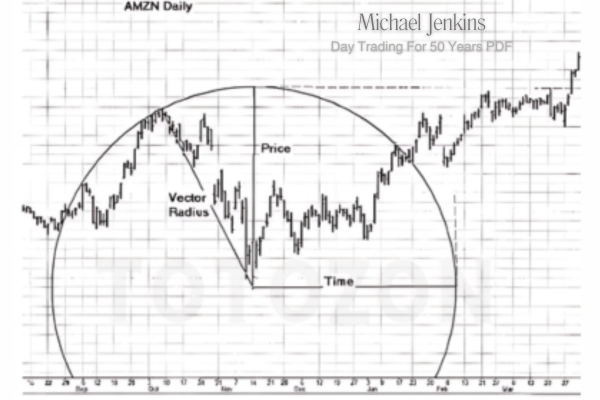 Day Trading For 50 Years PDF with Michael Jenkins
1 × $6.00
Day Trading For 50 Years PDF with Michael Jenkins
1 × $6.00 -
×
 The 10%ers with Trader Mike
1 × $5.00
The 10%ers with Trader Mike
1 × $5.00 -
×
 SQX Mentorship with Tip Toe Hippo
1 × $23.00
SQX Mentorship with Tip Toe Hippo
1 × $23.00 -
×
 Essentials in Quantitative Trading QT01 By HangukQuant's
1 × $23.00
Essentials in Quantitative Trading QT01 By HangukQuant's
1 × $23.00 -
×
 Trade Australian Share CFDs with Brian Griffin
1 × $6.00
Trade Australian Share CFDs with Brian Griffin
1 × $6.00 -
×
 Elite Trader Package
1 × $31.00
Elite Trader Package
1 × $31.00 -
×
 Sea Lanes & Pipelines with Bernard D.Cole
1 × $6.00
Sea Lanes & Pipelines with Bernard D.Cole
1 × $6.00 -
×
 CAT 2007 Seminar with Stephen W.Bigalow
1 × $6.00
CAT 2007 Seminar with Stephen W.Bigalow
1 × $6.00 -
×
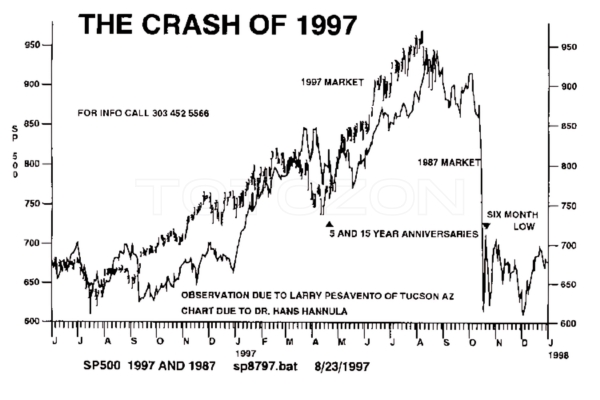 The Crash of 1997 (Article) with Hans Hannula
1 × $6.00
The Crash of 1997 (Article) with Hans Hannula
1 × $6.00 -
×
 ADR Pro For Metatrader 4.0 with Compass FX
1 × $15.00
ADR Pro For Metatrader 4.0 with Compass FX
1 × $15.00 -
×
 PFAZoneSuite [Trading Indicator] 2017
1 × $109.00
PFAZoneSuite [Trading Indicator] 2017
1 × $109.00 -
×
 Capital Asset Investment with Anthony F.Herbst
1 × $6.00
Capital Asset Investment with Anthony F.Herbst
1 × $6.00 -
×
 Advanced Trading Course with John Person
1 × $6.00
Advanced Trading Course with John Person
1 × $6.00 -
×
 The Fundamentals of Options Trading Basis with Joseph Frey
1 × $6.00
The Fundamentals of Options Trading Basis with Joseph Frey
1 × $6.00 -
×
 Handbook of Integral Equations with Andrei D.Polyanin, Alexander V.Manzhirov
1 × $6.00
Handbook of Integral Equations with Andrei D.Polyanin, Alexander V.Manzhirov
1 × $6.00 -
×
 MACK - PATS Simple ES Scalping Strategy
1 × $15.00
MACK - PATS Simple ES Scalping Strategy
1 × $15.00 -
×
 The Indices Orderflow Masterclass with The Forex Scalpers
1 × $23.00
The Indices Orderflow Masterclass with The Forex Scalpers
1 × $23.00 -
×
 Gann Course (Video & Audio 1.1 GB)
1 × $6.00
Gann Course (Video & Audio 1.1 GB)
1 × $6.00 -
×
 Technical Analysis 101: A Comprehensive Guide to Becoming a Better Trader Class with Jeff Bierman
1 × $6.00
Technical Analysis 101: A Comprehensive Guide to Becoming a Better Trader Class with Jeff Bierman
1 × $6.00 -
×
 Learn Plan Profit 2.0 with Ricky Gutierrez
1 × $39.00
Learn Plan Profit 2.0 with Ricky Gutierrez
1 × $39.00 -
×
 Advanced Trading Course with Edney Pinheiro
1 × $5.00
Advanced Trading Course with Edney Pinheiro
1 × $5.00 -
×
 The Prop Trading Code with Brannigan Barrett - Axia Futures
1 × $23.00
The Prop Trading Code with Brannigan Barrett - Axia Futures
1 × $23.00 -
×
 Quantamentals - The Next Great Forefront Of Trading and Investing with Trading Markets
1 × $8.00
Quantamentals - The Next Great Forefront Of Trading and Investing with Trading Markets
1 × $8.00 -
×
 Butterfly and Condor Workshop with Aeromir
1 × $15.00
Butterfly and Condor Workshop with Aeromir
1 × $15.00 -
×
 E-mini Weekly Options Income with Peter Titus
1 × $15.00
E-mini Weekly Options Income with Peter Titus
1 × $15.00 -
×
 Fundamentals of Futures & Options Markets (4th Ed.)
1 × $6.00
Fundamentals of Futures & Options Markets (4th Ed.)
1 × $6.00 -
×
 Complete Price Action, Volume Profile and Orderflow Trading Bundle with Price Action Volume Trader
1 × $78.00
Complete Price Action, Volume Profile and Orderflow Trading Bundle with Price Action Volume Trader
1 × $78.00 -
×
 I Segreti Del Trading Di Breve Termine (Italian) with Larry Williams
1 × $6.00
I Segreti Del Trading Di Breve Termine (Italian) with Larry Williams
1 × $6.00 -
×
 THE ART OF ADJUSTING IN 2017
1 × $6.00
THE ART OF ADJUSTING IN 2017
1 × $6.00 -
×
 Inside the House of Money (2006) with Steven Drobny
1 × $6.00
Inside the House of Money (2006) with Steven Drobny
1 × $6.00 -
×
 The Trading Blueprint with Brad Goh - The Trading Geek
1 × $5.00
The Trading Blueprint with Brad Goh - The Trading Geek
1 × $5.00 -
×
 Advanced Scalping Techniques Home Study Course with Sami Abusaad - T3Live
1 × $31.00
Advanced Scalping Techniques Home Study Course with Sami Abusaad - T3Live
1 × $31.00 -
×
 Fibonacci Ratios with Pattern Recognition - Larry Pesavento & Steven Shapiro
1 × $6.00
Fibonacci Ratios with Pattern Recognition - Larry Pesavento & Steven Shapiro
1 × $6.00 -
×
 TradeCraft: Your Path to Peak Performance Trading By Adam Grimes
1 × $15.00
TradeCraft: Your Path to Peak Performance Trading By Adam Grimes
1 × $15.00 -
×
 Volatility Trading with Fractal Flow Pro
1 × $15.00
Volatility Trading with Fractal Flow Pro
1 × $15.00 -
×
 Simpler Options - Ultimate Guide to Debit Spreads – Nov 2014
1 × $6.00
Simpler Options - Ultimate Guide to Debit Spreads – Nov 2014
1 × $6.00 -
×
 Weekly Diagonal Spreads for Consistent Income By Doc Severson
1 × $6.00
Weekly Diagonal Spreads for Consistent Income By Doc Severson
1 × $6.00 -
×
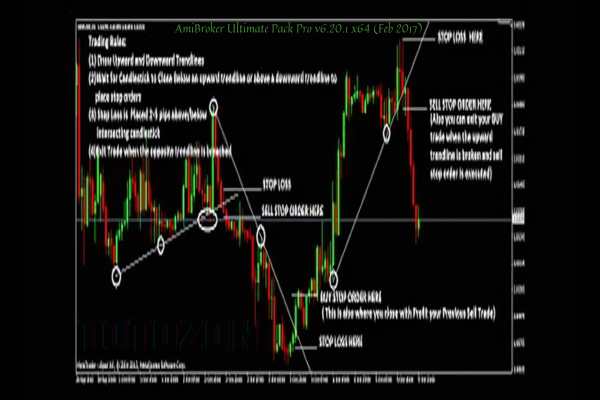 AmiBroker Ultimate Pack Pro v6.20.1 x64 (Feb 2017)
1 × $6.00
AmiBroker Ultimate Pack Pro v6.20.1 x64 (Feb 2017)
1 × $6.00 -
×
 Capital with Charles D.Ellis
1 × $6.00
Capital with Charles D.Ellis
1 × $6.00 -
×
 MMfx Course August 2011 + MT4 Ind. Jan 2012
1 × $15.00
MMfx Course August 2011 + MT4 Ind. Jan 2012
1 × $15.00 -
×
 Financial Markets Online – VIP Membership with James Bentley
1 × $6.00
Financial Markets Online – VIP Membership with James Bentley
1 × $6.00 -
×
 TRADING NFX Course with Andrew NFX
1 × $5.00
TRADING NFX Course with Andrew NFX
1 × $5.00

An Empirical Ananlysis of Stock Market Sentiment (Article) with Andrea Terzi
$6.00
File Size: Cooming soon!
Delivery Time: 1–12 hours
Media Type: Online Course
Content Proof: Watch Here!
You may check content proof of “An Empirical Ananlysis of Stock Market Sentiment (Article) with Andrea Terzi” below:

An Empirical Analysis of Stock Market Sentiment with Andrea Terzi
Introduction
Stock market sentiment plays a crucial role in the financial world, influencing trading decisions and market outcomes. In the article “An Empirical Analysis of Stock Market Sentiment,” Andrea Terzi delves into the intricacies of market psychology, providing insights into how investor sentiment can drive market movements. This article offers a comprehensive exploration of Terzi’s analysis, highlighting key concepts and findings.
Understanding Stock Market Sentiment
What Is Stock Market Sentiment?
Stock market sentiment refers to the overall attitude of investors towards the financial markets. It can be bullish (positive) or bearish (negative), and it significantly impacts trading behavior and market trends.
Importance of Sentiment Analysis
Sentiment analysis helps investors understand the mood of the market. By gauging the collective emotions and opinions of market participants, one can predict potential market movements and make informed investment decisions.
Key Concepts in Sentiment Analysis
Bullish vs. Bearish Sentiment
- Bullish Sentiment: Indicates optimism among investors, leading to increased buying and rising market prices.
- Bearish Sentiment: Reflects pessimism, resulting in selling pressure and declining market prices.
Indicators of Market Sentiment
Several indicators help measure market sentiment, including:
- Market Surveys: Collecting opinions from a sample of investors.
- Social Media Analysis: Analyzing posts and comments for sentiment trends.
- News Sentiment: Assessing the tone of financial news articles.
Methodology of Terzi’s Analysis
Data Collection
Andrea Terzi’s empirical analysis involves collecting vast amounts of data from various sources, including:
- Historical Market Data: Price movements and trading volumes.
- Investor Surveys: Sentiment scores from individual investors.
- Media Content: News articles, blogs, and social media posts.
Analytical Techniques
Terzi employs sophisticated analytical techniques to process and interpret the data:
- Natural Language Processing (NLP): Used to analyze text data from news and social media.
- Statistical Methods: To identify correlations and patterns in the data.
- Machine Learning Models: For predictive analysis and sentiment scoring.
Findings of the Analysis
Correlation Between Sentiment and Market Movements
Terzi’s analysis reveals a strong correlation between market sentiment and stock prices. Positive sentiment often precedes market rallies, while negative sentiment is linked to market downturns.
Sentiment as a Leading Indicator
Sentiment analysis can act as a leading indicator for market trends. By monitoring sentiment changes, investors can anticipate market movements and adjust their strategies accordingly.
Impact of News and Social Media
News and social media play a significant role in shaping market sentiment. Rapid dissemination of information can cause swift changes in sentiment, affecting market volatility.
Applications of Sentiment Analysis
Investment Strategies
Investors can use sentiment analysis to develop effective investment strategies:
- Contrarian Investing: Going against prevailing sentiment trends to capitalize on market corrections.
- Momentum Trading: Riding the wave of positive sentiment to maximize gains.
Risk Management
Sentiment analysis helps in risk management by identifying potential market reversals and enabling timely adjustments to portfolios.
Algorithmic Trading
Algorithmic trading systems incorporate sentiment analysis to execute trades based on real-time sentiment data, enhancing trading efficiency.
Challenges in Sentiment Analysis
Data Quality and Availability
The accuracy of sentiment analysis depends on the quality and availability of data. Incomplete or biased data can lead to incorrect conclusions.
Interpretation of Sentiment Scores
Interpreting sentiment scores requires a nuanced understanding of the market context. Simple sentiment scores may not capture the complexity of market dynamics.
Rapid Market Changes
Markets can change rapidly, and sentiment can be highly volatile. Continuous monitoring and quick adaptation are essential for effective sentiment analysis.
Future of Sentiment Analysis
Advancements in Technology
Advancements in AI and machine learning are expected to enhance sentiment analysis, providing more accurate and timely insights.
Integration with Other Data Sources
Integrating sentiment analysis with other data sources, such as economic indicators and technical analysis, can offer a more comprehensive view of the market.
Wider Adoption
As technology improves, sentiment analysis is likely to see wider adoption among investors, financial institutions, and trading platforms.
Conclusion
Andrea Terzi’s “An Empirical Analysis of Stock Market Sentiment” sheds light on the powerful influence of investor sentiment on market movements. By understanding and leveraging sentiment analysis, investors can gain a competitive edge in the financial markets. As technology advances, the importance and accuracy of sentiment analysis are set to grow, making it an indispensable tool for modern investors.
Frequently Asked Questions
1. What is stock market sentiment?
Stock market sentiment refers to the overall attitude of investors towards the financial markets, influencing their trading behavior and market outcomes.
2. How is sentiment analysis conducted?
Sentiment analysis is conducted using data from market surveys, social media, and news articles, analyzed through techniques like NLP, statistical methods, and machine learning.
3. Why is sentiment analysis important?
Sentiment analysis helps investors understand market mood, predict potential movements, and make informed investment decisions.
4. What are the challenges in sentiment analysis?
Challenges include data quality and availability, accurate interpretation of sentiment scores, and the rapid changes in market sentiment.
5. How can sentiment analysis be applied in investing?
It can be used for developing investment strategies, risk management, and enhancing algorithmic trading systems by incorporating real-time sentiment data.
Be the first to review “An Empirical Ananlysis of Stock Market Sentiment (Article) with Andrea Terzi”
You must be logged in to post a review.
Related products

Forex Trading
Original price was: $1,098.00.$39.00Current price is: $39.00.

Original price was: $139.00.$23.00Current price is: $23.00.

Forex Trading
Original price was: $499.00.$15.00Current price is: $15.00.
Forex Trading
Original price was: $2,997.00.$23.00Current price is: $23.00.

Original price was: $695.00.$41.00Current price is: $41.00.
Forex Trading
Original price was: $799.00.$15.00Current price is: $15.00.

Original price was: $799.00.$15.00Current price is: $15.00.

Original price was: $1,849.00.$15.00Current price is: $15.00.
Original price was: $450.00.$23.00Current price is: $23.00.

Original price was: $2,120.00.$15.00Current price is: $15.00.

Original price was: $299.00.$8.00Current price is: $8.00.
Forex Trading
Quantamentals – The Next Great Forefront Of Trading and Investing with Trading Markets
Original price was: $1,495.00.$8.00Current price is: $8.00.

Forex Trading
Original price was: $4,997.00.$27.00Current price is: $27.00.
Original price was: $4,995.00.$15.00Current price is: $15.00.

Forex Trading
Original price was: $2,000.00.$23.00Current price is: $23.00.

Original price was: $197.00.$5.00Current price is: $5.00.

Original price was: $999.00.$5.00Current price is: $5.00.

Original price was: $997.00.$8.00Current price is: $8.00.

Forex Trading
Original price was: $999.00.$15.00Current price is: $15.00.
Original price was: $1,200.00.$23.00Current price is: $23.00.

Reviews
There are no reviews yet.