
-
×
 Home Run Options Trading Course with Dave Aquino - Base Camp Trading
1 × $11.00
Home Run Options Trading Course with Dave Aquino - Base Camp Trading
1 × $11.00 -
×
 $20 – 52k 20 pips a day challange with Rafał Zuchowicz - TopMasterTrader
1 × $5.00
$20 – 52k 20 pips a day challange with Rafał Zuchowicz - TopMasterTrader
1 × $5.00 -
×
 How To Read The Market Professionally with TradeSmart
1 × $27.00
How To Read The Market Professionally with TradeSmart
1 × $27.00 -
×
 White Phoenix’s The Smart (Money) Approach to Trading with Jayson Casper
1 × $39.00
White Phoenix’s The Smart (Money) Approach to Trading with Jayson Casper
1 × $39.00 -
×
 Algo Trading Masterclass with Ali Casey - StatOasis
1 × $23.00
Algo Trading Masterclass with Ali Casey - StatOasis
1 × $23.00 -
×
 The Naked Eye: Raw Data Analytics with Edgar Torres - Raw Data Analytics
1 × $8.00
The Naked Eye: Raw Data Analytics with Edgar Torres - Raw Data Analytics
1 × $8.00 -
×
 TradeCraft: Your Path to Peak Performance Trading By Adam Grimes
1 × $15.00
TradeCraft: Your Path to Peak Performance Trading By Adam Grimes
1 × $15.00 -
×
 Deep Dive Butterfly Trading Strategy Class with SJG Trades
1 × $41.00
Deep Dive Butterfly Trading Strategy Class with SJG Trades
1 × $41.00 -
×
 ICT Prodigy Trading Course – $650K in Payouts with Alex Solignani
1 × $15.00
ICT Prodigy Trading Course – $650K in Payouts with Alex Solignani
1 × $15.00 -
×
 Quantamentals - The Next Great Forefront Of Trading and Investing with Trading Markets
1 × $8.00
Quantamentals - The Next Great Forefront Of Trading and Investing with Trading Markets
1 × $8.00 -
×
 AI For Traders with Trading Markets
1 × $31.00
AI For Traders with Trading Markets
1 × $31.00 -
×
 Essentials in Quantitative Trading QT01 By HangukQuant's
1 × $23.00
Essentials in Quantitative Trading QT01 By HangukQuant's
1 × $23.00 -
×
 Order flow self-study training program with iMFtracker
1 × $10.00
Order flow self-study training program with iMFtracker
1 × $10.00 -
×
 Advanced Spread Trading with Guy Bower - MasterClass Trader
1 × $15.00
Advanced Spread Trading with Guy Bower - MasterClass Trader
1 × $15.00 -
×
 WondaFX Signature Strategy with WondaFX
1 × $5.00
WondaFX Signature Strategy with WondaFX
1 × $5.00 -
×
 12 Strategies for Picking Tops & Bottoms
1 × $23.00
12 Strategies for Picking Tops & Bottoms
1 × $23.00 -
×
 The Indices Orderflow Masterclass with The Forex Scalpers
1 × $23.00
The Indices Orderflow Masterclass with The Forex Scalpers
1 × $23.00 -
×
 Forecast 2024 Clarification with Larry Williams
1 × $15.00
Forecast 2024 Clarification with Larry Williams
1 × $15.00 -
×
 The Orderflow Masterclass with PrimeTrading
1 × $17.00
The Orderflow Masterclass with PrimeTrading
1 × $17.00 -
×
 0 DTE Options Trading Workshop with Aeromir Corporation
1 × $15.00
0 DTE Options Trading Workshop with Aeromir Corporation
1 × $15.00 -
×
 Options Trading & Ultimate MasterClass With Tyrone Abela - FX Evolution
1 × $54.00
Options Trading & Ultimate MasterClass With Tyrone Abela - FX Evolution
1 × $54.00 -
×
 Compass Trading System with Right Line Trading
1 × $39.00
Compass Trading System with Right Line Trading
1 × $39.00
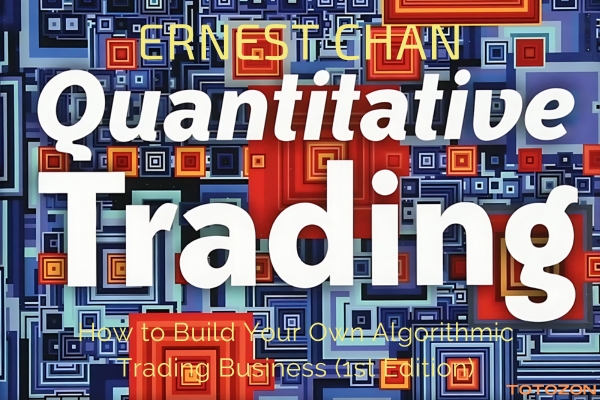
Quantitative Trading: How to Build Your Own Algorithmic Trading Business (1st Edition) with Ernest Chan
Original price was: $32.00.$6.00Current price is: $6.00.
Quantitative Trading: How to Build Your Own Algorithmic Trading Business (1st Edition) with Ernest Chan
Content Proof:

Introduction
Embarking on a journey into the world of quantitative trading can be exhilarating yet daunting. Ernest Chan’s “Quantitative Trading: How to Build Your Own Algorithmic Trading Business” provides a roadmap for individuals aspiring to harness the power of algorithms in the financial markets.
Who is Ernest Chan?
Dr. Ernest Chan is a respected figure in the trading community, known for his expertise in quantitative finance and algorithmic trading. His practical approach to trading strategies has empowered many to start their own trading businesses.
What is Quantitative Trading?
Quantitative trading involves using mathematical models to make trading decisions. These models are based on analyzing historical data and identifying profitable trading opportunities.
Getting Started with Quantitative Trading
Before diving into the technicalities, it’s crucial to understand the basics of quantitative trading and what it entails.
Essential Components
- Data Analysis
- Statistical Models
- Automated Trading Systems
The Role of a Quant Trader
As a quant trader, your role extends beyond just creating algorithms. You are also tasked with continually refining strategies based on market dynamics.
Key Responsibilities
- Strategy Development
- Risk Management
- Performance Monitoring
Building Algorithmic Models
At the heart of quantitative trading is the development of algorithmic models that can predict market movements and execute trades automatically.
Steps to Building Models
- Data Collection
- Backtesting
- Optimization
Data: The Foundation of Your Strategy
Data integrity is paramount in quantitative trading. The accuracy of your models depends on the quality and completeness of the data you use.
Types of Data
- Price Data
- Volume Data
- Economic Indicators
Backtesting Your Strategies
Backtesting involves simulating a trading strategy using historical data to determine its viability before live deployment.
Importance of Backtesting
- Risk Assessment
- Strategy Refinement
Optimizing Trading Algorithms
Once a strategy is backtested, the next step is optimization to enhance its performance under various market conditions.
Optimization Techniques
- Parameter Adjustment
- Stress Testing
Risk Management in Quantitative Trading
Effective risk management is crucial to protect against large losses and ensure the sustainability of your trading business.
Risk Management Strategies
- Stop-Loss Orders
- Position Sizing
- Diversification
The Psychological Aspect of Trading
Understanding the psychological pressures of trading and managing your emotions are vital components of a successful trading strategy.
Coping Mechanisms
- Emotional Discipline
- Continuous Learning
Technology and Infrastructure
Investing in the right technology and infrastructure is essential to execute high-frequency trading strategies effectively.
Essential Technologies
- High-Speed Internet
- Advanced Computing Power
Legal and Regulatory Considerations
Navigating the legal landscape is crucial for running your algorithmic trading business without compliance issues.
Compliance Requirements
- Securities Regulations
- Trading Licenses
Conclusion
Ernest Chan’s guide offers invaluable insights into starting and managing a successful algorithmic trading business. By understanding and applying these principles, you can position yourself at the forefront of the financial trading industry.
FAQs
- How much capital do I need to start a quantitative trading business?
- The initial capital can vary greatly, but starting small is advisable as you refine your strategies.
- What programming skills are necessary for quantitative trading?
- Proficiency in programming languages like Python or C++ is crucial for developing and implementing trading algorithms.
- How long does it take to develop a profitable trading algorithm?
- It can take several months to develop, test, and optimize a profitable trading algorithm.
- Is quantitative trading only suitable for finance professionals?
- While a background in finance is beneficial, passionate individuals with strong quantitative skills can also succeed.
- Can quantitative strategies become obsolete?
- Yes, quantitative strategies can decay over time. Continuous research and adaptation are required to maintain competitiveness.
Be the first to review “Quantitative Trading: How to Build Your Own Algorithmic Trading Business (1st Edition) with Ernest Chan”
You must be logged in to post a review.
Related products

Forex Trading
Original price was: $500.00.$5.00Current price is: $5.00.

Forex Trading
Original price was: $2,997.00.$23.00Current price is: $23.00.
Forex Trading
Original price was: $550.00.$5.00Current price is: $5.00.
Forex Trading
Original price was: $850.00.$23.00Current price is: $23.00.

Original price was: $1,849.00.$15.00Current price is: $15.00.

Original price was: $649.00.$20.00Current price is: $20.00.
Original price was: $197.00.$5.00Current price is: $5.00.

Original price was: $999.00.$5.00Current price is: $5.00.

Original price was: $299.00.$8.00Current price is: $8.00.

Forex Trading
The Complete Guide to Multiple Time Frame Analysis & Reading Price Action with Aiman Almansoori
Original price was: $1,399.00.$13.00Current price is: $13.00.

Original price was: $997.00.$13.00Current price is: $13.00.
Forex Trading
Original price was: $1,898.00.$10.00Current price is: $10.00.
Original price was: $700.00.$39.00Current price is: $39.00.
Forex Trading
Original price was: $1,098.00.$39.00Current price is: $39.00.

Forex Trading
Original price was: $397.00.$31.00Current price is: $31.00.
Original price was: $450.00.$23.00Current price is: $23.00.
Forex Trading
Original price was: $2,000.00.$23.00Current price is: $23.00.
Forex Trading
Original price was: $999.00.$15.00Current price is: $15.00.

Original price was: $799.00.$15.00Current price is: $15.00.

Forex Trading
Original price was: $797.00.$10.00Current price is: $10.00.
Reviews
There are no reviews yet.