
-
×
 Simpler Options - Weekly Butterflies for Income
1 × $6.00
Simpler Options - Weekly Butterflies for Income
1 × $6.00 -
×
 Staying Alive in the Markets (Video & Manual) with Mark Cook
1 × $6.00
Staying Alive in the Markets (Video & Manual) with Mark Cook
1 × $6.00 -
×
 Fundamentals of Futures & Options Markets (4th Ed.)
1 × $6.00
Fundamentals of Futures & Options Markets (4th Ed.)
1 × $6.00 -
×
 Measuring Risk in Complex Stochastic Systems with J.Franke, W. Hardle, G. Stahl
1 × $6.00
Measuring Risk in Complex Stochastic Systems with J.Franke, W. Hardle, G. Stahl
1 × $6.00 -
×
 EFT for Prevention and Treatment of Serious Diseases with Kari Dawson
1 × $6.00
EFT for Prevention and Treatment of Serious Diseases with Kari Dawson
1 × $6.00 -
×
 HandBook of Parametric and Nonparametric Statistical Procedures with David J.Sheskin
1 × $6.00
HandBook of Parametric and Nonparametric Statistical Procedures with David J.Sheskin
1 × $6.00 -
×
 Smart Money Course with Forex XL
1 × $6.00
Smart Money Course with Forex XL
1 × $6.00 -
×
 Fundamentals of the Securities Industry with William A.Rini
1 × $6.00
Fundamentals of the Securities Industry with William A.Rini
1 × $6.00 -
×
 Finding Top Secret Statagies with AlphaShark Trading
1 × $109.00
Finding Top Secret Statagies with AlphaShark Trading
1 × $109.00 -
×
 ETF Trend Trading Mentorship Course
1 × $15.00
ETF Trend Trading Mentorship Course
1 × $15.00 -
×
 DynaRange® (PREMIUM)
1 × $78.00
DynaRange® (PREMIUM)
1 × $78.00 -
×
 David Weis Stock Market Update Nightly Report 2014-2019
1 × $20.00
David Weis Stock Market Update Nightly Report 2014-2019
1 × $20.00 -
×
 Hiden Collective Factors in Speculative Trading with Bertrand Roehner
1 × $6.00
Hiden Collective Factors in Speculative Trading with Bertrand Roehner
1 × $6.00 -
×
 Power Index Method for Profitable Futures Trading with Harold Goldberg
1 × $6.00
Power Index Method for Profitable Futures Trading with Harold Goldberg
1 × $6.00 -
×
 Stock Trading Success - You Make The Call - How To Set Entries And Exits with Steve Nison and K.Cal
1 × $6.00
Stock Trading Success - You Make The Call - How To Set Entries And Exits with Steve Nison and K.Cal
1 × $6.00 -
×
 RSI Basic with Andrew Cardwell
1 × $54.00
RSI Basic with Andrew Cardwell
1 × $54.00 -
×
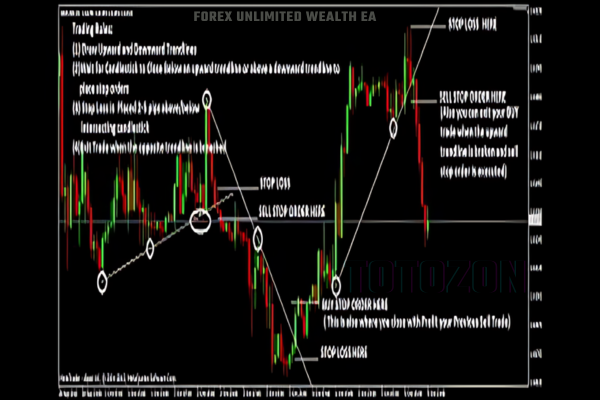 FOREX UNLIMITED WEALTH EA
1 × $6.00
FOREX UNLIMITED WEALTH EA
1 × $6.00 -
×
 How I Trade the QQQs with Don Miller
1 × $6.00
How I Trade the QQQs with Don Miller
1 × $6.00 -
×
 Scalp Trading Mini Course with Jayson Casper
1 × $23.00
Scalp Trading Mini Course with Jayson Casper
1 × $23.00 -
×
 How to Make Money in Deflationary Markets with Gary Shilling
1 × $6.00
How to Make Money in Deflationary Markets with Gary Shilling
1 × $6.00 -
×
 Full Credit Spreads with Ryan Litchfield
1 × $6.00
Full Credit Spreads with Ryan Litchfield
1 × $6.00 -
×
 How I use Technical Analysis & Orderflow with Adam Webb - Traderskew
1 × $54.00
How I use Technical Analysis & Orderflow with Adam Webb - Traderskew
1 × $54.00 -
×
 Financial Astrology Course with Brian James Sklenka
1 × $6.00
Financial Astrology Course with Brian James Sklenka
1 × $6.00 -
×
 How to Make Money Trading Stocks and Commodities with George R.Sranko
1 × $4.00
How to Make Money Trading Stocks and Commodities with George R.Sranko
1 × $4.00 -
×
 Edge Trading Group with Edge Elite
1 × $6.00
Edge Trading Group with Edge Elite
1 × $6.00 -
×
 SJG Trading - Butterflies Class with Steve Ganz
1 × $31.00
SJG Trading - Butterflies Class with Steve Ganz
1 × $31.00 -
×
 Startup Trading Masterclass with Jack Gleason
1 × $93.00
Startup Trading Masterclass with Jack Gleason
1 × $93.00 -
×
 How Do You See Risk? A Guide to Evaluating & Applying Technical Volatility Indicators class with Theotrade
1 × $4.00
How Do You See Risk? A Guide to Evaluating & Applying Technical Volatility Indicators class with Theotrade
1 × $4.00 -
×
 Forex Profit Formula System with Jason Fielder
1 × $6.00
Forex Profit Formula System with Jason Fielder
1 × $6.00 -
×
 Romeo’s University of Turtle Soup with Romeo
1 × $6.00
Romeo’s University of Turtle Soup with Romeo
1 × $6.00 -
×
 How I Day Trade Course with Traderade
1 × $15.00
How I Day Trade Course with Traderade
1 × $15.00 -
×
 Forex Made Easy: 6 Ways to Trade the Dollar with James Dicks
1 × $6.00
Forex Made Easy: 6 Ways to Trade the Dollar with James Dicks
1 × $6.00 -
×
 How to be a Sector Investor with Larry Hungerford & Steve Hungerford
1 × $4.00
How to be a Sector Investor with Larry Hungerford & Steve Hungerford
1 × $4.00 -
×
 How To Invest Better
1 × $6.00
How To Invest Better
1 × $6.00 -
×
 Predicting Market Trends with Periodic Number Cycle
1 × $6.00
Predicting Market Trends with Periodic Number Cycle
1 × $6.00 -
×
 Fundamentals 101: A Comprehensive Guide to Macroeconomic, Industry, and Financial Statement Analysis Class with Jeff Bierman
1 × $6.00
Fundamentals 101: A Comprehensive Guide to Macroeconomic, Industry, and Financial Statement Analysis Class with Jeff Bierman
1 × $6.00 -
×
 Butterfly and Condor Workshop with Aeromir
1 × $15.00
Butterfly and Condor Workshop with Aeromir
1 × $15.00 -
×
 Home Run Options Trading Course with Dave Aquino - Base Camp Trading
1 × $11.00
Home Run Options Trading Course with Dave Aquino - Base Camp Trading
1 × $11.00 -
×
 FXjake Daily Trader Program
1 × $31.00
FXjake Daily Trader Program
1 × $31.00 -
×
 Psycho-Paper 96 with Charles Drummond
1 × $6.00
Psycho-Paper 96 with Charles Drummond
1 × $6.00 -
×
 Crypto Trading Academy with Cheeky Investor - Aussie Day Trader
1 × $13.00
Crypto Trading Academy with Cheeky Investor - Aussie Day Trader
1 × $13.00 -
×
 Pairs Trading The Final Frontier with Don Kaufman
1 × $6.00
Pairs Trading The Final Frontier with Don Kaufman
1 × $6.00 -
×
 White Phoenix’s The Smart (Money) Approach to Trading with Jayson Casper
1 × $39.00
White Phoenix’s The Smart (Money) Approach to Trading with Jayson Casper
1 × $39.00 -
×
 Gann Trade Real Time with Larry B.Jacobs
1 × $6.00
Gann Trade Real Time with Larry B.Jacobs
1 × $6.00 -
×
 AI For Traders with Trading Markets
1 × $31.00
AI For Traders with Trading Markets
1 × $31.00 -
×
 The Indices Orderflow Masterclass with The Forex Scalpers
1 × $23.00
The Indices Orderflow Masterclass with The Forex Scalpers
1 × $23.00 -
×
 Scalp Strategy and Flipping Small Accounts with Opes Trading Group
1 × $5.00
Scalp Strategy and Flipping Small Accounts with Opes Trading Group
1 × $5.00 -
×
 $20 – 52k 20 pips a day challange with Rafał Zuchowicz - TopMasterTrader
1 × $5.00
$20 – 52k 20 pips a day challange with Rafał Zuchowicz - TopMasterTrader
1 × $5.00 -
×
 Deep Dive Butterfly Trading Strategy Class with SJG Trades
1 × $41.00
Deep Dive Butterfly Trading Strategy Class with SJG Trades
1 × $41.00 -
×
 Cotton Trading Manual with Terry Townsend
1 × $6.00
Cotton Trading Manual with Terry Townsend
1 × $6.00 -
×
 The Orderflows Trade Opportunities Encyclopedia with Michael Valtos
1 × $8.00
The Orderflows Trade Opportunities Encyclopedia with Michael Valtos
1 × $8.00
Active Beta Indexes with Khalid Ghayur
$6.00
File Size: Coming soon!
Delivery Time: 1–12 hours
Media Type: Online Course
Active Beta Indexes with Khalid Ghayur
Introduction to Active Beta Indexes
In the ever-evolving world of finance, Active Beta Indexes have emerged as a powerful tool for investors seeking to enhance their returns while managing risk. Khalid Ghayur, a pioneer in this field, offers deep insights into the concept and application of Active Beta Indexes. This article explores the fundamentals, benefits, and strategies associated with Active Beta Indexes, guided by Ghayur’s expertise.
Who is Khalid Ghayur?
Background and Expertise
Khalid Ghayur is a prominent figure in the finance industry, known for his significant contributions to investment management and index construction. His work focuses on developing innovative strategies that blend passive and active management techniques.
Contributions to Finance
Ghayur has authored numerous papers and books on investment strategies and is recognized for his work in advancing the understanding and application of Active Beta Indexes.
Understanding Active Beta Indexes
What Are Active Beta Indexes?
Active Beta Indexes, also known as smart beta or strategic beta, are investment indexes designed to enhance returns, improve diversification, and reduce risk by systematically selecting, weighting, and rebalancing portfolio constituents based on various factors.
Key Components of Active Beta
- Factor Investing: Utilizing factors such as value, momentum, quality, and size to drive investment decisions.
- Systematic Strategies: Implementing rules-based strategies that aim to outperform traditional market-cap-weighted indexes.
- Rebalancing: Periodically adjusting the portfolio to maintain desired factor exposures.
The Evolution of Indexing
Traditional Indexing
Traditional indexing involves tracking a market-cap-weighted index, where the largest companies have the most significant influence on the index’s performance.
Rise of Active Beta
Active Beta Indexes emerged as a response to the limitations of traditional indexing, offering a more nuanced approach that seeks to capture specific investment factors and improve risk-adjusted returns.
Benefits of Active Beta Indexes
Enhanced Returns
By focusing on factors that have historically outperformed the market, Active Beta Indexes can potentially deliver higher returns compared to traditional indexes.
Risk Management
Active Beta strategies incorporate risk management techniques that help mitigate downside risk and enhance portfolio stability.
Diversification
These indexes provide broader diversification by spreading investments across multiple factors and reducing the reliance on a few large-cap stocks.
Key Strategies in Active Beta Indexing
Value Investing
Definition
Value investing involves selecting stocks that are undervalued relative to their intrinsic value, based on financial metrics such as price-to-earnings (P/E) and price-to-book (P/B) ratios.
Application
Active Beta Indexes that focus on value investing aim to capture the premium associated with undervalued stocks, providing opportunities for long-term growth.
Momentum Investing
Definition
Momentum investing capitalizes on the tendency of stocks that have performed well in the past to continue performing well in the near future.
Application
Indexes that incorporate momentum strategies select and weight stocks based on their recent performance trends, aiming to capture ongoing price movements.
Quality Investing
Definition
Quality investing focuses on companies with strong financial health, including high profitability, low debt levels, and stable earnings.
Application
Active Beta Indexes emphasizing quality investing aim to provide stable returns by selecting financially robust companies.
Size Factor
Definition
The size factor involves investing in small-cap stocks, which have historically outperformed large-cap stocks over the long term.
Application
Active Beta Indexes that include the size factor allocate a higher weight to smaller companies, aiming to capture the size premium.
Implementing Active Beta Strategies
Portfolio Construction
Stock Selection
Stocks are selected based on their factor scores, ensuring that the portfolio reflects the desired factor exposures.
Weighting Scheme
Weights are assigned based on factors rather than market capitalization, enhancing the index’s ability to capture targeted investment premiums.
Rebalancing
Periodic Adjustments
Regular rebalancing ensures that the portfolio maintains its intended factor exposures, adapting to changes in market conditions and company fundamentals.
Risk Control
Rebalancing also involves risk control measures to prevent excessive concentration in any single stock or factor.
Practical Applications of Active Beta Indexes
Institutional Investors
Institutional investors, such as pension funds and endowments, use Active Beta Indexes to enhance their portfolios’ risk-adjusted returns and achieve specific investment objectives.
Individual Investors
Individual investors can access Active Beta strategies through exchange-traded funds (ETFs) and mutual funds that track these indexes, allowing them to benefit from sophisticated investment techniques.
Challenges and Considerations
Factor Timing
Timing factor exposures can be challenging, as different factors perform well at different times. Investors must be cautious of market cycles and economic conditions.
Complexity
Active Beta strategies are more complex than traditional indexing, requiring a deeper understanding of factor investing and portfolio construction techniques.
Costs
Implementing Active Beta strategies can involve higher costs due to increased trading and rebalancing, which can impact overall returns.
Conclusion
Active Beta Indexes with Khalid Ghayur provide a sophisticated approach to investing that blends the benefits of passive and active management. By focusing on key factors and systematic strategies, these indexes offer enhanced returns, improved risk management, and broader diversification. Embracing the insights and methodologies of Active Beta can help investors achieve their financial goals in an ever-changing market environment.
FAQs
What are Active Beta Indexes?
Active Beta Indexes are investment indexes designed to enhance returns and manage risk by selecting, weighting, and rebalancing portfolio constituents based on specific factors.
Who is Khalid Ghayur?
Khalid Ghayur is a renowned expert in investment management and index construction, known for his contributions to the development and understanding of Active Beta Indexes.
How do Active Beta Indexes differ from traditional indexes?
Unlike traditional market-cap-weighted indexes, Active Beta Indexes use factors such as value, momentum, quality, and size to drive investment decisions and improve risk-adjusted returns.
What are the benefits of Active Beta Indexes?
Benefits include enhanced returns, better risk management, and broader diversification compared to traditional indexes.
How can investors access Active Beta strategies?
Investors can access Active Beta strategies through ETFs and mutual funds that track these indexes, providing exposure to sophisticated investment techniques.
Be the first to review “Active Beta Indexes with Khalid Ghayur”
You must be logged in to post a review.
Related products

Original price was: $997.00.$8.00Current price is: $8.00.

Forex Trading
The Complete Guide to Multiple Time Frame Analysis & Reading Price Action with Aiman Almansoori
Original price was: $1,399.00.$13.00Current price is: $13.00.
Original price was: $497.00.$11.00Current price is: $11.00.
Original price was: $299.00.$8.00Current price is: $8.00.
Forex Trading
Original price was: $2,995.00.$31.00Current price is: $31.00.

Forex Trading
Original price was: $125.00.$17.00Current price is: $17.00.

Original price was: $310.00.$23.00Current price is: $23.00.

Forex Trading
Original price was: $850.00.$23.00Current price is: $23.00.
Forex Trading
Original price was: $799.00.$15.00Current price is: $15.00.

Forex Trading
Original price was: $1,898.00.$10.00Current price is: $10.00.

Original price was: $649.00.$20.00Current price is: $20.00.

Forex Trading
Original price was: $239.00.$8.00Current price is: $8.00.

Original price was: $1,200.00.$23.00Current price is: $23.00.

Forex Trading
Original price was: $499.00.$15.00Current price is: $15.00.

Forex Trading
Original price was: $500.00.$5.00Current price is: $5.00.
Original price was: $997.00.$13.00Current price is: $13.00.

Forex Trading
Quantamentals – The Next Great Forefront Of Trading and Investing with Trading Markets
Original price was: $1,495.00.$8.00Current price is: $8.00.
Original price was: $695.00.$41.00Current price is: $41.00.
Original price was: $700.00.$39.00Current price is: $39.00.

Original price was: $4,995.00.$15.00Current price is: $15.00.

Reviews
There are no reviews yet.